How Escalator Steps Change Shape Without Folding
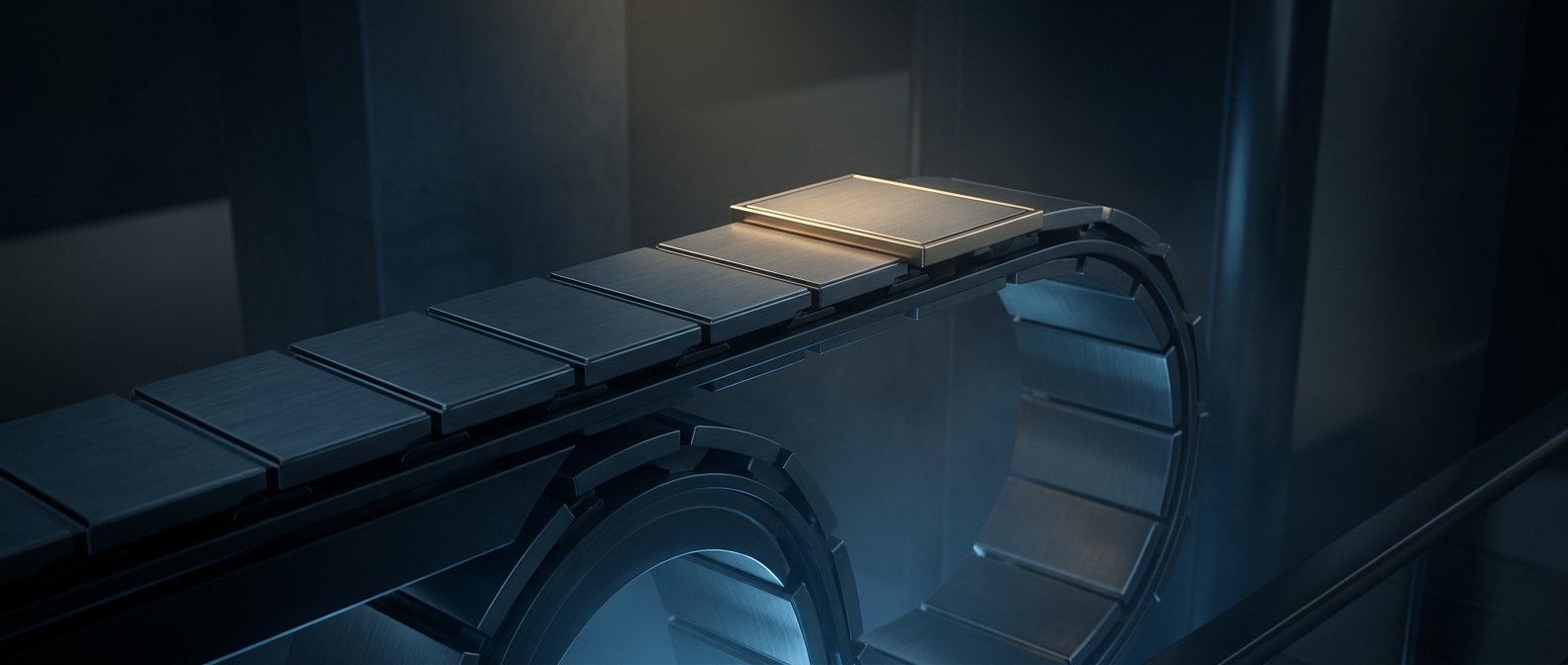
An escalator step looks like a small stair, but it is part of a linked train of steps moving around a loop. Each step has rollers that run in separate tracks beneath the visible surface. The tracks—not a hinge in the step—control how it sits.
Along the incline, the tracks hold each tread level while positioning it above the one behind. Near the top and bottom, the tracks curve and draw neighboring steps together. Their treads settle into one level plane as the chain turns beneath the landing.
The Comb at the Landing
At the entrance and exit, the flat steps pass through a comb plate: a stationary edge with teeth that fit into grooves in the step treads. The teeth bridge the transition between moving and fixed surfaces, helping keep loose objects from being drawn into the gap. That is why escalator steps have ridges rather than smooth tops.
The same guided movement works in reverse at the other end, where the steps separate and rise into a staircase again. Riders therefore travel on a continuous loop of rigid platforms, while the track layout creates the changing shape. The apparent staircase is a temporary arrangement of steps, not a set of stairs being carried uphill.