From Crowd Noise to Creative Input
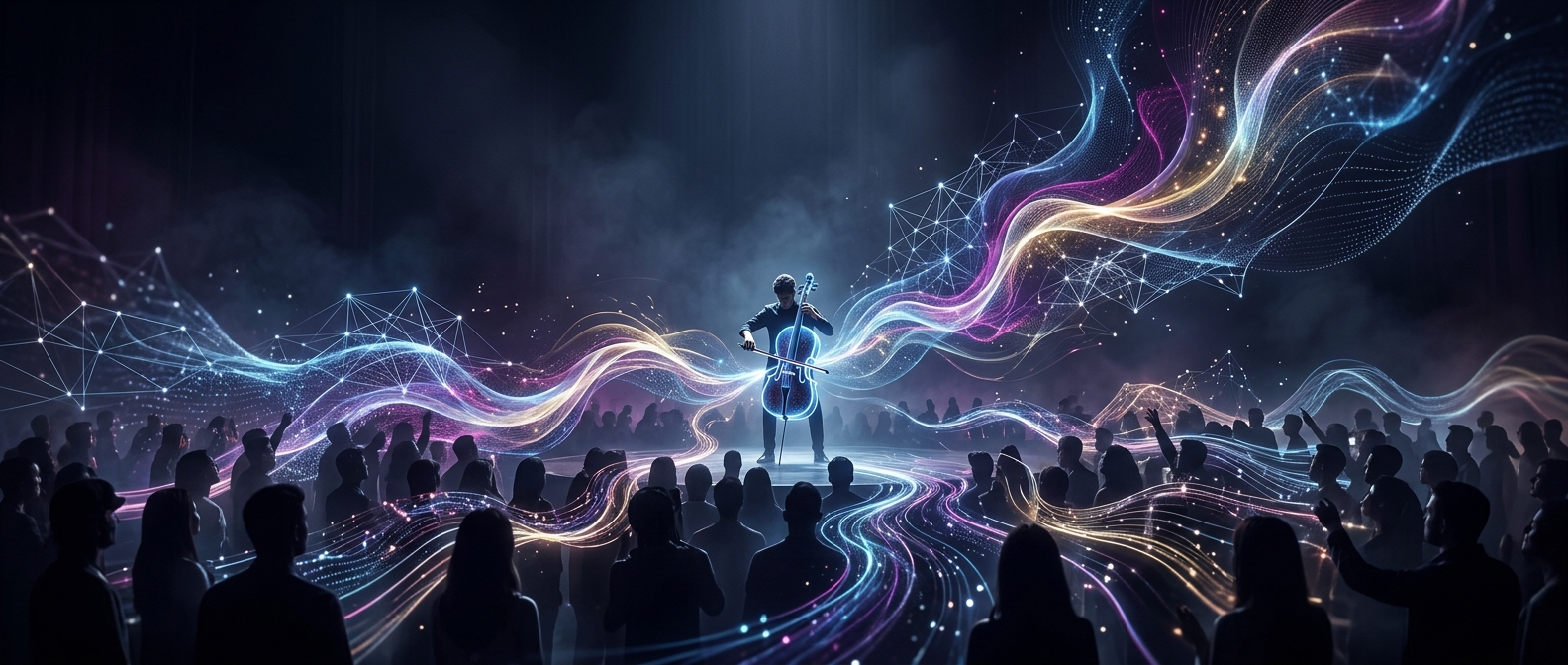
For a show to react to an audience, the system first needs a way to turn audience behavior into data. A microphone might capture the loudness or rhythm of cheering; an app or interactive device could register taps, votes, or movement. Software then looks for a usable signal, such as a rise in volume or a choice that many people make.
Generative AI can use that signal to produce or alter material—perhaps shifting a visual pattern, changing a musical texture, or selecting among possible transitions. The important step is the link between input and output: the audience’s action has to be translated into a cue the creative system can act on.
The Response Has to Be Designed
An AI system does not automatically know what would make a good concert moment. The performers and production team set the boundaries: which parts of the show may change, what kinds of changes are appropriate, and how much variation is allowed. A crowd response might influence lighting or the arrangement without changing the melody or disrupting a performer’s timing.
That restraint also helps the system respond quickly. A live show runs on tight timing, so the software must interpret input and produce a result before the moment passes. A simple, well-defined cue can be more useful onstage than an elaborate change that arrives late or feels disconnected from the music.
Each Night Becomes a Different Version
Because audience input varies, the system may generate a different sequence of visual or musical choices from one performance to the next. The crowd is not necessarily controlling every detail; rather, its behavior becomes one ingredient in a performance shaped by the artists’ rules. The result is a show with room for surprise while keeping the performers in control of its overall direction.