How AI finds clues in broken cuneiform
A clay tablet can preserve only part of a sentence: a corner may be missing, or a crack may erase several wedge-shaped marks. Those marks are cuneiform, a writing system made by pressing a cut reed into soft clay. Reading a damaged tablet is therefore not just a matter of recognizing signs. The reader must also work out which words and sentence patterns could fit the surviving pieces.
AI models can help by learning patterns from texts that scholars have already read, including Akkadian and Elamite tablets. When a passage is incomplete or obscure, a model can use the surrounding structure to suggest likely readings or connections. The clue may be less a single sign than the way signs tend to occur together across a text.
A tool for scholars, not an automatic translator
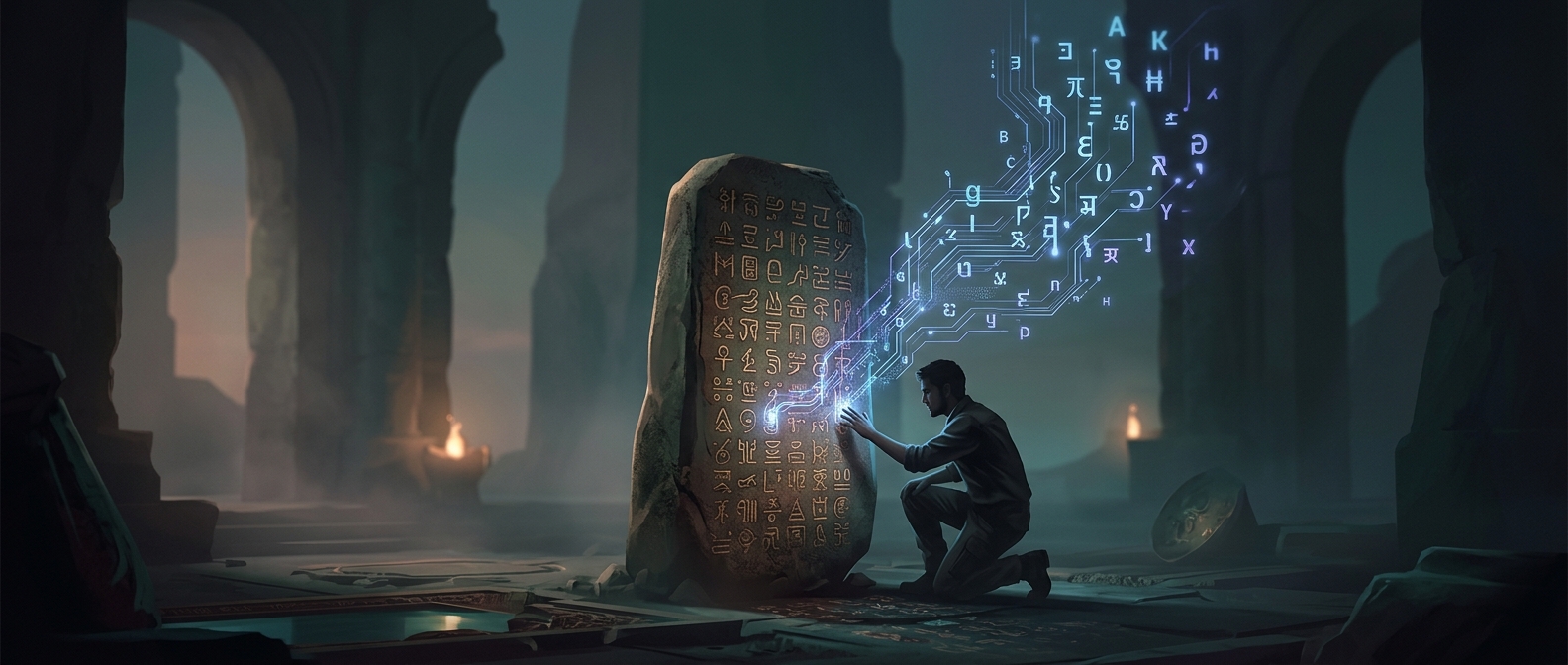
The comparison to a digital Rosetta Stone captures the hope of using patterns to bridge gaps, but it is not a literal key that instantly translates every tablet. A model’s suggestion is a possibility, not proof: ancient writing can be ambiguous, and a damaged sign may support more than one reading. Researchers still need to examine the tablet, compare related passages, and judge whether a proposed reading makes sense.
That division of labor matters. A computer can search for recurring structures across far more text than a person can inspect at once; specialists bring knowledge of the scripts, languages, and historical context needed to assess what those structures mean. AI can make a faint pattern easier to notice, but interpretation remains a human task. For a tablet with a missing line, that extra clue may help turn scattered marks into a passage scholars can investigate.