How a birth chart gets divided into houses
In astrology, houses are the chart’s way of placing symbolic themes in the setting of a person’s life. To draw them, an astrologer uses a birth time and location to orient the chart to the local horizon and sky. The rising sign—the zodiac sign appearing on the eastern horizon—is a key starting point, and the chart is then divided into twelve houses. Different house systems can draw those boundaries differently, so a planet near a boundary may be assigned to a different house depending on the method used.
Signs, planets, and houses play different roles
Astrologers often read a chart by combining three elements: a planet describes what kind of drive or function is involved; a sign describes its style; and a house points to the life area where the theme is interpreted. For example, a planet associated with communication in a house linked to work might be read as emphasizing communication in professional routines. That is an interpretive convention, not a prediction guaranteed by the chart.
The houses are not twelve equal-sized boxes of meaning in every chart. Their boundaries depend on the chart’s orientation and the house system, while the meanings attached to them come from astrological tradition. A house’s topic can also be read alongside its ruling sign and any planets located there, rather than in isolation.
Why the divisions matter to astrologers
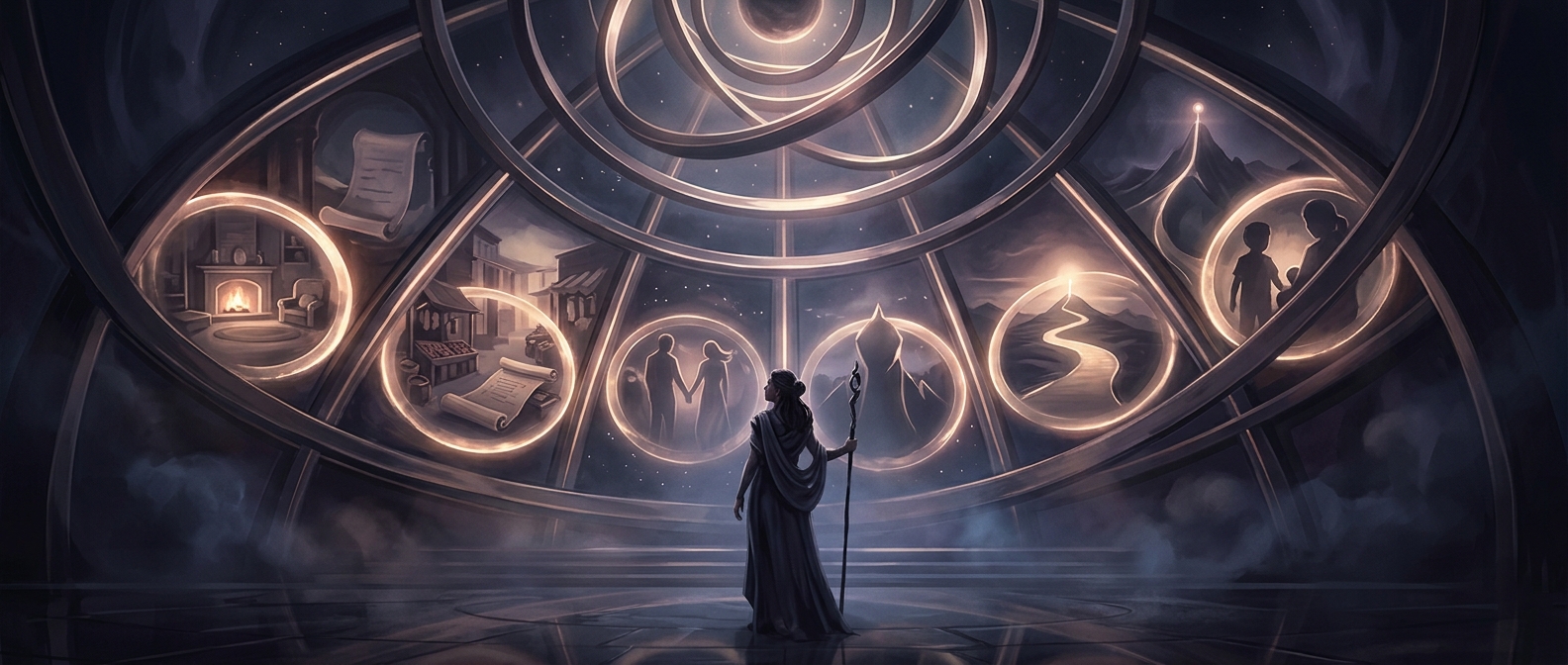
The houses give astrologers a way to connect broad symbols to specific domains—such as relationships, home, or shared resources—instead of treating every chart feature as a statement about life in general. In practice, the same planet-and-sign combination can receive a different interpretation depending on its house. The house supplies the setting for the symbolism, much as a stage helps an audience understand where an action is taking place.