Why a brake light needs a higher position
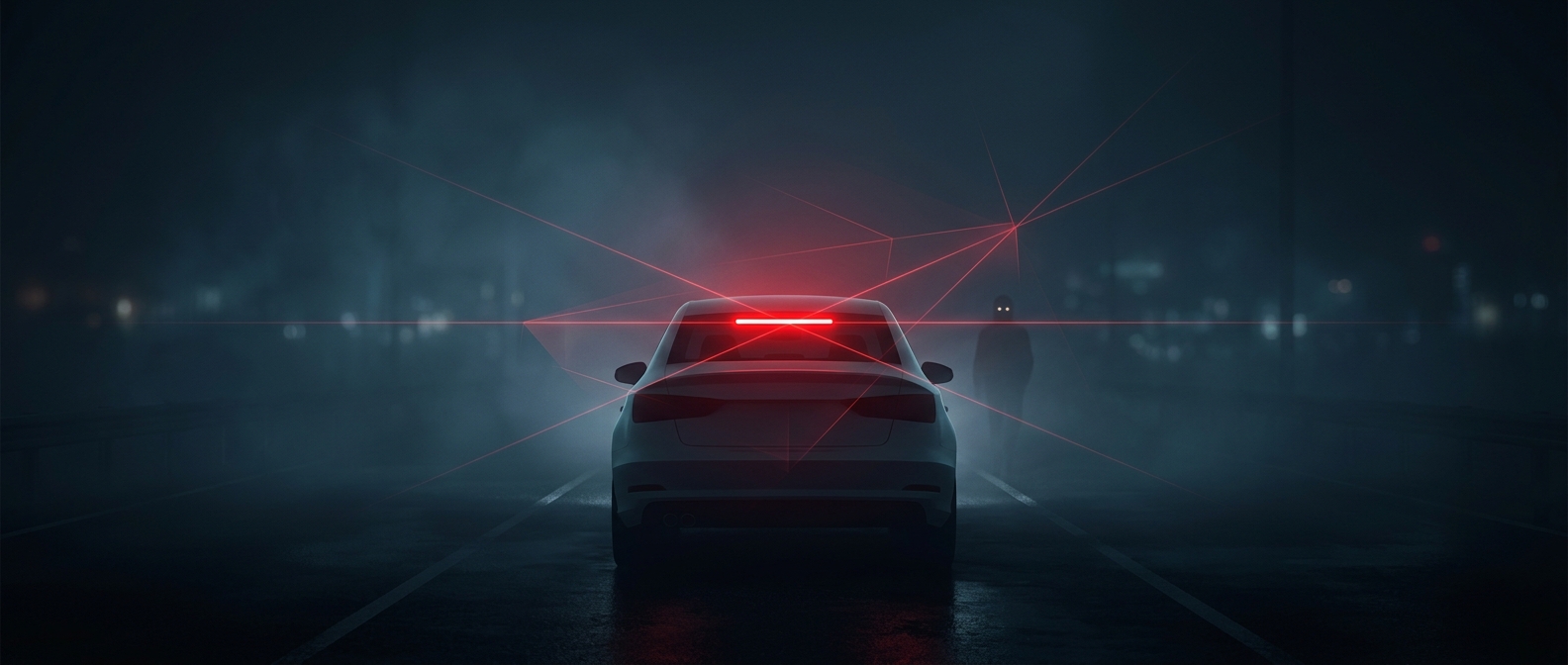
A car’s two ordinary brake lights sit near the road, where they can disappear behind another vehicle in dense traffic. The high-mounted center lamp was designed to put a brake signal in a different part of the view—not merely to add another red light. When a driver looks through or over the car ahead, that elevated signal may remain visible even when the lower lamps are blocked.
The placement also helps the signal stand apart from the visual clutter at the back of a car. Turn signals, reflections, and the changing shapes of traffic all compete for attention. A lamp near the centerline gives the following driver another, distinct cue that the car ahead is slowing.
An extra cue, not extra stopping power
The lamp does not make the car in front brake sooner, and it cannot prevent every collision. Its value is in the moment between seeing a vehicle slow and deciding to react. A clear, early signal can give the driver behind more time to lift off the accelerator or brake, especially when several cars are close together and the first sign of slowing might otherwise be hidden.
That is why the third light is mounted high and near the center: its advantage comes from visibility and placement, not brightness alone. In a packed line of cars, the highest brake signal can be the one that reaches a driver’s eyes first.