A crowd turned the doorway into the message
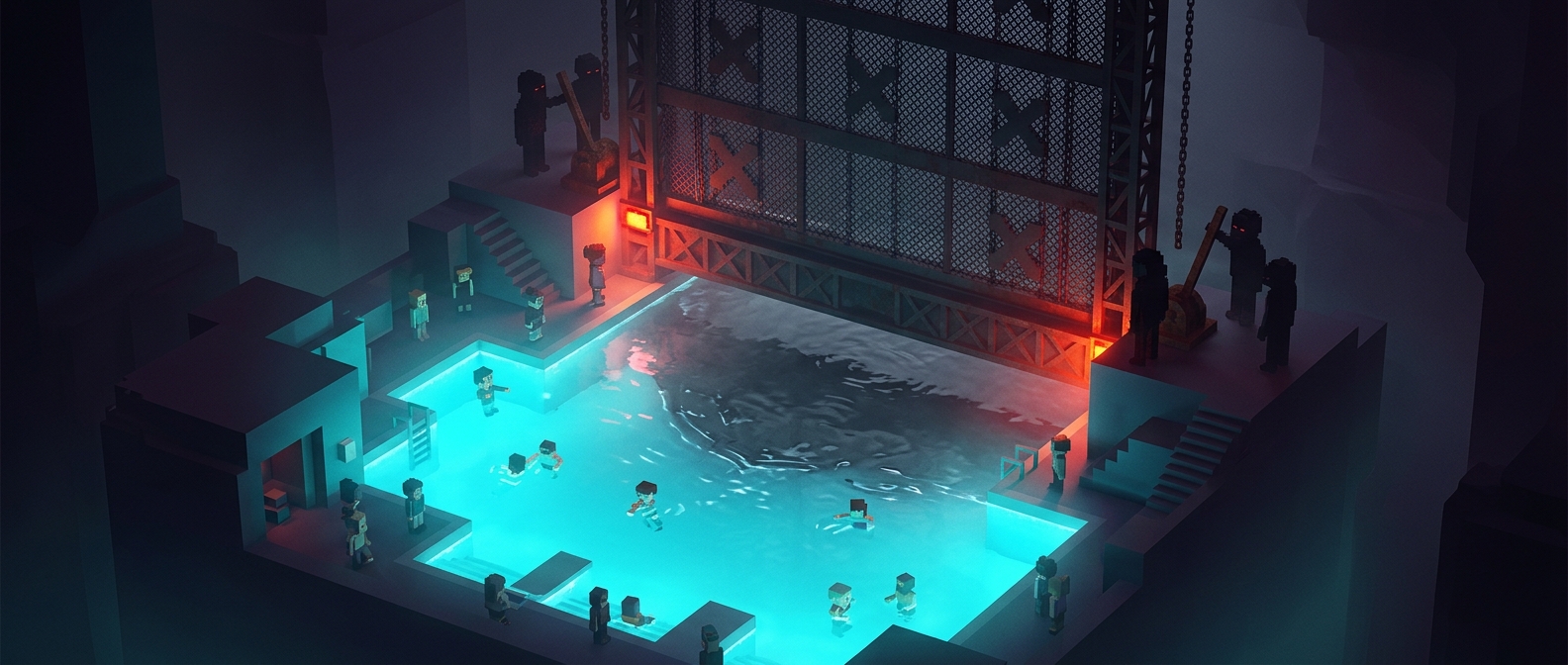
Habbo Hotel was built around shared virtual rooms where people met and chatted through avatars. At the pool entrance, the crowd made its point by taking up space: identical-looking avatars lined the way in, while their “closed” declaration supplied the sign a real pool might have on its door.
The tactic joined two kinds of obstruction. The avatars made the entrance harder to pass, and the repeated message told visitors how to interpret the scene. What looked like a service announcement was actually a coordinated protest staged inside the room.
Why the prank worked
The group did not need to alter the pool itself. It used the room’s ordinary social features—visible avatars, shared space, and chat—to make a crowd feel like a gate. That depended on coordination: one avatar at the entrance might be easy to ignore, but a line of matching figures made the obstruction legible at a glance.
The result was a small but revealing collision between a platform’s design and its users. Habbo’s rooms were meant to host conversation; because users could gather visibly in them, they could also use that gathering to interrupt other people’s plans. The pool could remain part of the virtual hotel while, for anyone arriving at the doorway, the crowd made it seem closed.