Turning a Blast Into a Distance Calculation
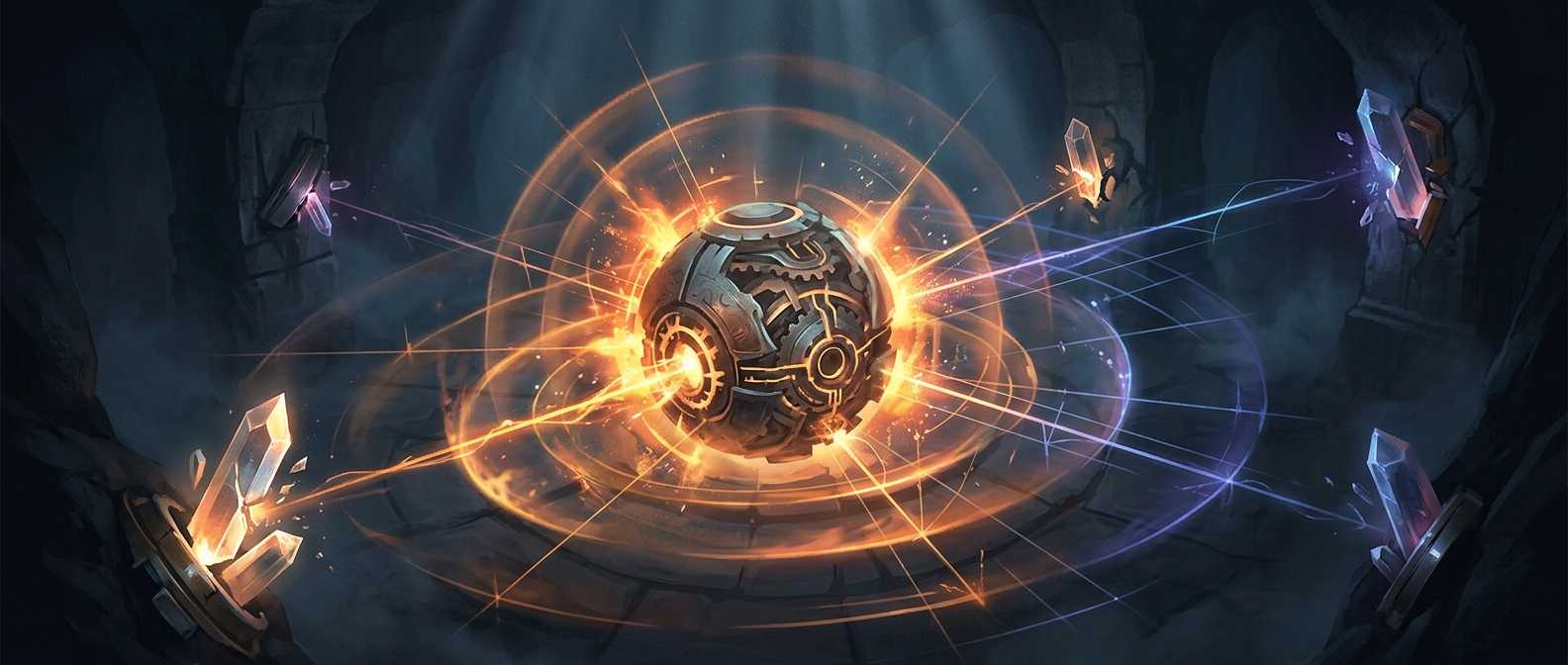
A game can treat an explosion as a point in space and each character as another position. Subtracting those positions gives a distance vector: a direction pointing from the blast’s center toward the character, with a length showing how far apart they are. For damage, the game uses that length. The direction itself does not matter; two characters equally far away receive the same result under this rule.
The game then maps distance to damage. A nearby character might take more, while a farther one takes less. The exact curve is a design choice: damage could fall steadily, drop sharply after a certain range, or reach zero at a limit. The fact that distance alone governs the result does not specify which curve is used.
What the Rule Leaves Out
A distance-only model makes an explosion predictable and relatively simple to tune. Moving farther from the center reliably reduces the hit, so players can learn to judge risk by spacing. It also means the calculation does not account for whether a wall, piece of cover, or another object lies between the blast and the character—unless the game adds a separate rule for those factors.
That tradeoff affects how an explosion feels. A character just behind a solid barrier may still be treated like someone standing in the open at the same distance, while a character a little farther away takes less damage. The blast is therefore less a simulation of every physical detail than a clear rule about position: how far you are from the center determines how hard the explosion hits.