When the eyes and inner ear disagree
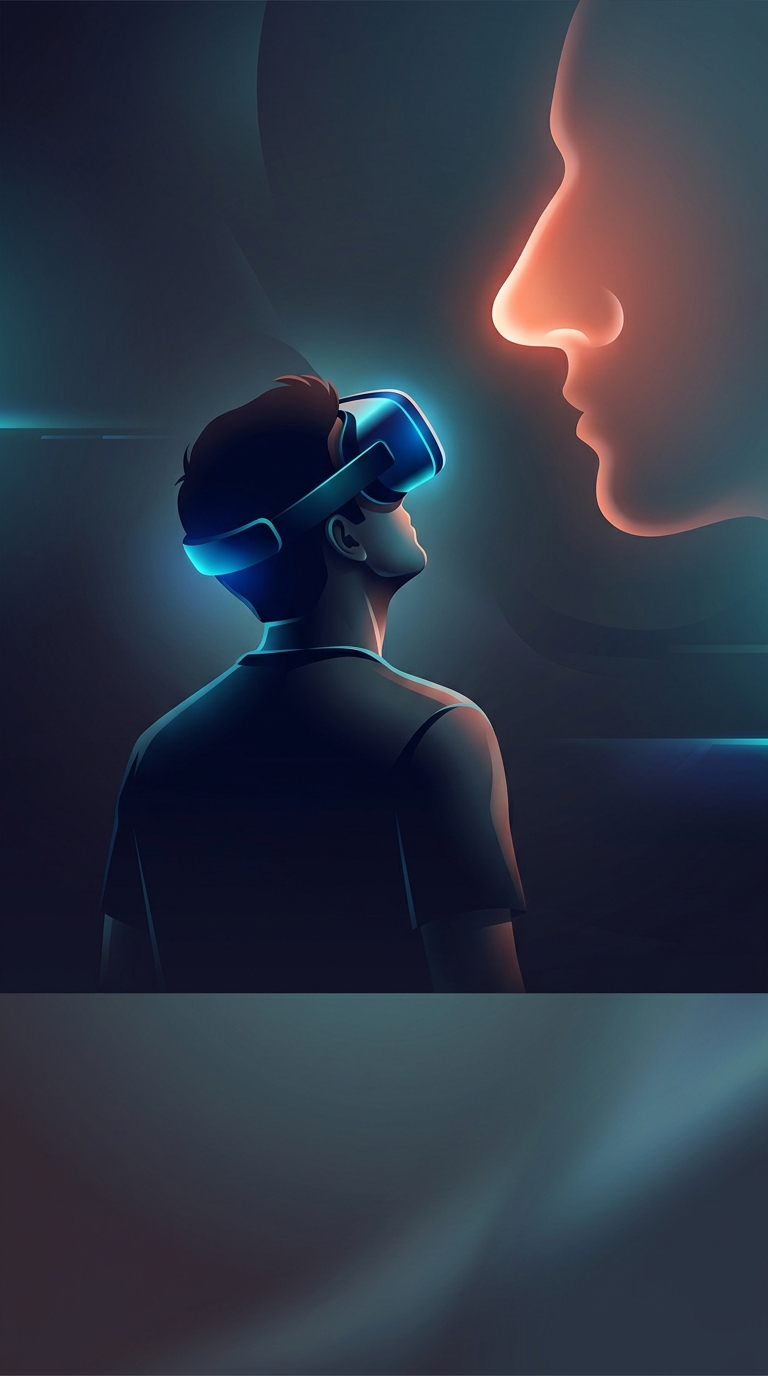
A VR scene can look as if the player is moving through a real space, while the body remains nearly still. The eyes report acceleration, turning, or a sudden drop. But the inner ear—which senses head movement and balance—and the body’s other motion signals report little or none of it. This conflict can disrupt the brain’s usual estimate of where the body is and how it is moving.
The result, often called cybersickness, can include nausea, dizziness, sweating, headache, and disorientation. It resembles motion sickness, but the provoking motion may exist only in the headset’s moving images.
Why a realistic game can feel worse
Realistic visuals make virtual movement more convincing; they do not make the player’s body move along with it. A fast ride, a sharp turn, or smooth movement controlled by a thumbstick can therefore create a strong visual signal with no matching bodily sensation. New players may be especially unprepared for that mismatch, particularly if the game keeps moving the view while their head stays still.
Small technical delays can add to the strain. If the displayed image lags behind a head turn, the world seems to slip or sway rather than remain anchored in place. VR systems work to keep images responsive, but comfort also depends on the game’s movement design and on the individual player.
Comfort is partly a design choice
Games can reduce the mismatch by letting players move in ways that produce fewer conflicting cues—for example, by teleporting between locations instead of continuously gliding. Some offer a fixed visual frame or other comfort settings that limit how much of the scene moves during turns. These options can make movement feel less immersive, but they may also make a session more tolerable.
There is no universal threshold: one player may feel fine while another becomes ill quickly, and symptoms can build over time. Taking off the headset when discomfort begins is more sensible than trying to push through it. In VR, the most convincing movement is not always the most comfortable one.