Why a convincing world does not need perfect graphics
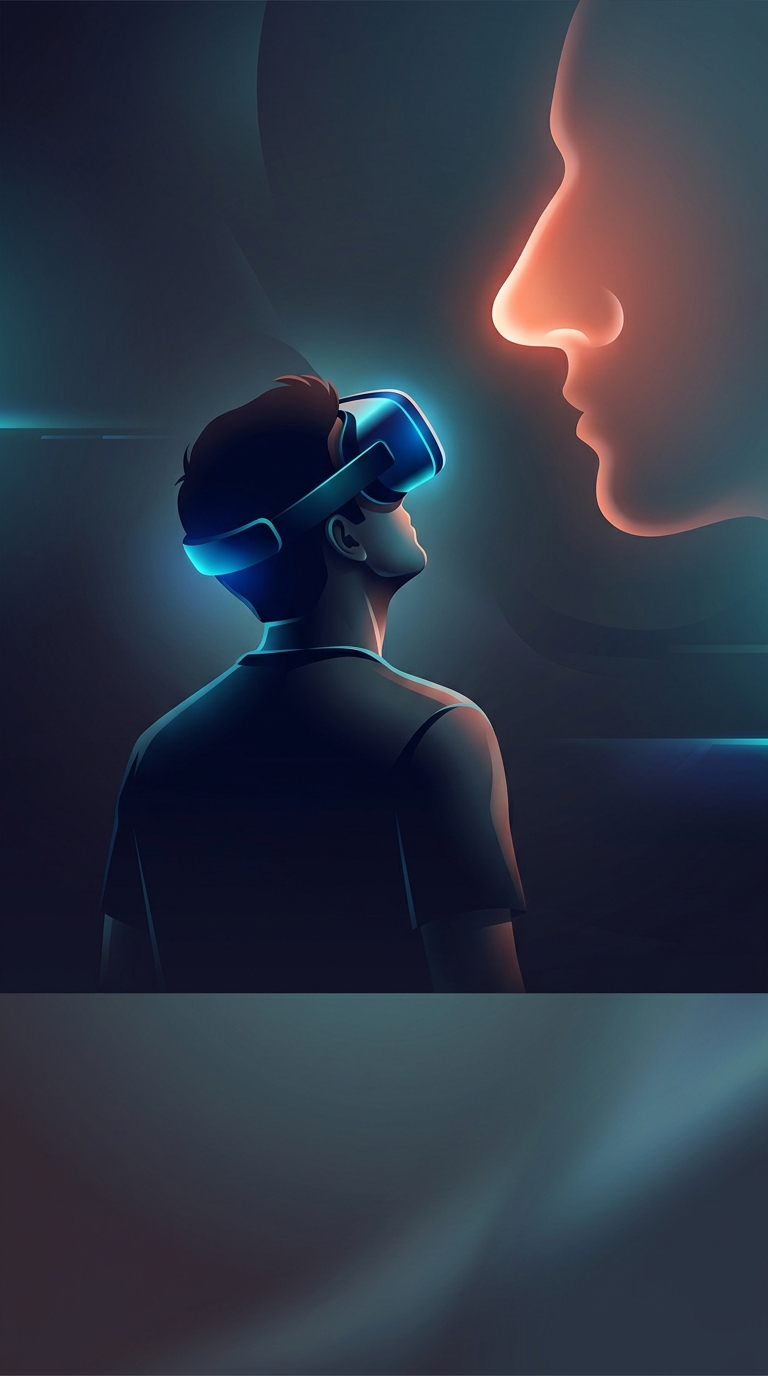
Virtual reality works less like a photograph and more like a coordinated set of clues. Your brain estimates where you are by combining what each eye sees with signals from head movement, balance, and the way nearby objects shift as you move. When those clues agree, a simple scene can feel spatial and present; when they conflict, even detailed graphics can feel artificial.
The cues that make space feel solid
A headset shows each eye a slightly different view. That difference, called stereoscopic disparity, helps the brain judge depth. As you turn your head, the displayed scene must also update so objects appear to stay put. This head-motion-to-display delay needs to be small: if the image lags behind the movement, the mismatch can make the world feel unstable or contribute to discomfort.
Shadows and perspective provide additional evidence. A shadow that shifts consistently with a light source helps locate an object relative to the floor; perspective makes parallel edges seem to recede into the distance. These cues need not be physically perfect. They need to be coherent with one another and with the viewer’s movement.
Spending detail where it matters
Rendering every surface with equal realism is expensive for a headset’s graphics hardware. Designers can use simpler textures or less elaborate geometry in places where fine detail contributes little to the sense of depth, while preserving clear edges, believable lighting, and responsive motion. The goal is not to fool eyesight with one flawless image; it is to keep the strongest spatial cues aligned from moment to moment.
That is why a modest virtual castle can feel walkable while a more polished scene feels oddly flat: the decisive detail may be how the walls shift as you turn, not how many bricks they contain.