A game exposed the limits of the tools
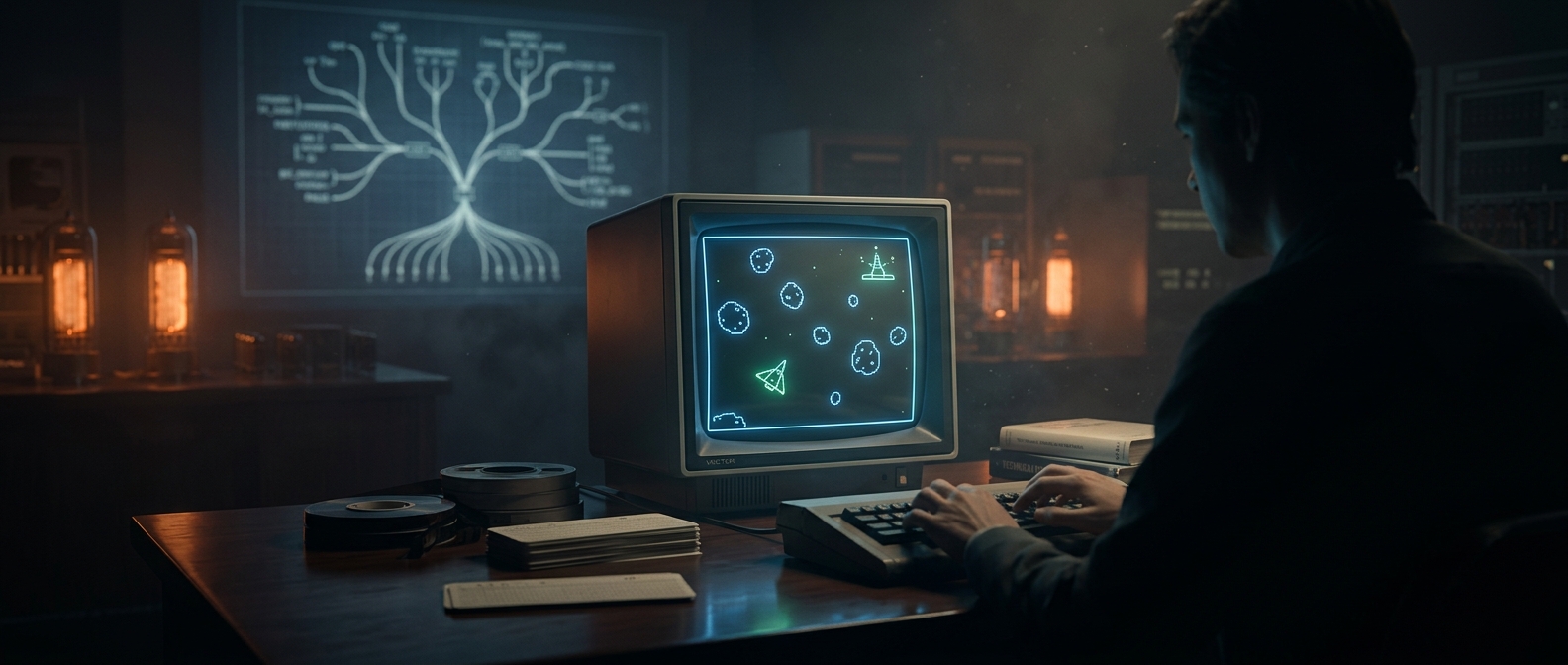
Space Travel was a text-based simulation of moving through the solar system. Dennis Ritchie and Ken Thompson wanted to run it on a PDP-7 minicomputer, but adapting the game to the machine was awkward with the programming tools available. That practical frustration—not a plan to design a universal language—helped set their work in motion.
From making the game run to shaping a system
The difficulty was part of a larger problem: the researchers were building software for a computer with limited memory and hardware, and needed tools that could be changed and reused. As they worked on the system around the game, they developed C, a language that let programmers describe operations in a more manageable form while still giving them close control over the machine.
That balance mattered. A language too far removed from the hardware could be inefficient or difficult to use for low-level system work; writing everything directly in machine-specific instructions made programs cumbersome to maintain and move. C offered a practical middle ground, making it useful for the operating system as well as applications.
A small project, a lasting consequence
C did not become influential simply because of Space Travel. Its importance grew from the broader system-building work the game helped prompt: software and a language designed to be practical on real hardware. C later became foundational to major operating systems, and its approach influenced many languages that followed. The surprising chain is that an attempt to make a space game less cumbersome helped drive tools used to build the software beneath everyday computing.