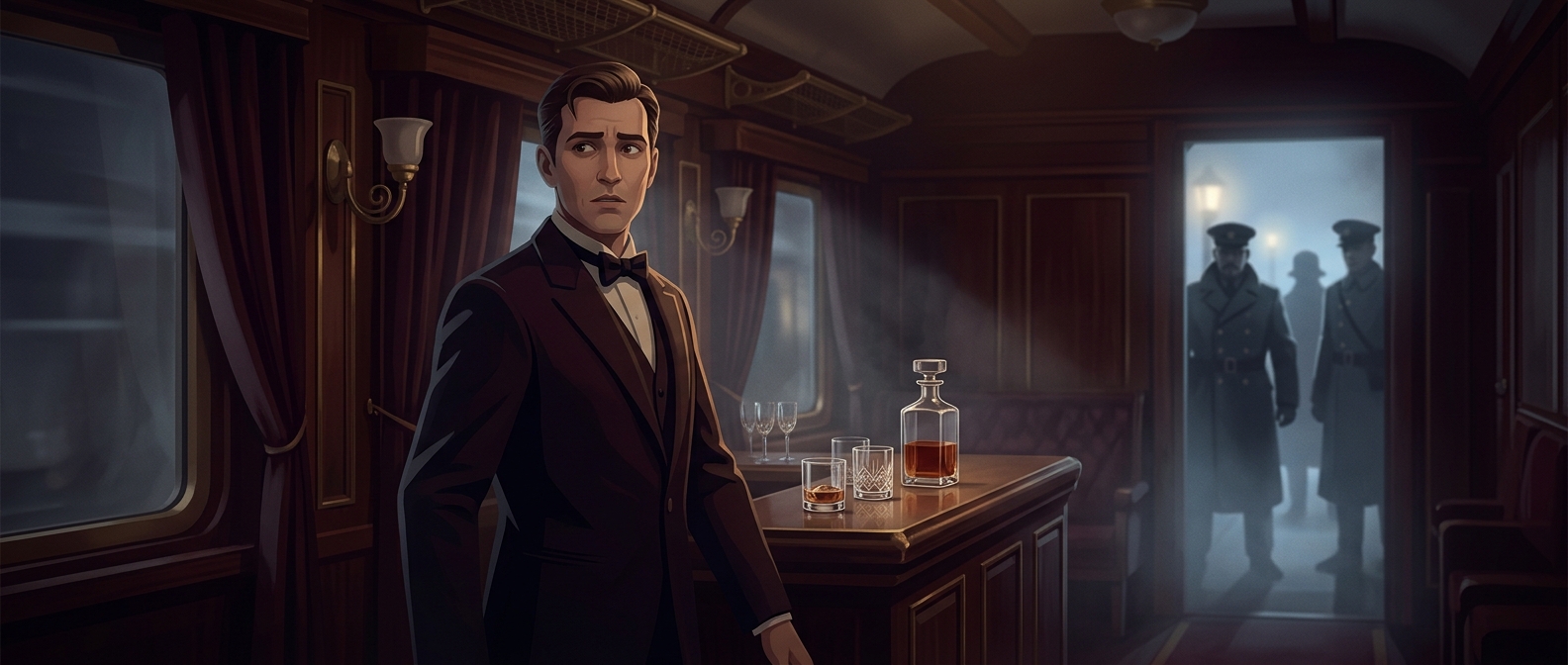
Why the liquor cabinet mattered at a border
A bottle carried across a frontier could count as imported merchandise, even if it was riding on a train rather than being unloaded onto a platform. Customs duties—taxes charged on goods entering a country—could therefore apply to the Orient Express’s onboard alcohol.
The dining car made the issue practical: its liquor was stored for service to passengers, but the train passed through countries with separate customs jurisdictions. Keeping the cabinet locked at a border restricted access to the stock while the train crossed into the next one, helping staff avoid treating the alcohol as available for untaxed sale there.
A moving restaurant, changing rules
The lock was a small operational solution to a problem created by international travel. A restaurant standing in one country could stock and serve drinks under one set of customs rules. A restaurant on wheels crossed borders with its supplies still aboard, so staff had to manage those supplies as the legal setting changed around them.
That made the cabinet more than a piece of dining-car furniture: it was a boundary the crew could enforce. For passengers, the border might mean a change of scenery; for the staff, it could mean securing the drinks before the train reached the next customs zone.