Why balance comes before pedaling
A bicycle stays upright while moving because its rider continually makes small steering adjustments. When the bike starts to tip, turning the front wheel slightly toward the fall helps bring the wheels back underneath the rider. Children do not need to understand that physics; they need room to feel the bike respond to their movements.
A balance bike removes the pedals so a child can focus on that one problem. With both feet close to the ground, the child can walk, scoot faster, and briefly lift their feet. Those short glides provide immediate feedback: a steady steering correction keeps the bike rolling, while a poor one brings a foot back down. The low seat makes that recovery feel manageable rather than like a full-speed fall.
What training wheels change
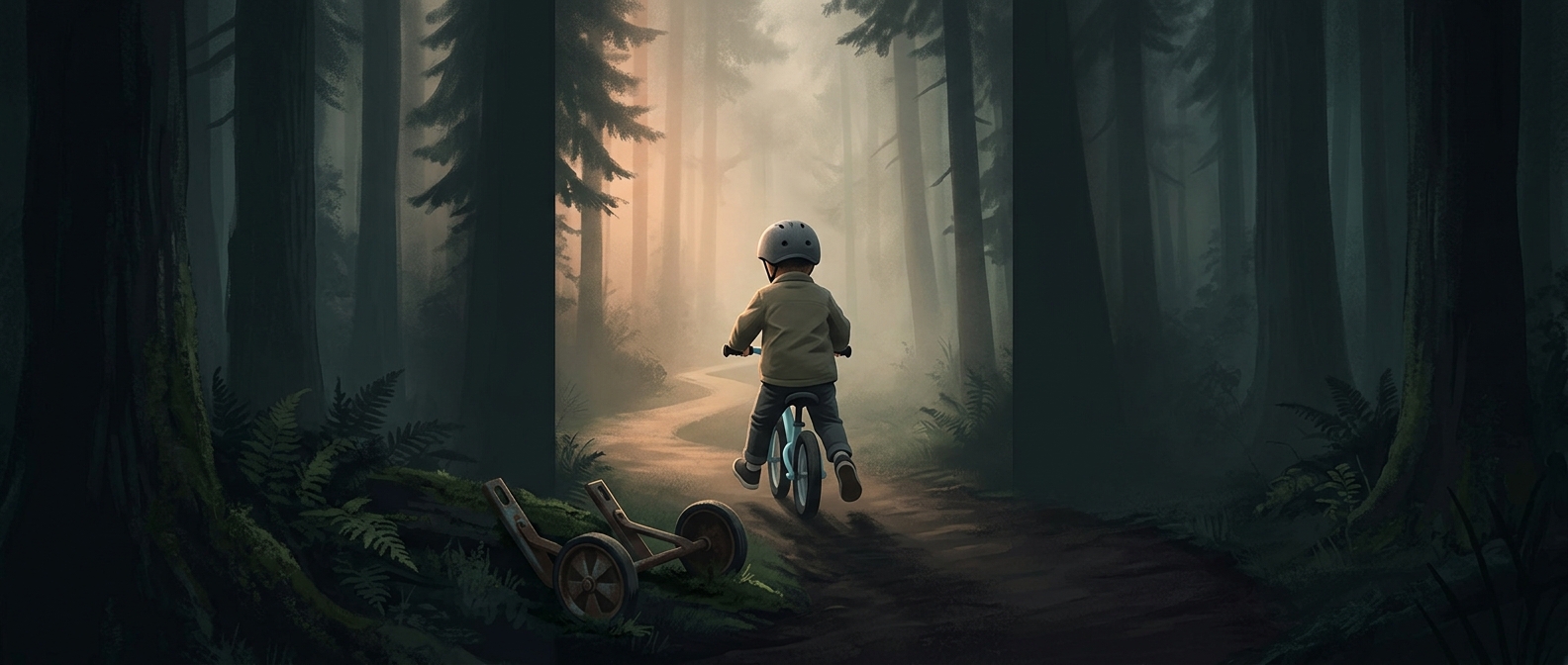
Training wheels support the bicycle when it tilts, so the rider can pedal without having to keep the frame upright. That is useful support for getting moving, but it changes the task: the child can rely on the extra wheels instead of learning to balance through steering and body position. When the supports are removed, the familiar bicycle can suddenly feel unstable.
On a balance bike, the child has already practiced the part that makes a two-wheeled bicycle feel difficult. Pedals add a new job—pushing them around while coordinating feet and steering—but they do not provide the basic balance. That is why moving to a pedal bike can sometimes be a smaller adjustment than the appearance of a new bicycle suggests.
A different order of learning
The key is not that pedals are unimportant; they are simply easier to add after steering and balance have become familiar. A child who can glide while keeping the bicycle upright has learned to manage the moment when the bike begins to lean. The next ride can then be about making the wheels turn with the pedals, rather than asking the child to solve balance and pedaling at once.