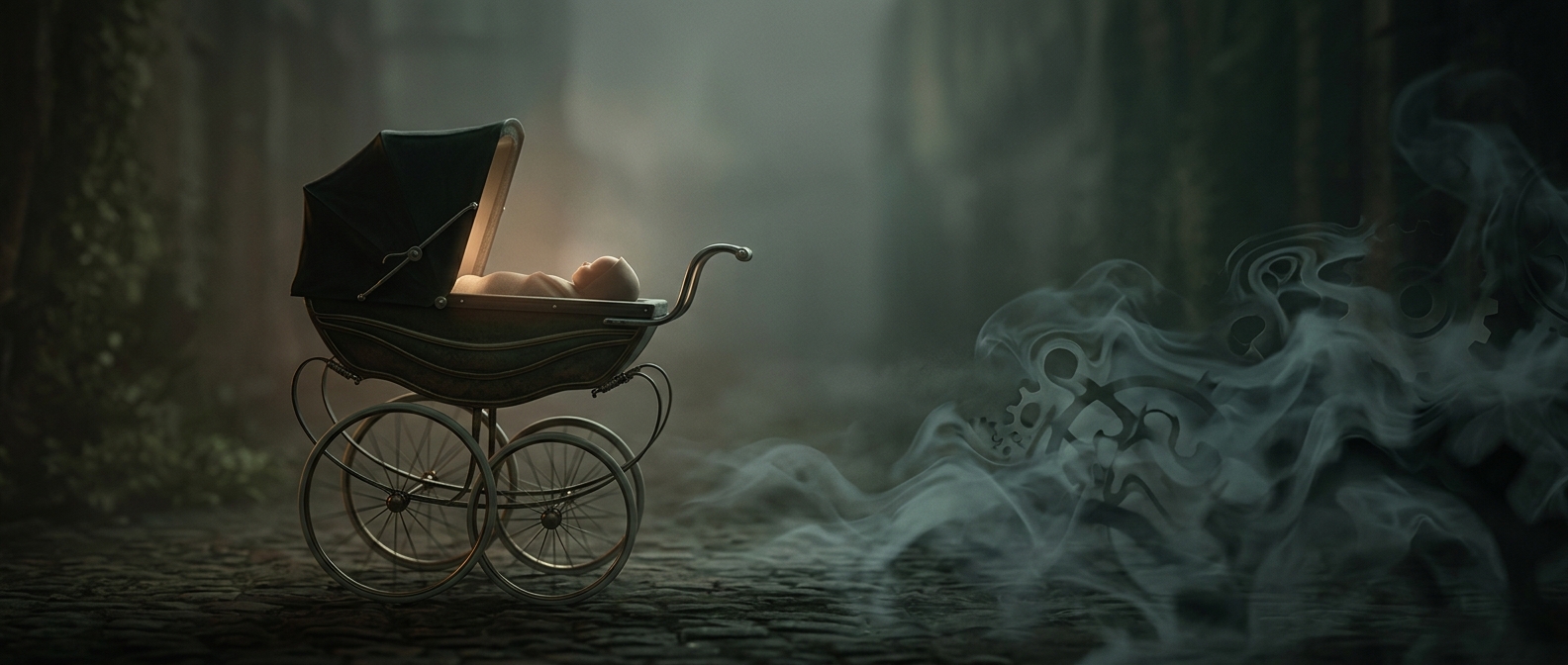
Why the carriage reached the road first
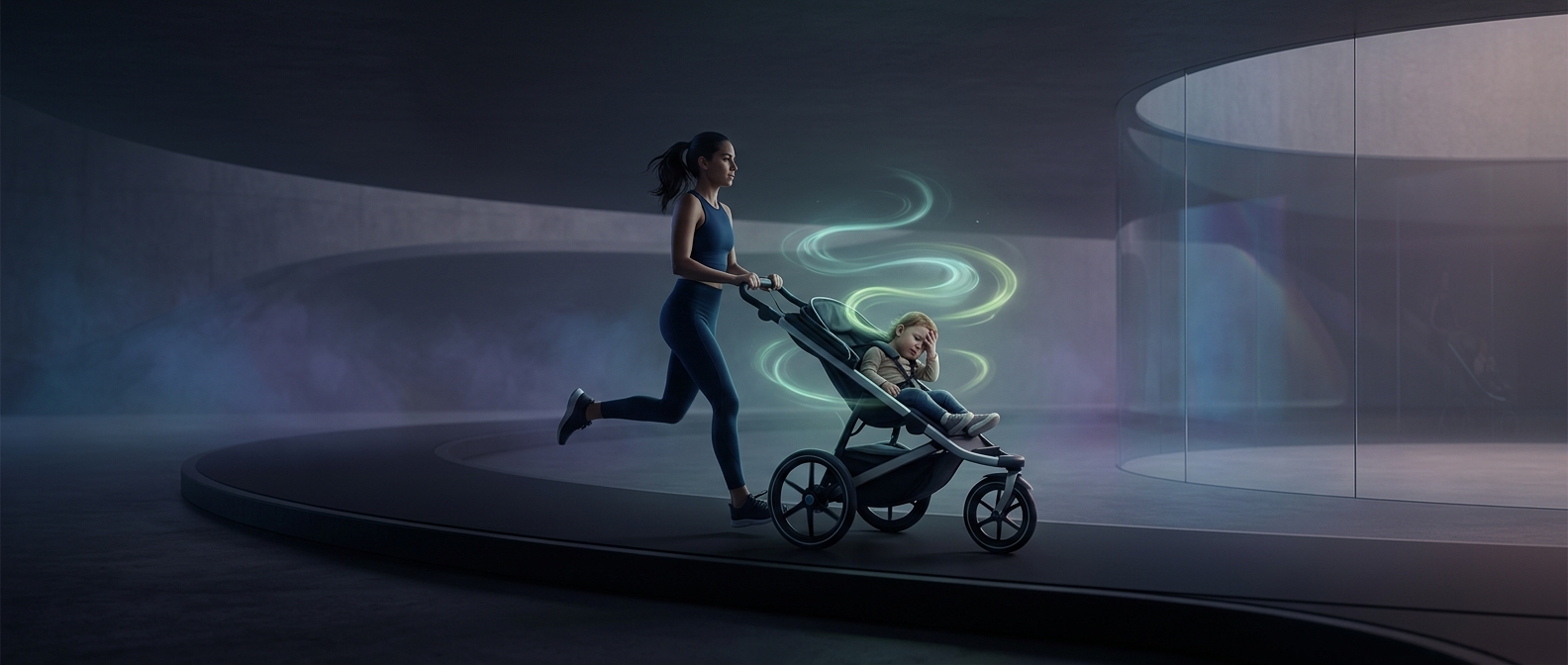
A pram puts its passenger in front of the person steering it. That arrangement makes sense on a path: the adult can push from behind while keeping a hand on the handle. At a crossing, though, the same layout creates a risky sequence. The front wheels and the child move beyond the curb before the adult’s body does.
The difference matters because a crossing is not just a change of direction. It is a place where someone may need to judge approaching traffic, pause, or pull back. If the pram has already rolled into the roadway, reversing course means bringing the child back first, while the adult is still behind the carriage. The pusher’s ability to see traffic does not change which part of the pair is exposed earliest.
A design built for a different problem
The pram’s basic job was to carry a child comfortably. Its forward position served that purpose, but it did not make the carriage behave like a compact vehicle designed around crossings and traffic. A long handle could keep the adult at a distance from the child; it could not make the child arrive at the intersection later.
That is the unsettling mismatch: a familiar, gentle-looking piece of equipment could put its most vulnerable passenger at the leading edge of a street encounter. The pram did not need to be moving fast for its design to determine who entered danger first.