Why Benz Had to Ask Before Taking the Motorwagen Out
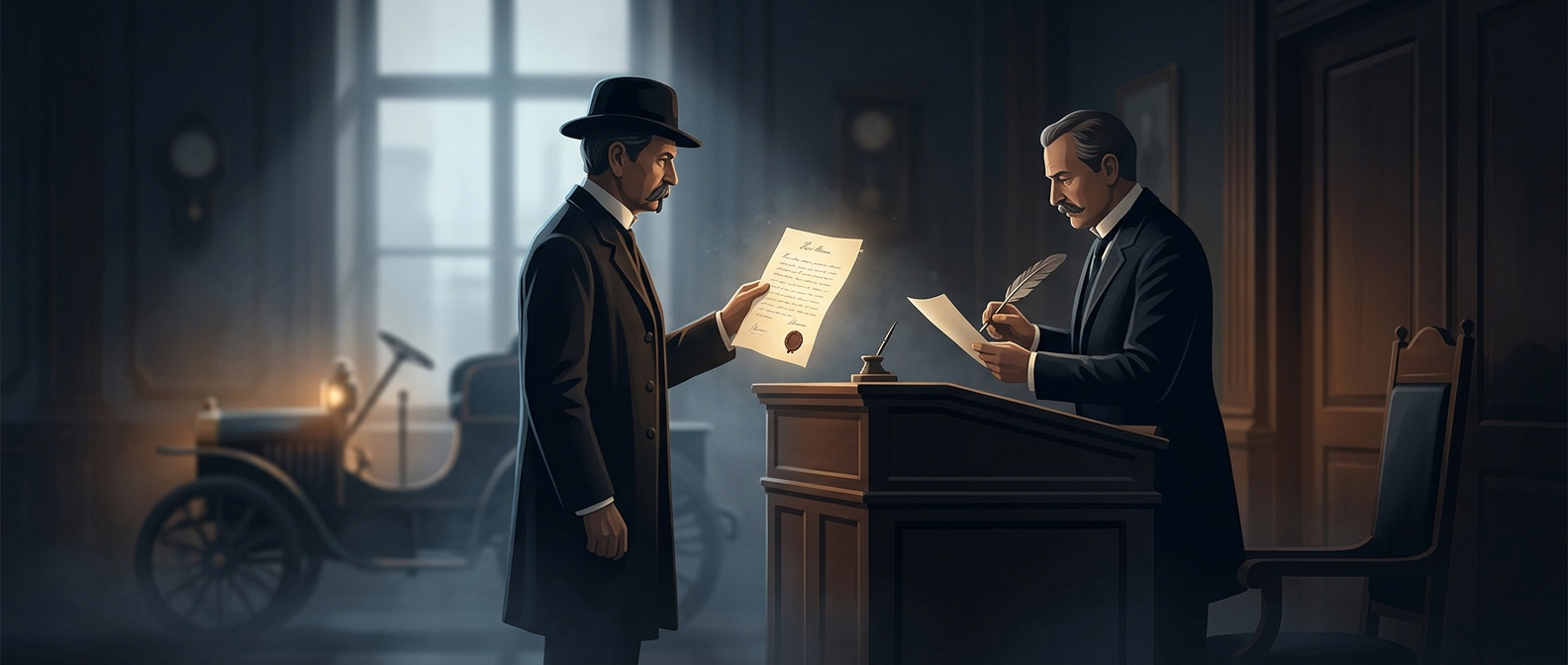
Karl Benz’s 1880s motorcar did not fit neatly into the rules governing public roads. Those roads were already shared by pedestrians, horse-drawn vehicles, and bicycles; a self-propelled machine with an engine was a new kind of road user. Before testing his Motorwagen on public streets, Benz needed official permission from authorities in Mannheim.
That permission was not the equivalent of a modern driver’s license. It was a practical response to a machine for which ordinary road rules offered no clear routine. A test drive could affect other people using the street, and officials had to decide whether the unfamiliar vehicle could be operated there at all.
The Road Was Part of the Experiment
Benz’s challenge was not only to make an engine and vehicle work. He also had to find out how the machine behaved in real streets, where a breakdown or an unexpected noise mattered beyond the workshop. Public-road testing exposed the Motorwagen to conditions a controlled indoor setting could not reproduce—and required the authorities to make room for a technology their rules had not anticipated.
The paperwork is a small but telling part of the car’s arrival: before motor traffic needed a full system of rules, one inventor had to obtain permission for a single new machine to share the road.