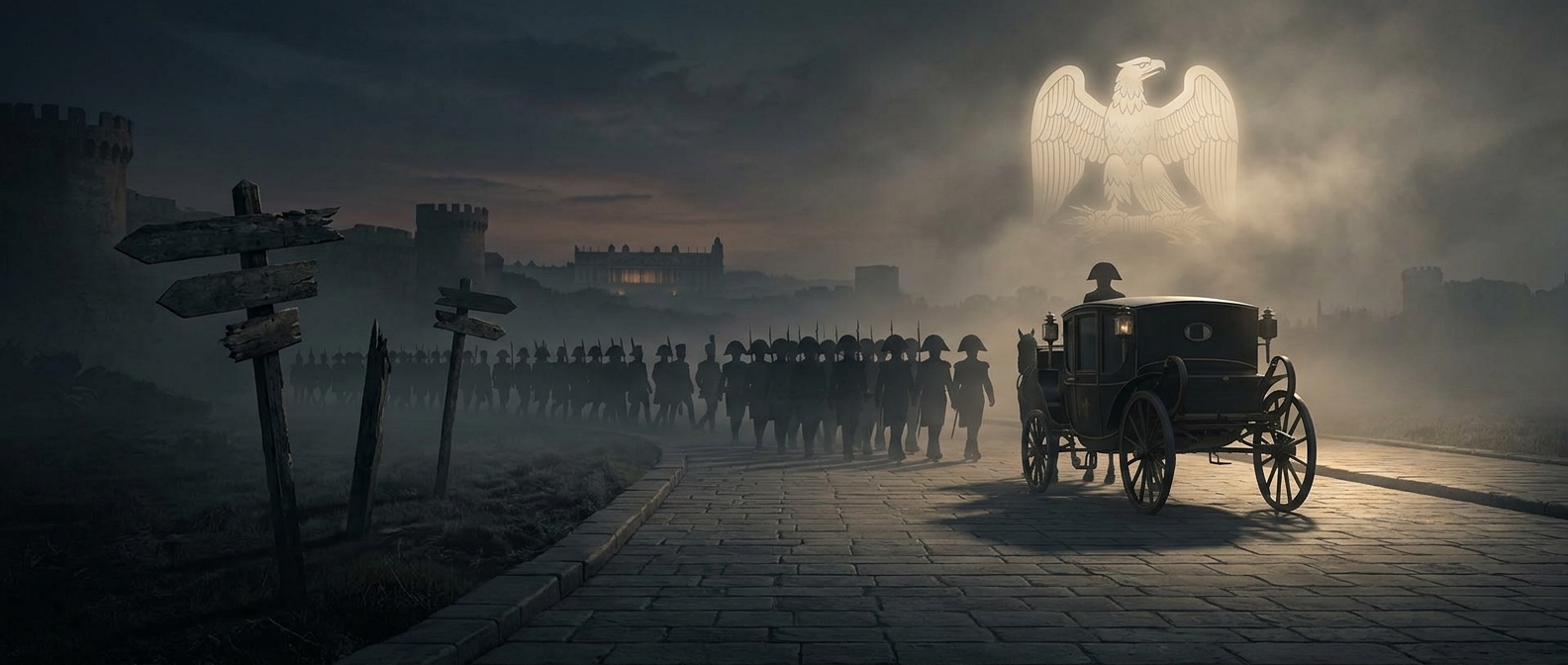
Napoleon helped spread right-side traffic—but the story is more complicated
Napoleon did not invent right-hand travel across Europe with one continent-wide order. The custom was already taking hold in France during the upheaval of the French Revolution. As Napoleon’s armies conquered territory and French rule expanded, right-side traffic spread with the new governments and legal systems. In places under French influence, a local convention could become an official rule—and remain after French power receded.
That is the practical connection behind the familiar story: Napoleon’s campaigns helped carry a French traffic rule across borders. But the claim that he chose the right because he was left-handed and wanted soldiers’ sword arms free is not a dependable explanation. It compresses a long, uneven change into a tidy anecdote, and confuses the movement of marching troops with rules for everyday road traffic.
How a road convention becomes a lasting rule
Before traffic rules were standardized, people could follow local habits rather than a single national system. Once a government required everyone to keep to one side, the choice shaped more than individual behavior: it affected how vehicles met, how roads were managed, and how people learned to travel. Changing the rule later would mean retraining the public and adjusting practices built around it.
Napoleon’s role, then, was less a dramatic personal decision than a consequence of political reach. French authority helped turn right-side travel into an established rule in parts of continental Europe. The memorable sword-arm explanation may be easier to retell, but the deeper story is how conquest and administration made a local convention durable.