A route built around short walks
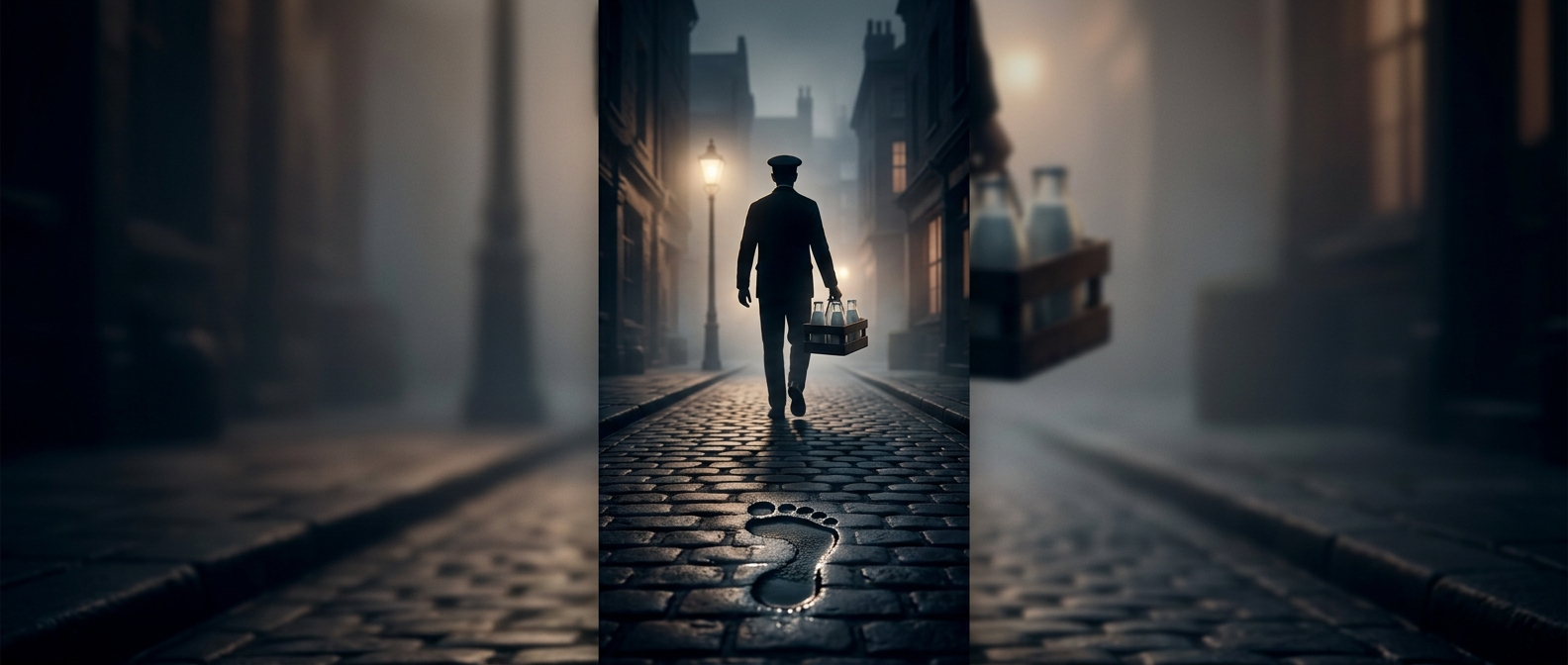
A doorstep milk route worked because its stops were close together. Instead of driving from house to house, a milkman followed a fixed neighborhood circuit on foot, carrying bottles from one doorstep to the next. That traded speed over long distances for direct access to homes: no need to find a place to park, unload at every stop, or maneuver a vehicle along narrow streets.
The route also made the work predictable. Deliveries could be arranged in advance, so the milkman could carry the right bottles for the next stretch rather than treating every stop as a separate trip back to a shop or depot. But glass made each load heavy, and the weight had to be moved by hand throughout the circuit. The job’s efficiency depended on keeping the route compact and the carrying manageable.
The bottle made the return trip part of the system
Glass bottles were durable enough to be collected, washed, and used again. That meant the doorstep was not just where milk was left: it was also where yesterday’s empty bottle could be picked up. Returning the containers kept them in circulation, but added another task to each stop and more weight to carry.
The result was a small, repeated piece of transport engineering: a carefully ordered walking route moved full bottles outward and empties back. The delivery vehicle, in effect, was the milkman’s own arms and legs—and every extra bottle mattered.