Why a Smooth Ride Can Still Upset a Toddler’s Stomach
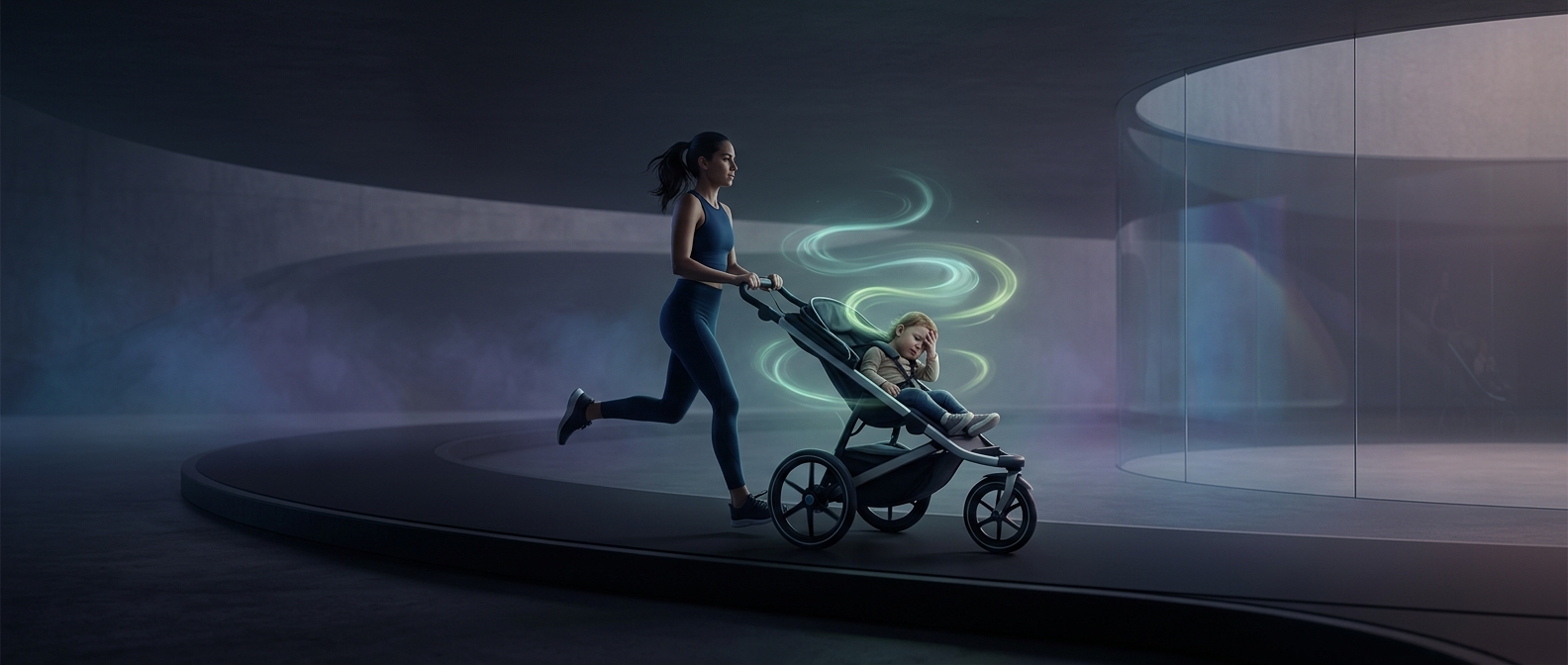
Motion sickness begins when the brain receives conflicting clues about movement. The inner ear senses acceleration and changes in direction; the eyes report what the child can see. In a stroller, a toddler may feel each bump and turn while looking at a nearby seat, parent, or toy that seems relatively steady. The brain has to reconcile those signals, and in some children that mismatch can bring on nausea, pallor, or fussiness.
Suspension Softens Impacts, Not Every Signal
A jogging stroller’s larger wheels and suspension help absorb shocks before they reach the seat. But they cannot erase motion: the frame still rises and dips over uneven ground, and turns can shift a child’s body from side to side. The seat may also continue to rock after a bump. What matters to the child is not just how rough the pavement looks, but the movement their body experiences and whether their view helps explain it.
What the Child Can See Matters
A view of the passing surroundings can give the brain useful evidence that the body is moving. By contrast, staring at a fixed object inside the stroller may make the ride harder to interpret. A slower pace on rough stretches, a smoother route, and looking ahead at the surroundings may reduce the combination of jolts and visual uncertainty. If a child repeatedly becomes ill during rides, stopping and giving them a chance to settle is more useful than assuming the stroller’s suspension has made the trip motionless.