Why a Rotor Could Shake the Whole Aircraft
A helicopter rotor is not a perfectly balanced, rigid disk. Each blade meets changing airflow as it spins, so the forces on it rise and fall through every revolution. The blades also move slightly at the hub: they flap up and down and shift back and forth in the plane of rotation. Those motions help the rotor cope with uneven lift, but they can also send repeated jolts into the airframe.
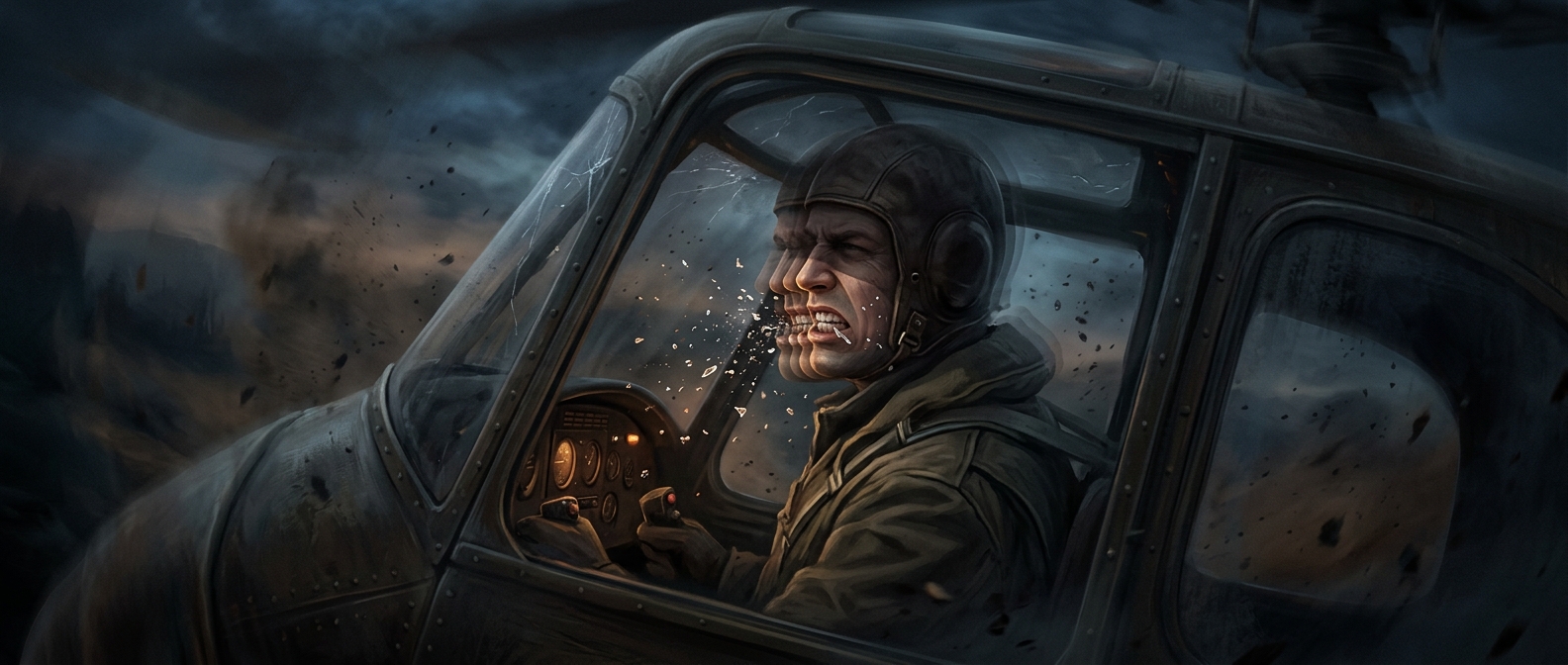
If those forces arrive faster than the aircraft and its controls can settle, vibration becomes more than a nuisance. The pilot feels it through the seat and controls, making precise inputs difficult. A helicopter can seem to buck even when the pilot is holding the controls steady.
The Hub Had to Manage Motion, Not Eliminate It
Rotor designers could not simply clamp the blades rigidly in place. A blade needs some freedom to move as lift changes; otherwise, loads would concentrate at the hub and blade roots. But unrestricted movement can let oscillations build. In-plane blade motion, called lead-lag, is especially important: a blade can surge ahead of or fall behind its expected position as the rotor turns.
Damping devices at the hub resist that back-and-forth motion, much as a shock absorber controls a car’s spring. They do not make the rotor motionless; they keep it from swinging too freely and transmitting large, repeated disturbances into the aircraft. Better control of those movements made the rotor system more manageable and the pilot’s job less punishing. The difference was felt directly at the controls: instead of fighting a machine that shuddered with every turn of the blades, the pilot could make deliberate adjustments.