Why Paimon’s Welcome Is Described as Loud
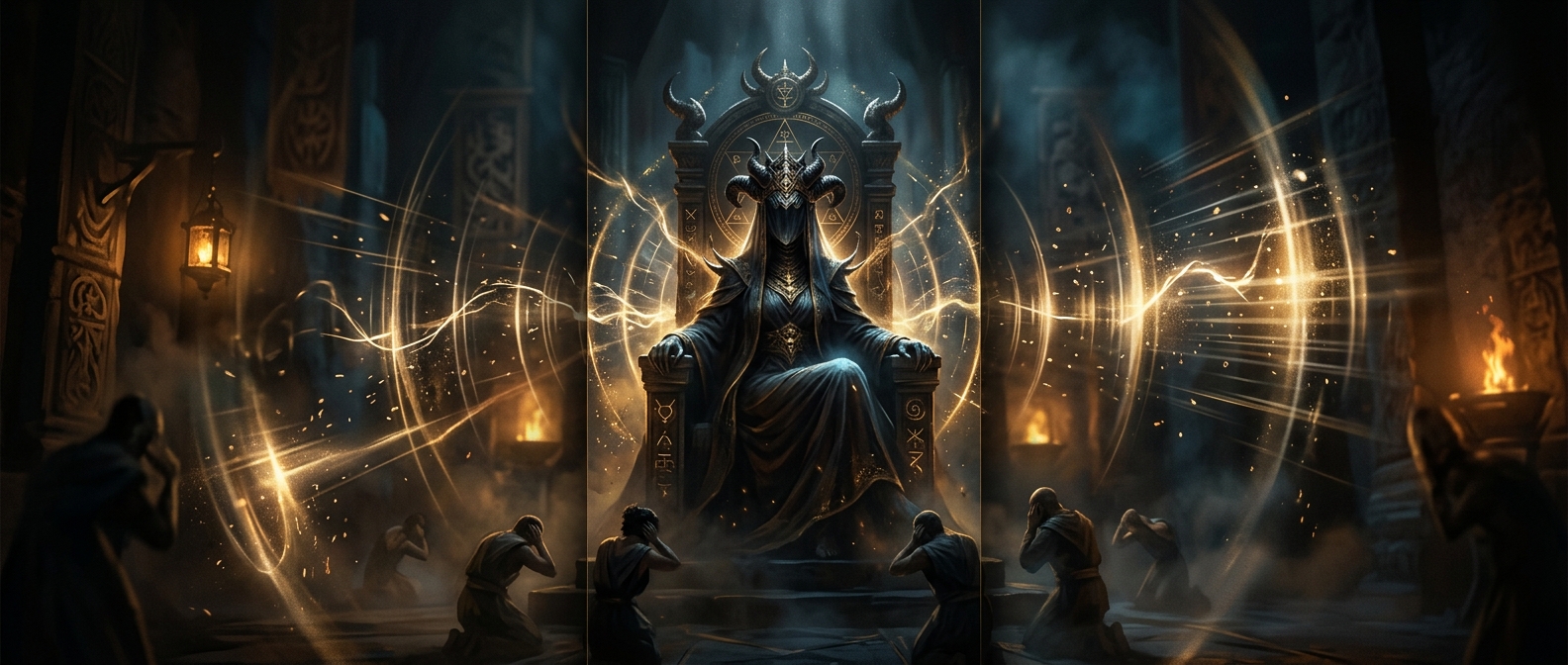
In some European occult manuals, Paimon is presented as a powerful spirit whose arrival is marked by sound. The instruction to greet him noisily belongs to the ritual language of those texts: sound makes an encounter feel formal, deliberate, and unmistakable. It is not evidence that noise can summon a supernatural being or control one.
Sound as a Ritual Signal
A loud greeting can serve a practical purpose within a ceremony. It separates the ritual from ordinary activity, focuses participants’ attention, and signals that the invocation has begun. Bells, horns, spoken formulas, and other sounds have played similar roles in many kinds of ritual because they make an otherwise invisible transition perceptible.
The claimed consequence—Paimon becoming uncooperative if the greeting is too quiet—also gives the instruction weight. It frames the spirit as an agent with preferences, not merely a symbol, and makes obedience to the prescribed procedure seem consequential. Such warnings are part of how an occult manual presents its ritual authority; they do not establish that the stated consequence occurs.
A Rule Within a Textual Tradition
Paimon’s portrayal varies across occult writings, and manuals do not necessarily agree on every ritual detail. Their instructions are best understood as claims within particular esoteric traditions, shaped by the texts and practices that preserve them. In that setting, the noise is more than decoration: it is a way to make the spirit’s supposed arrival—and the practitioner’s compliance—audible.