A narrow loch with an unusually deep basin
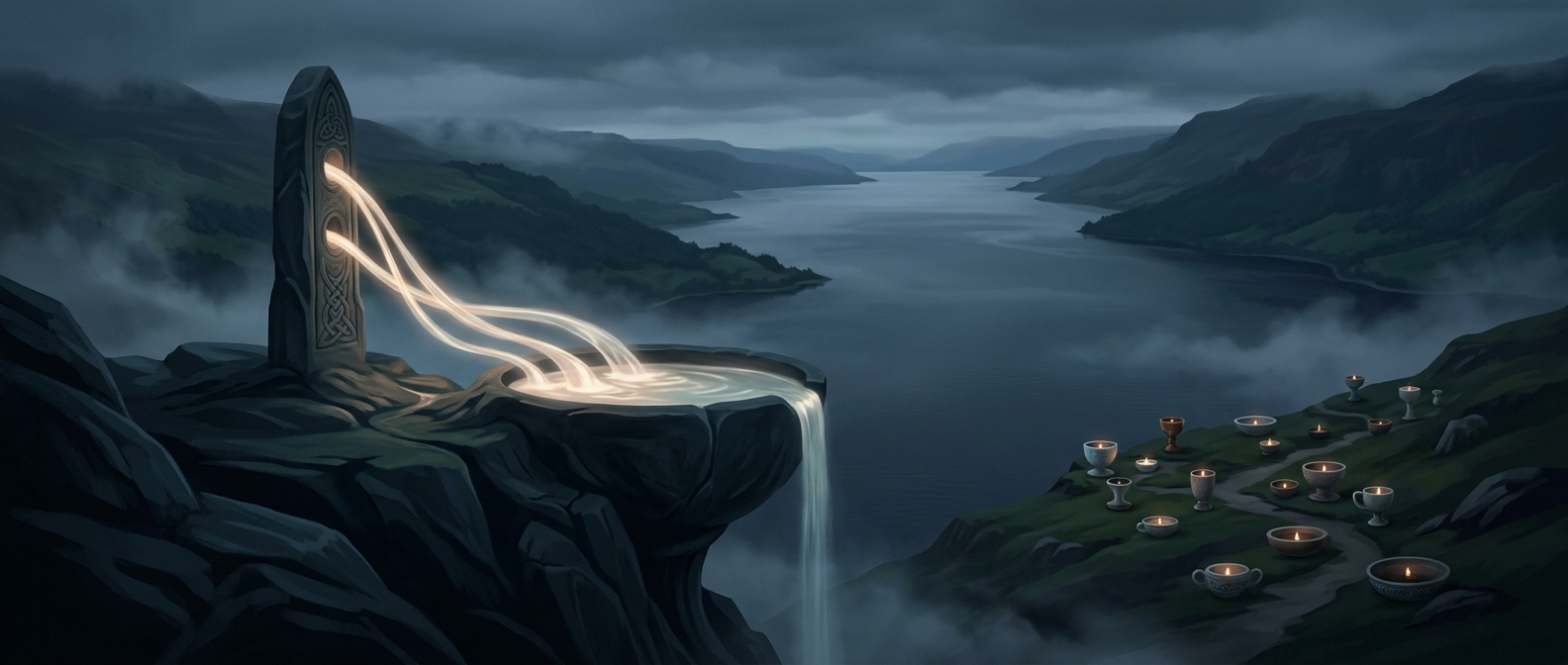
Loch Ness does not look large enough to contain so much water. Its surface area is modest compared with many broad lakes, but the loch is long, narrow, and exceptionally deep: parts of its basin descend to roughly 230 metres. The crucial measure is not how much shoreline a lake has, but how much space lies beneath it.
That basin was carved by glaciers. As moving ice ground through the Great Glen, it deepened a long trough in the landscape; when the ice retreated, water filled the hollow. The result is a loch whose steep sides conceal a great deal of volume below the surface.
Why the comparison surprises
“Could hold every lake in England” is a comparison of total water volume, not surface area. Add up the water in England’s lakes and it can still amount to less than the water occupying Loch Ness’s deep basin. The phrase “with room to spare” captures that imbalance: a single Scottish loch can outweigh a much larger-looking collection of English lakes because depth matters so much.
The comparison also helps explain a familiar feature of a visit: the shoreline gives little sense of the hidden landscape beneath it. From the road or a boat, Loch Ness can seem like a long stretch of dark water. Below, its glacial trough drops far deeper than its appearance suggests—making the loch’s concealed depth, rather than its visible expanse, the detail worth remembering.