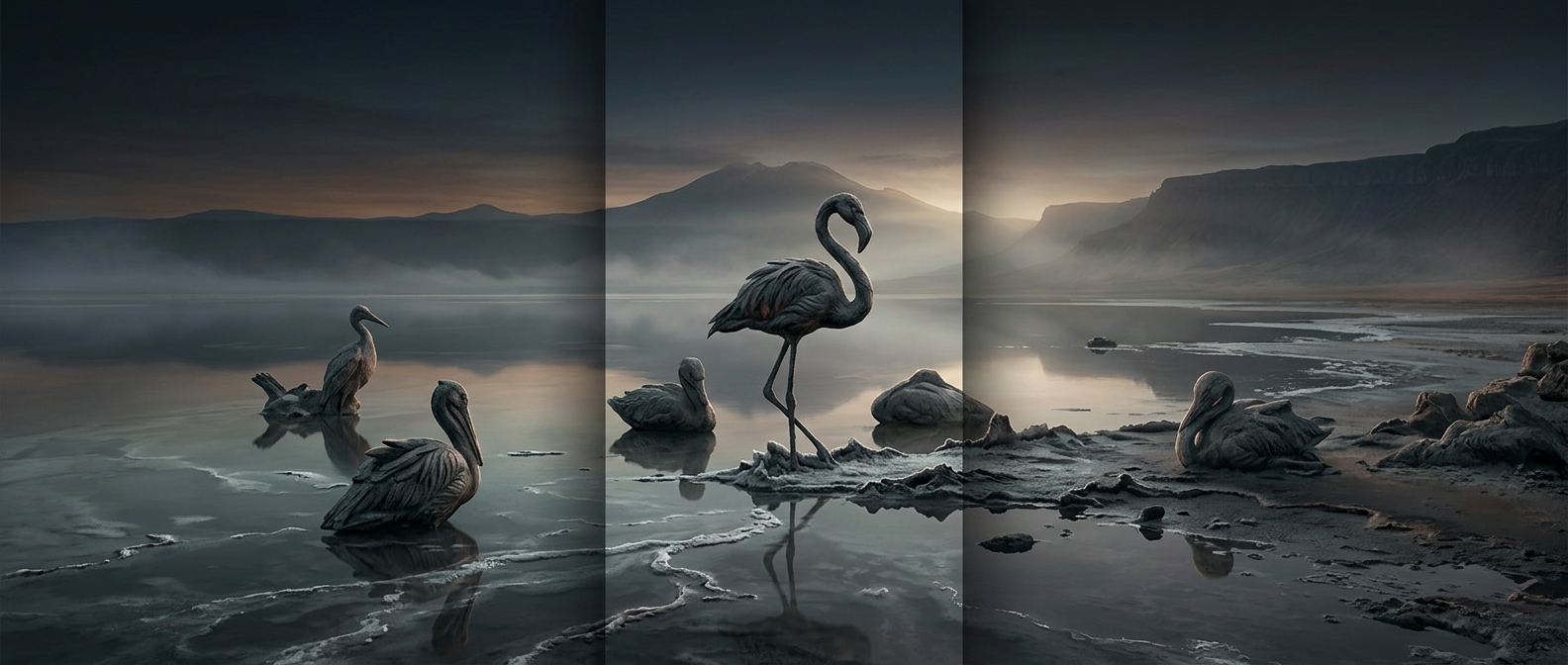
How Lake Natron leaves a mineral coating
Lake Natron sits in Tanzania’s Great Rift Valley, where volcanic minerals wash into a shallow lake and evaporation leaves dissolved salts behind. The water is strongly alkaline—more like a concentrated mineral solution than an ordinary freshwater lake. When a dead animal remains in or near the water, mineral-rich water can deposit salts on its body as it dries, helping preserve its shape and giving it a hard, stone-like appearance.
That is a coating and preservation effect, not a living animal being instantly transformed into rock. The stiff, posed look comes from the remains holding their shape as they dry and become encrusted.
A harsh lake with a living shoreline
The same chemistry makes Natron an extreme environment for many animals. Yet lesser flamingos gather there in huge numbers: the lake’s shallow, salty margins provide feeding and nesting habitat, while the harsh conditions discourage many potential predators. The lake is not simply a graveyard; its chemistry helps shape which species can thrive around it.
For visitors, the contrast is striking: the mineral crusts on a dead animal can resemble stone sculpture, while nearby flamingos depend on the same unusual waters as a refuge.