When a Game Controller Became a Racket
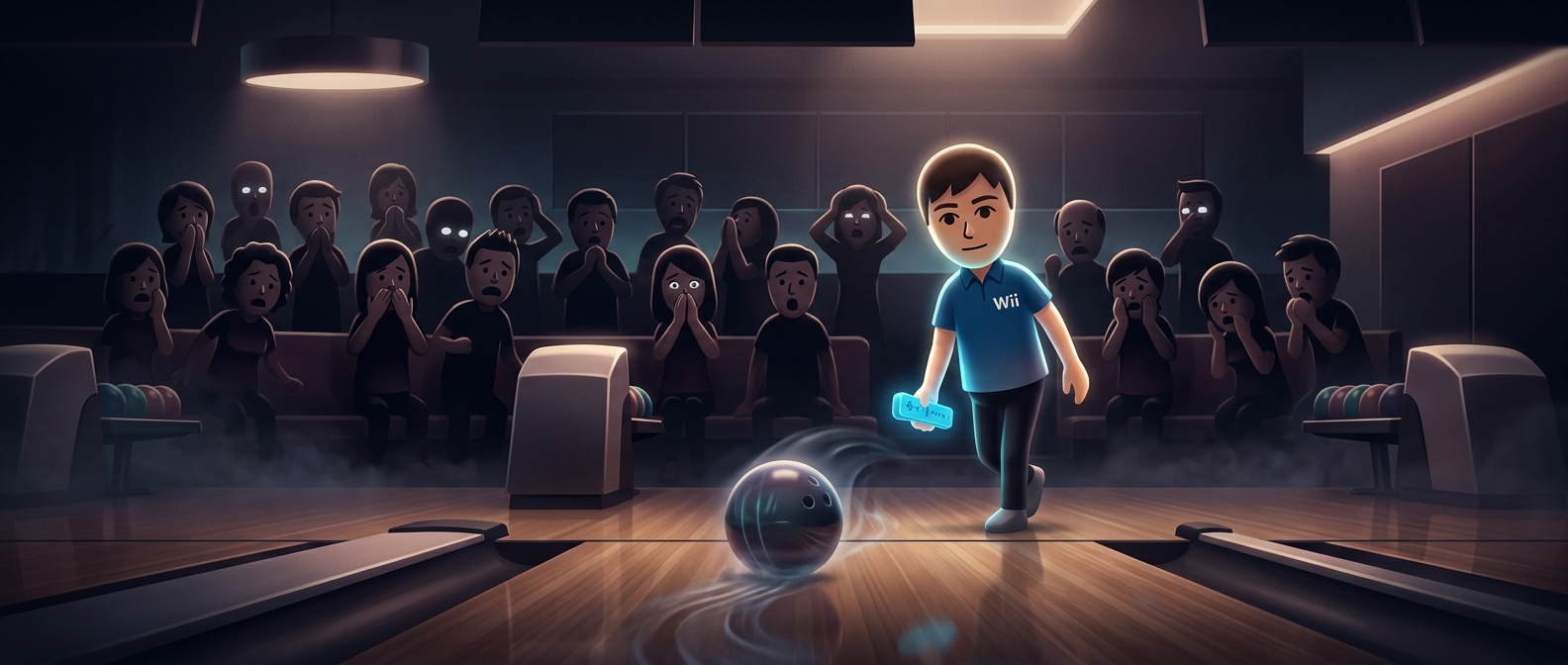
The Wii made movement part of the interface. Its motion-sensitive remote let players swing, bowl, or serve with an arm gesture, while the game translated that movement into an action on screen. But a virtual tennis ball offered no physical resistance—and the remote did not require a player to use a real racket’s measured, controlled stroke.
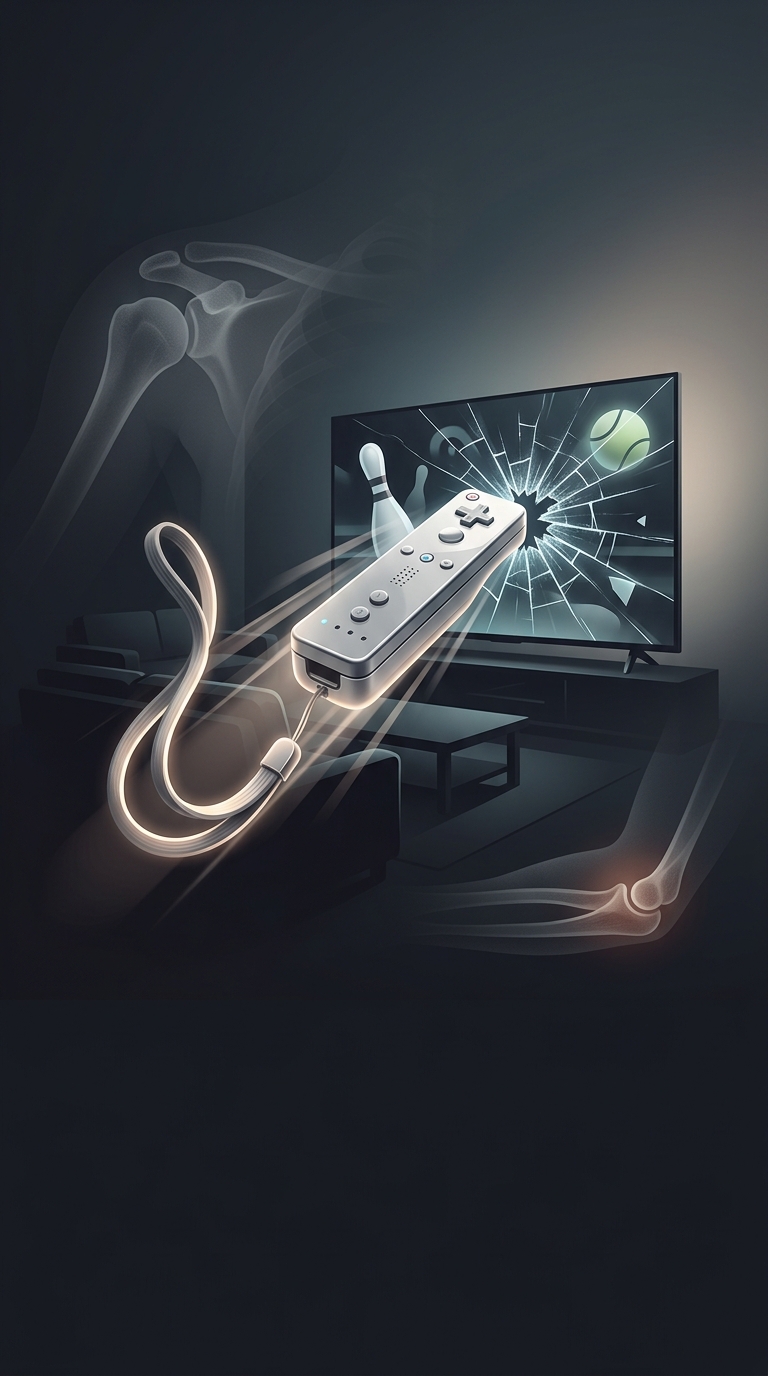
That gap mattered. Players could repeat broad swings, tense their muscles, or play longer and harder than they would during a casual game. In the confined space of a living room, an enthusiastic backswing could also meet a wall, furniture, or another person. Wrist straps and clear play space reduced some risks, but they could not prevent overuse or a poorly controlled movement.
Why Doctors Called It “Wiiitis”
Doctors used “Wiiitis” as a playful name for inflammation and pain associated with vigorous Wii play. One reported pattern resembled tennis elbow: repeated arm and wrist motions strained tissues around the elbow, even though the player had never held a tennis racket. Forceful swings could also aggravate the shoulder.
The term captured a familiar bodily process, not a mysterious new disease. Muscles and tendons adapt to ordinary demands; sudden, repetitive exertion can irritate them, especially when someone is unaccustomed to the movement. A person may feel fine during play and notice soreness later, making the game itself an easy cause to overlook.
The episode revealed a design tradeoff in motion-controlled games: making play feel physical can invite players to move as if the action were physical, while the screen supplies neither the resistance nor the boundaries of a real sport. A living-room tennis match could therefore leave its mark not on the scoreboard, but in a sore elbow—or a swing that carried farther than the room allowed.