A Writer’s Face Became Max Payne’s
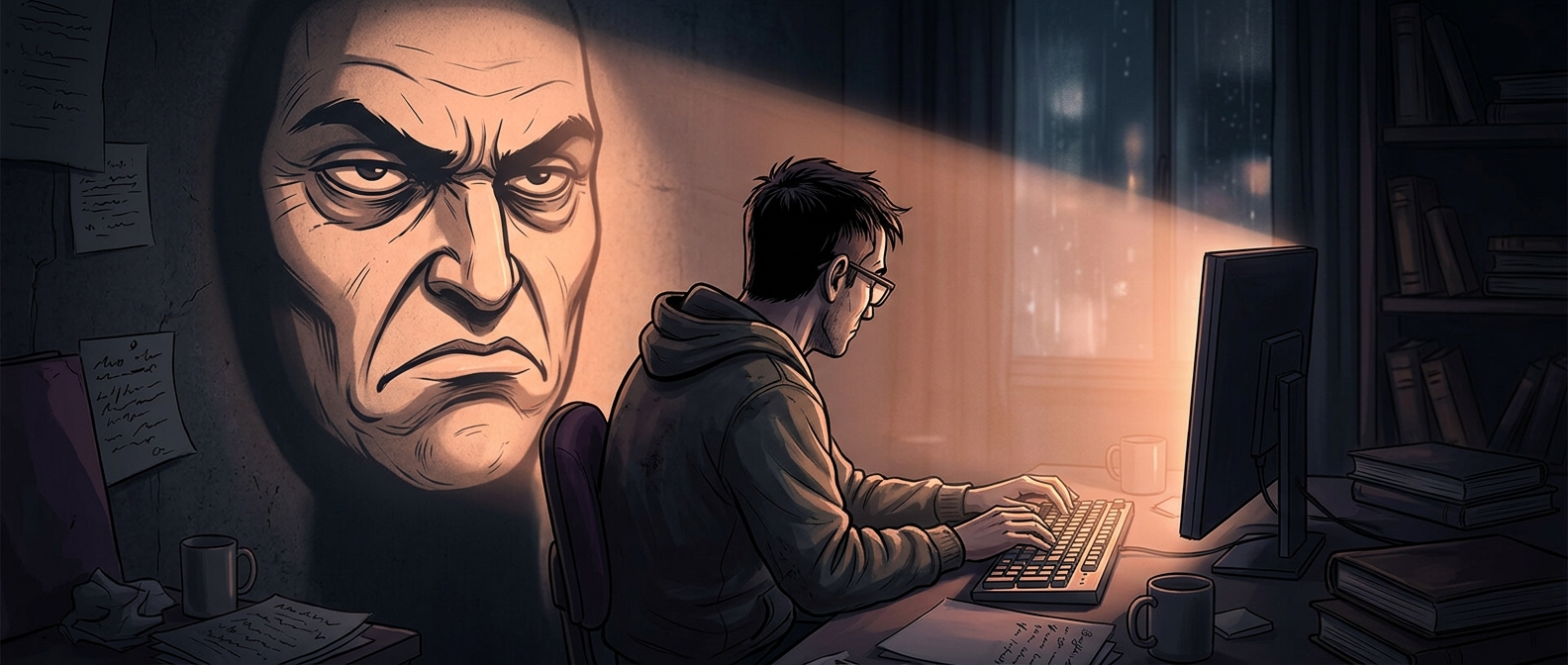
In the original Max Payne, the hero’s face was modeled on Sam Lake, the game’s lead writer. That choice turned a practical limitation into a recognizable part of the character’s look: instead of building the image around a conventional action-star face, the developers used a familiar, slightly uneasy expression that suited a hard-bitten detective.
The face was mapped onto the character model as a texture—a flat image fitted to the surface of a three-dimensional figure. The model could move through the game’s environments, while the image supplied its visible facial features. A real person’s photographed features do not automatically behave like a fully animated face, so the result could look stiff or unusually fixed. Lake’s squint became part of that effect rather than something hidden by it.
A Constraint That Became a Signature
The choice also fit the game’s larger presentation. Max Payne told much of its story through comic-book-style panels, a format that could carry character close-ups and dramatic narration without requiring every moment to play as a fully animated scene. The stylized face felt at home in that world: less like a polished movie performance than a stark image in a crime comic.
Lake’s likeness did more than save the studio from creating another face from scratch. It gave the game a visual identity that players could recognize—and made the writer himself part of the character’s on-screen presence.