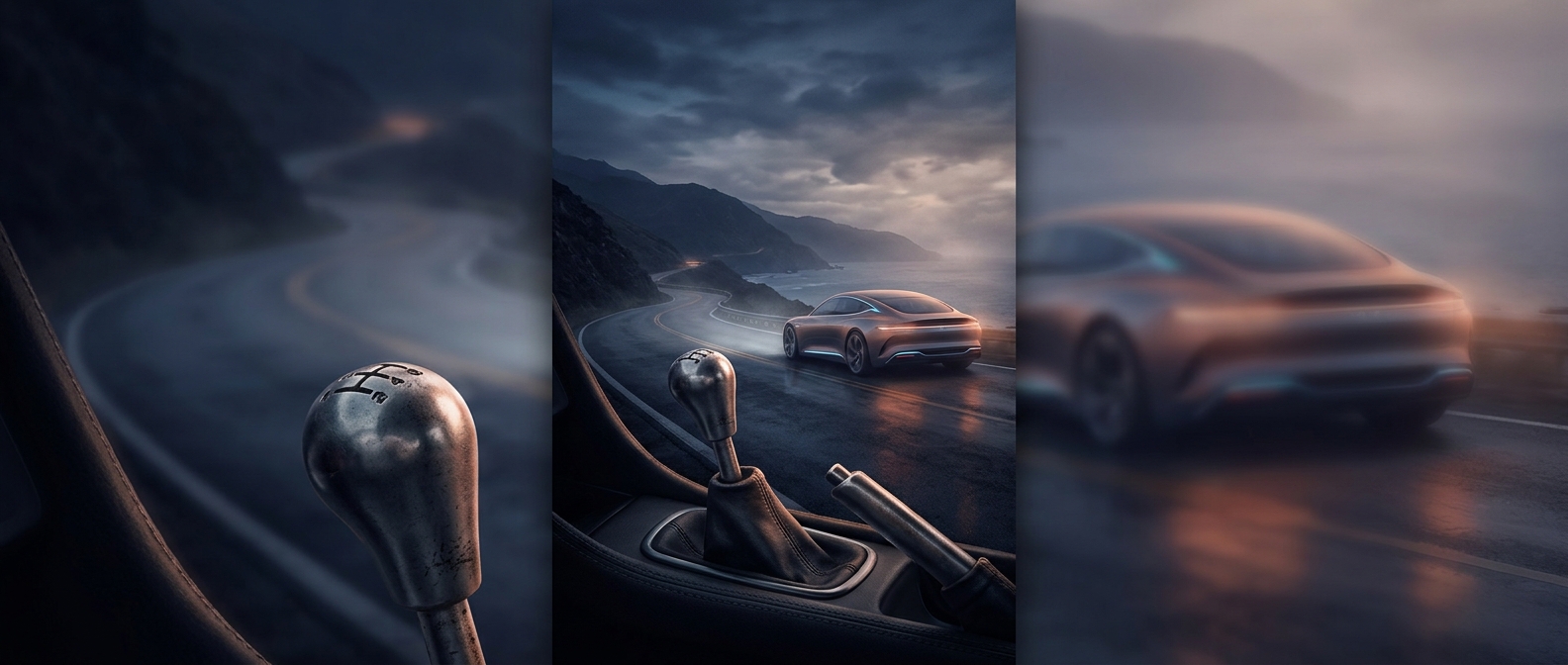
How the automatic took over the driver’s job
In a manual car, the driver has to interrupt the engine’s connection to the wheels with a clutch, select a gear, then reconnect it. An automatic handles those changes internally. In many traditional designs, hydraulic fluid carries power from the engine while planetary gears and internal clutches change the ratio—so the driver can accelerate without operating a clutch pedal or gear lever.
That difference matters most in stop-and-go traffic. A manual driver repeatedly works the clutch and shifts; an automatic driver mainly uses the accelerator and brake. The automatic did not make manual shifting impossible or less capable. It made the extra work harder to justify for drivers who wanted a car simply to get through daily trips.
Convenience changed what buyers expected
As automatics became familiar and widely available, buyers could choose ease of use without treating it as a special feature. Carmakers responded to that demand, and each new automatic-equipped car made the option more ordinary. Meanwhile, fewer drivers learned to use a clutch, shrinking the pool of people who actively wanted a manual. The transmission’s advantage reinforced itself: more automatic buyers encouraged more automatic offerings, while fewer manual drivers weakened the case for keeping manuals common.
Manuals still appeal to drivers who want direct control over gear selection, and they remain available in some cars. But in places where automatics dominate, a manual can also function as a simple theft deterrent: someone who cannot operate the clutch may not be able to drive the car away. That is a side effect of a once-common skill becoming uncommon—not a security system, just a barrier for an unprepared driver.