How a beam becomes a cutting tool
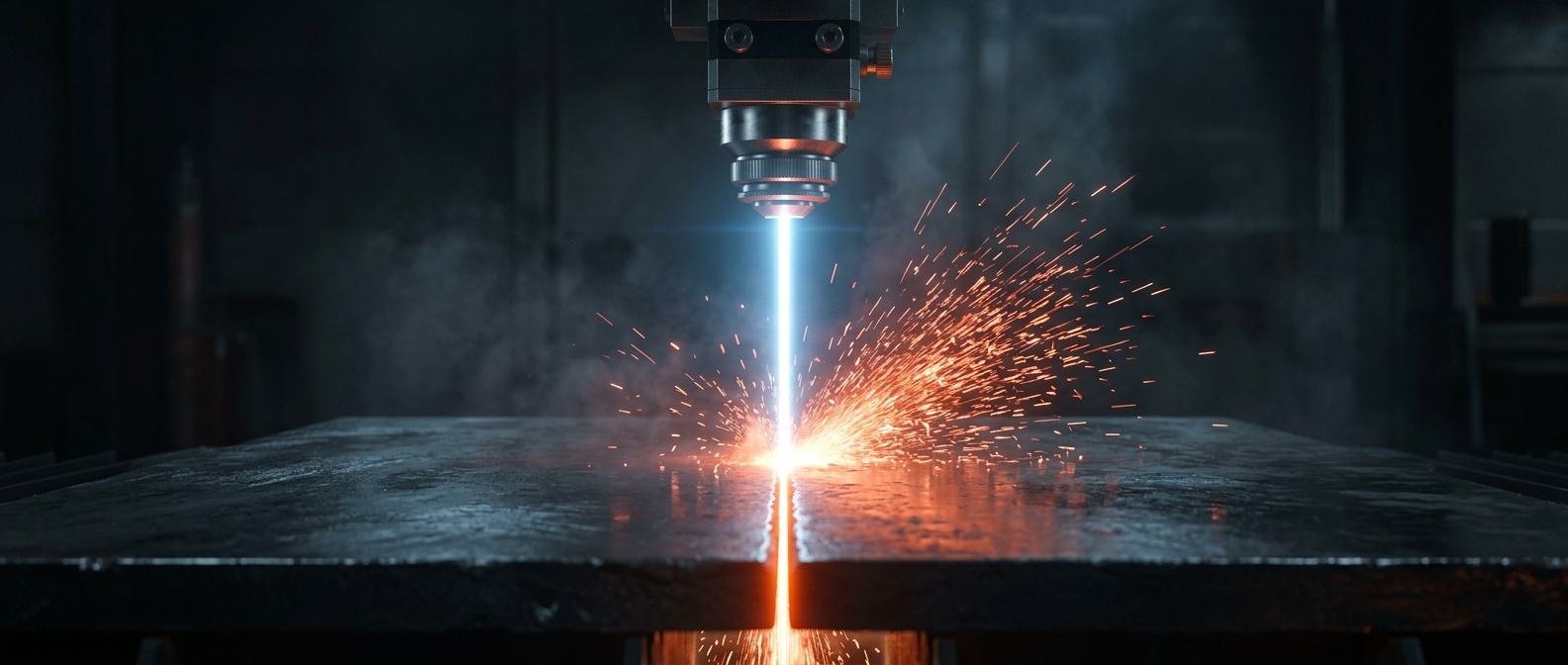
A cutting laser does not push its way through steel like a saw. Optics concentrate light into a tiny spot, packing enough energy into a small area to heat the metal rapidly. Depending on the process and material, the steel melts—and some may vaporize—along a narrow path.
A nozzle directs assist gas at that hot spot. The gas helps clear molten metal from the cut, so the beam can keep advancing instead of traveling through a pool of its own debris. The resulting opening, called a kerf, can be narrow and precisely controlled.
Why factories rely on precision
In many systems, the laser head stays fixed while a computer-guided machine moves the sheet beneath it; in others, the head moves. Either way, digital instructions can guide the beam through detailed outlines and repeated parts. Changing the design may require a new cutting path rather than a new physical cutting tool, which is useful when a factory needs varied shapes or frequent revisions.
That precision has limits. Cutting speed and quality depend on the steel’s thickness and composition, the laser’s power, and the chosen settings. Very thick material can take longer to cut, and the cut edge may need finishing. The practical advantage is not that a laser can slice any steel effortlessly: it is that manufacturers can direct intense heat along a controlled path, producing complex metal parts without a blade contacting the sheet.