When the round counter runs out of room
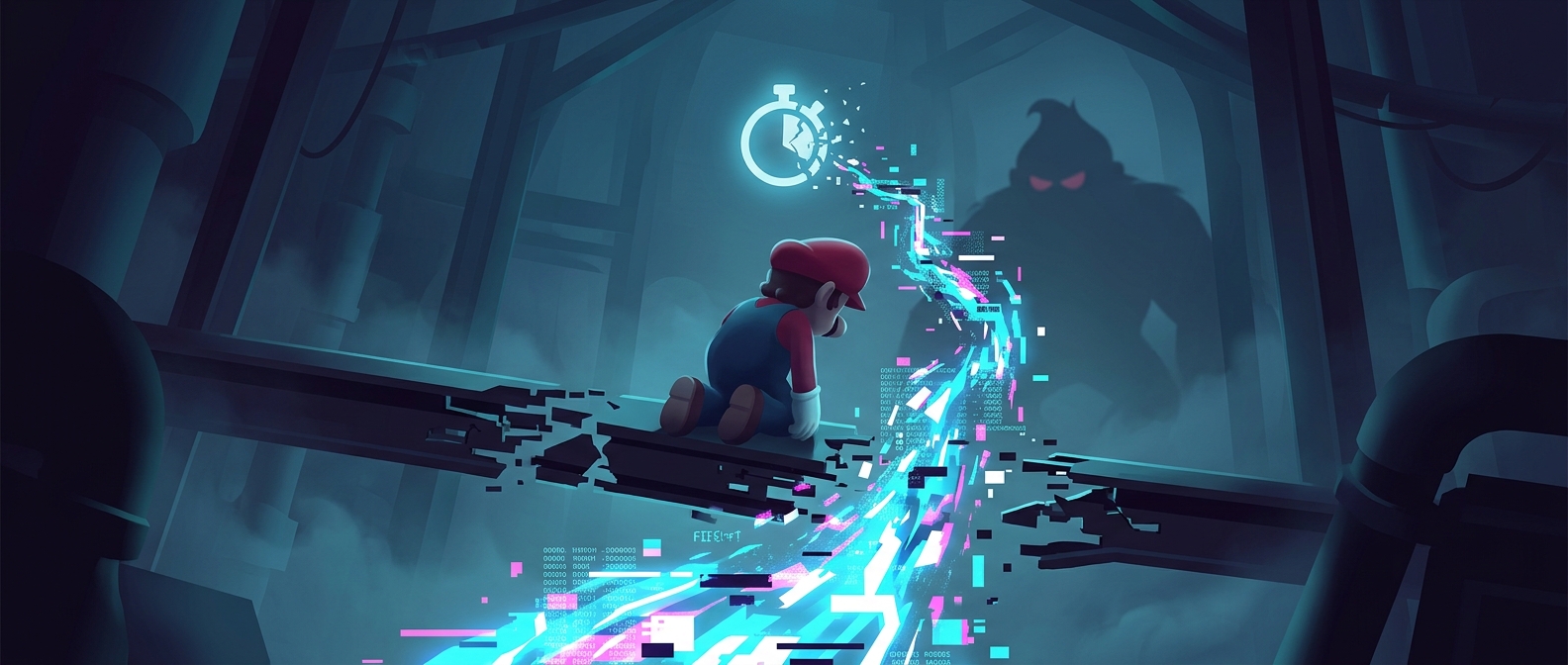
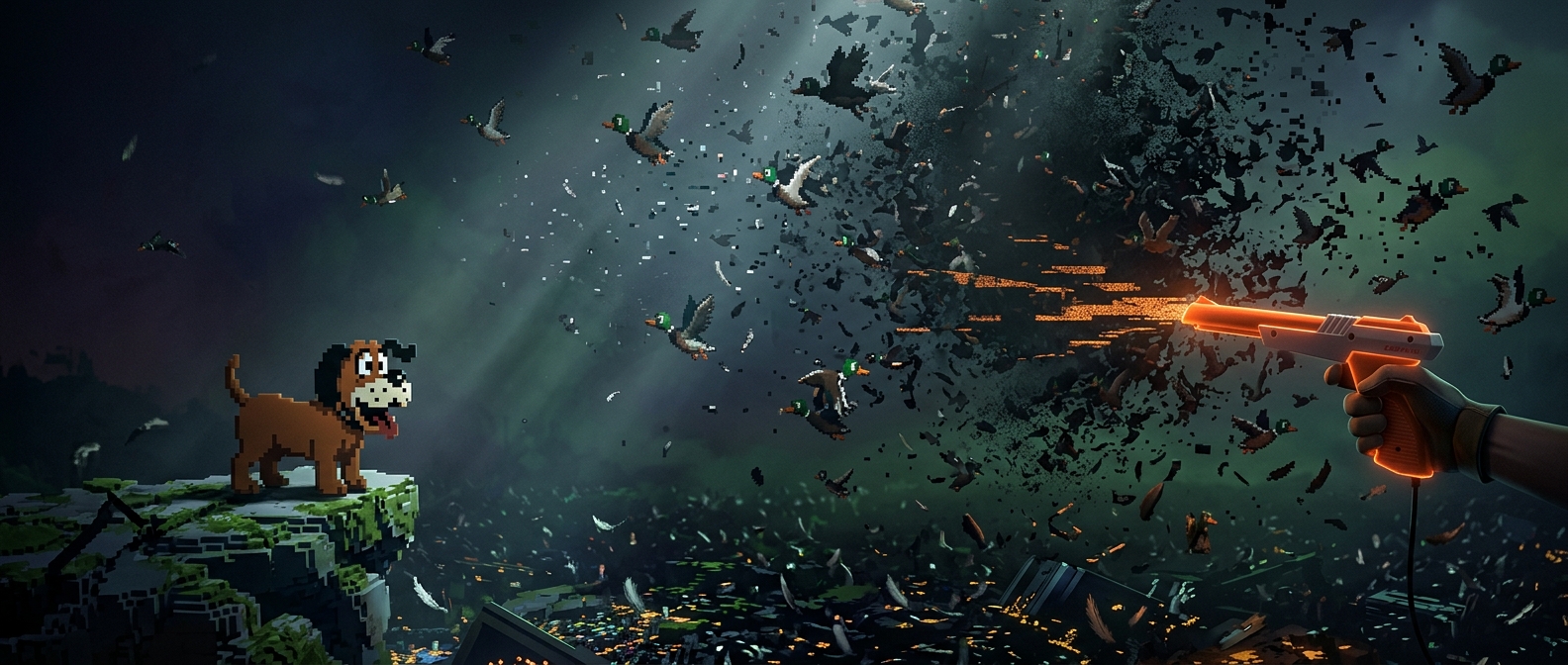
Duck Hunt was built around numbered rounds that grow harder as you progress. At round 99, that two-digit counter has reached its visible limit. When it rolls over to 0, the game no longer behaves like a normal next round: the ducks begin darting in erratic, extraordinarily fast patterns.
The important distinction is that the counter’s rollover is not a clean reset of the whole game. It changes the round number, but the game continues into a state its ordinary difficulty progression was not designed to make playable. The result is often called a kill screen: a point where the game still runs, but its behavior makes meaningful progress effectively impossible.
A challenge that becomes a software edge case
In ordinary rounds, a player can anticipate a duck’s movement and move the NES Zapper to meet it. At the rollover, that familiar rhythm breaks down. The ducks’ abrupt movement leaves too little time to track and shoot them consistently, so skillful play stops being a reliable answer.
That makes round 99 less like a deliberately tuned final boss than a boundary in the game’s progression. The counter reaches its limit, and the behavior that follows exposes what happens when a game’s numbering and difficulty systems continue past their intended range. The screen still asks you to hunt—but the ducks are moving on terms the player can scarcely follow.