From intended movement to cursor movement
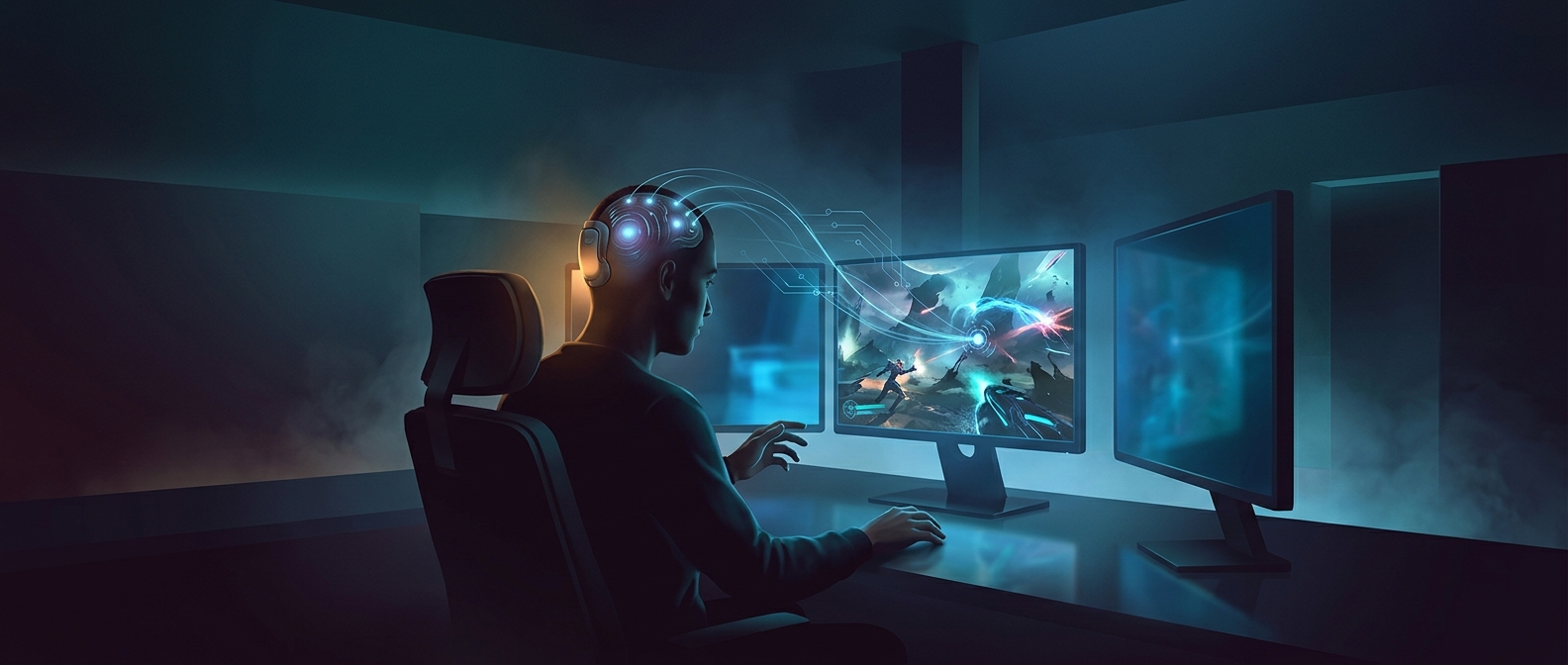
The implant does not read a sentence in Arbaugh’s mind or detect a tiny hand motion. Instead, it records electrical activity from neurons in the motor cortex, a brain area involved in planning and controlling movement. When he imagines moving his hand, patterns in that activity change. A computer system learns which patterns tend to correspond to cursor directions and translates them into commands.
That translation is the key step: the brain signal is not itself a mouse movement. Software must interpret it, then move the on-screen pointer. The result is a control loop—Arbaugh intends a movement, the cursor responds, and he can adjust his next intention based on what he sees.
Why a strategy game fits
Civilization VI presents a different challenge from a game built around rapid reflexes. It is turn-based: players can inspect the map, choose an action, and take time before the next turn. That gives a cursor-controlled player room to steer the pointer to a target and make decisions without needing continuous, split-second inputs.
The game also makes the value of cursor control tangible. A pointer can select units, inspect locations, and navigate menus—the same kinds of computer interactions that make ordinary software usable. The significant achievement is not that the implant supplies game knowledge; it gives Arbaugh a way to act on his own decisions through a computer interface.