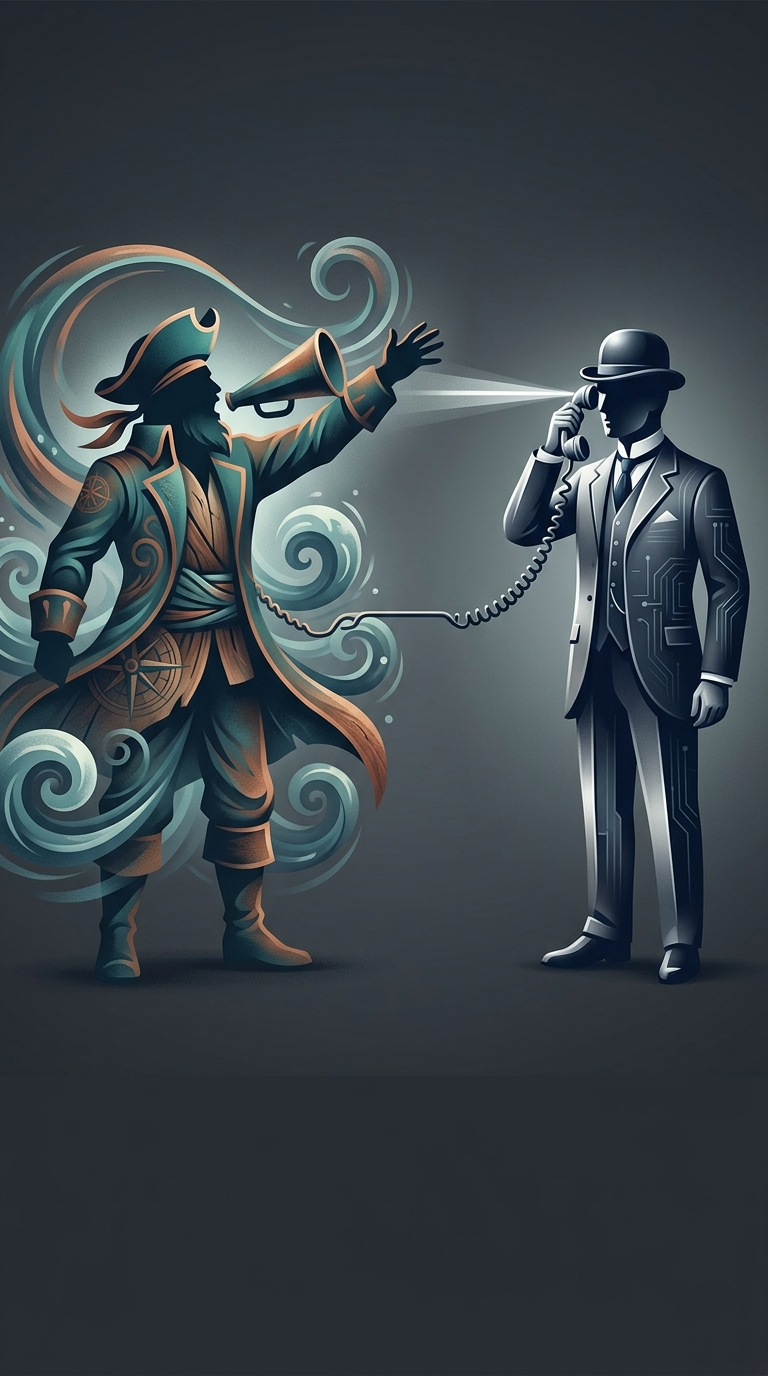
A greeting had to survive a bad connection
When telephones were new, answering one was not yet a settled social ritual. A caller’s first words had to do a practical job: get the other person’s attention over a line that could crackle, hiss, or carry voices unevenly. A short, recognizable greeting mattered because the listener might not know who was calling—or even be sure the connection was open.
Thomas Edison favored “hello” for that opening call. It began with a strong, noticeable sound and was familiar enough to be understood as a greeting. Alexander Graham Bell preferred “ahoy,” a nautical call used to hail someone at a distance. Both choices addressed the same problem, but Edison’s was better suited to becoming an everyday response on a telephone.
How a suggestion became a habit
A device does not arrive with all its social rules attached. People have to learn how to start a call, take turns speaking, and signal that they are listening. A consistent first word made that exchange easier, especially when the line was uncertain. Once “hello” was used in telephone guidance and repeated by callers, each new conversation reinforced the convention.
That is why Edison is widely credited with helping make “hello” the standard telephone greeting. The story is less a contest settled by a single technical test than an example of how a practical suggestion can become a shared custom: one option is adopted, repeated, and eventually feels natural.
Why “ahoy” lost the call
Bell’s “ahoy” did not vanish from the language; it simply failed to become the routine word people used to answer the telephone. “Hello” already worked as a recognizable attention-getter, and repeated use gave it an advantage that a rival greeting could not easily overcome. Once callers expected to hear it, the word helped make an unfamiliar machine feel like an ordinary conversation. Bell’s preferred greeting was left sounding more like a hail across water than an answer at home.