Why the visor stops short
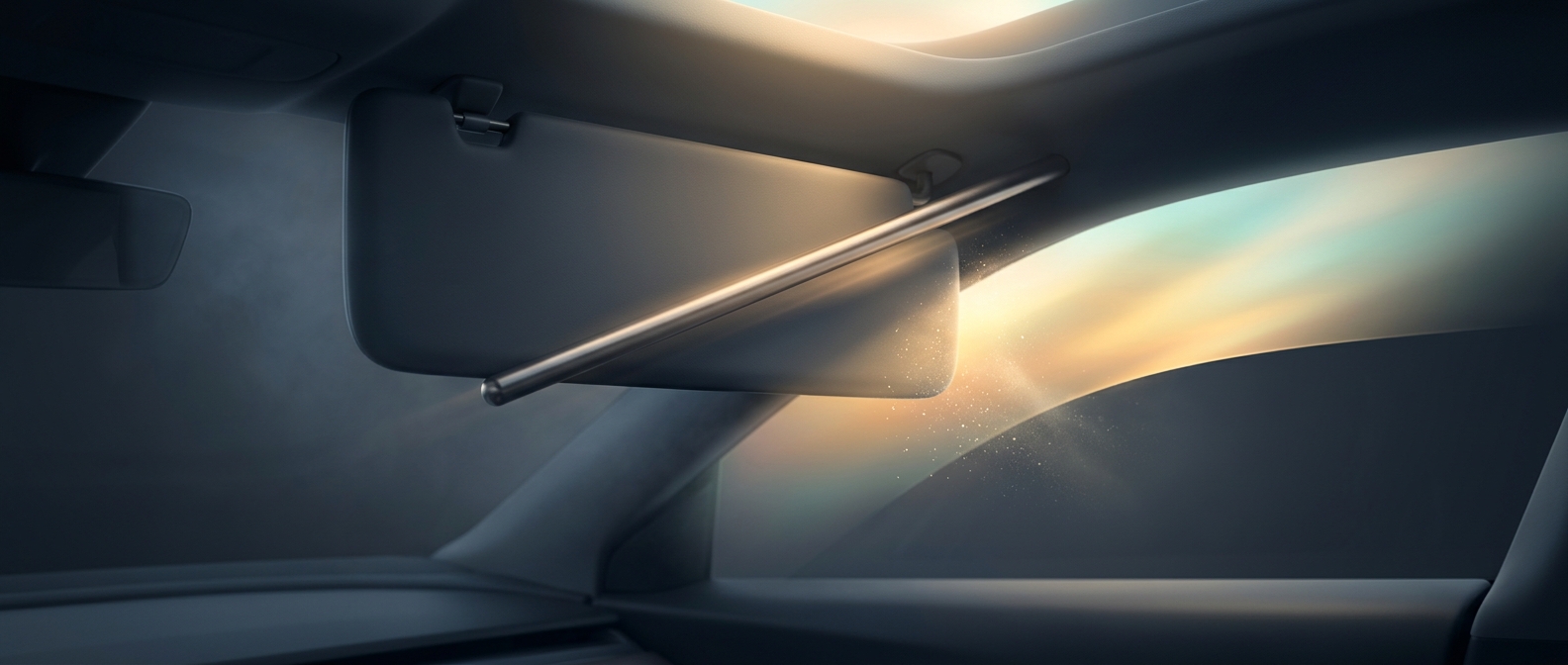
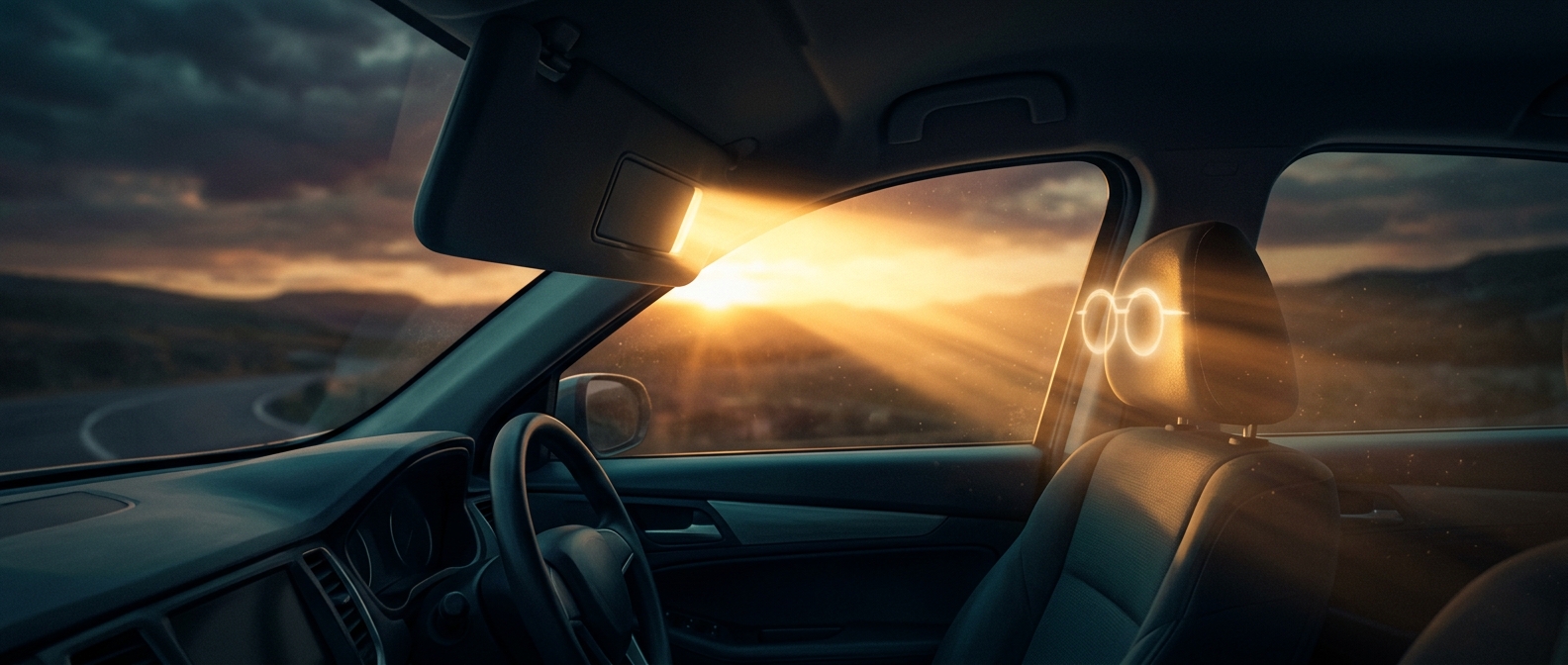
A car’s sun visor is mounted above the windshield, where it can swing down to block light coming through the front glass. But the driver’s view is also bordered by the side window and the thick frame between the windshield and that window, called the A-pillar. A visor in its normal position does not reach far enough sideways to cover that area.
The gap becomes especially noticeable when the sun is low. Its rays travel nearly horizontally through the side window, reaching the driver’s eyes even though the visor is lowered. The visor has not failed; it is aimed at a different part of the glass.
Extending the shade sideways
Many visors can be unhooked from their inner mount and swung toward the side window. Some also slide along a built-in extension, letting the driver cover more of the opening without moving the whole visor out of position. These adjustments turn one shade into a limited, movable screen for two different directions of sunlight.
The design has to leave room for the visor to fold up when it is not needed and avoid obstructing the driver’s view. So it cannot simply be a broad panel covering every angle. The tradeoff is familiar: a visor sized and placed for the windshield may leave a narrow but perfectly aligned route for side light—right where a low sun can make the drive suddenly harder to see.