A machine built to spare a person’s fingers
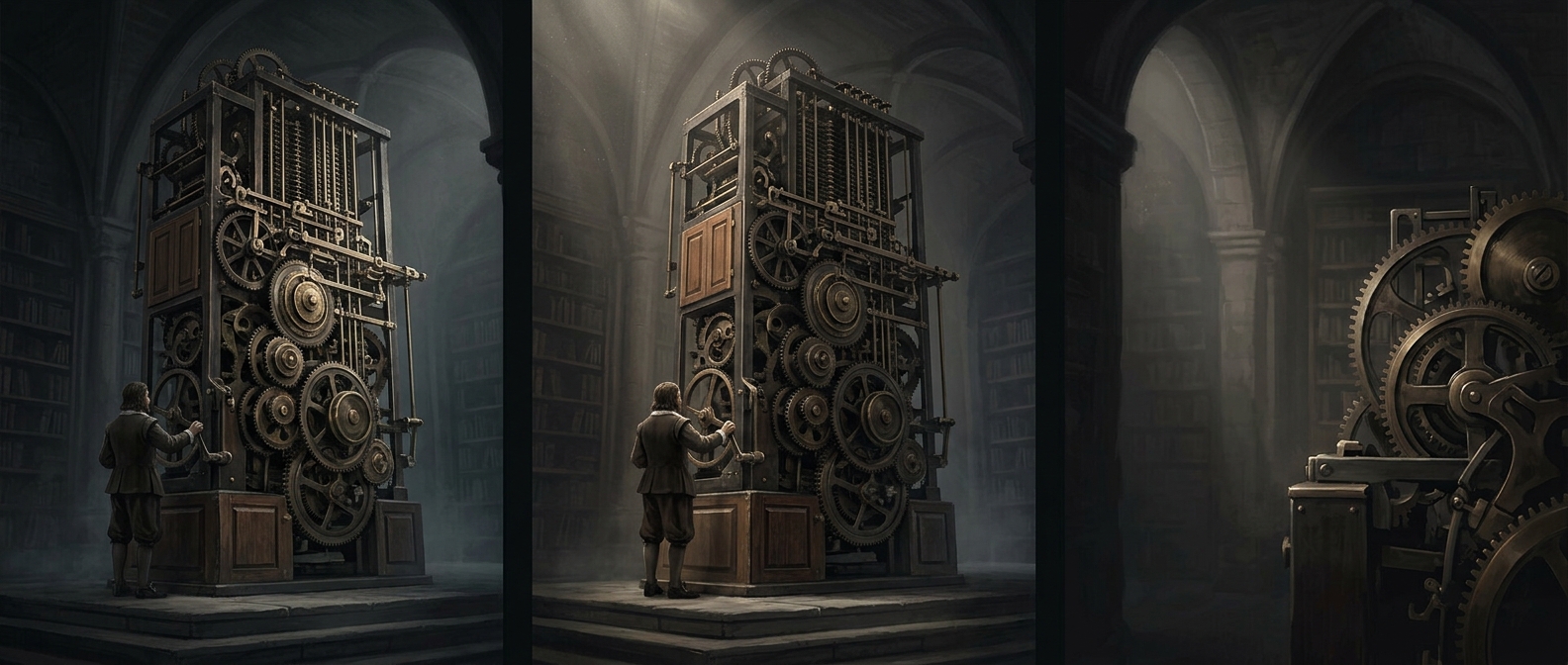
In the 1640s, Blaise Pascal set out to help his father, a royal tax official, with the repetitive arithmetic his work required. The result, now known as the Pascaline, moved calculation from handwritten columns to a row of numbered wheels. The operator turned a wheel to enter a digit; inside the box, linked gears represented the number and updated the displayed total.
The tricky part was carrying a one
Adding across place values requires more than turning one wheel. When a digit passes nine, the next wheel must advance by one—the mechanical equivalent of carrying in written arithmetic. Pascal’s design used a mechanism that could transfer that movement from one place to the next. Subtraction worked through the machine’s number-setting procedure, rather than by simply reversing the gears.
That transfer had to happen reliably, with small parts moving in a precise sequence. If a wheel stopped short or the mechanism failed to engage, the displayed result could be wrong. A machine that saved effort when it worked also demanded careful handling and repair.
Automation had a narrow boundary
The Pascaline did not decide what numbers to enter, check whether the underlying accounts were correct, or eliminate the need for a person to operate it. It took over a specific, repeated action: manipulating digits and carrying them between places. Its weight and mechanical sensitivity made it a poor substitute for all the surrounding labor.
That boundary is what makes the device an important step in calculation history. It showed that arithmetic could be embodied in moving parts—but also that automating a task does not automatically make the whole job easier.