The grab’s reach is a game rule, not a drawing
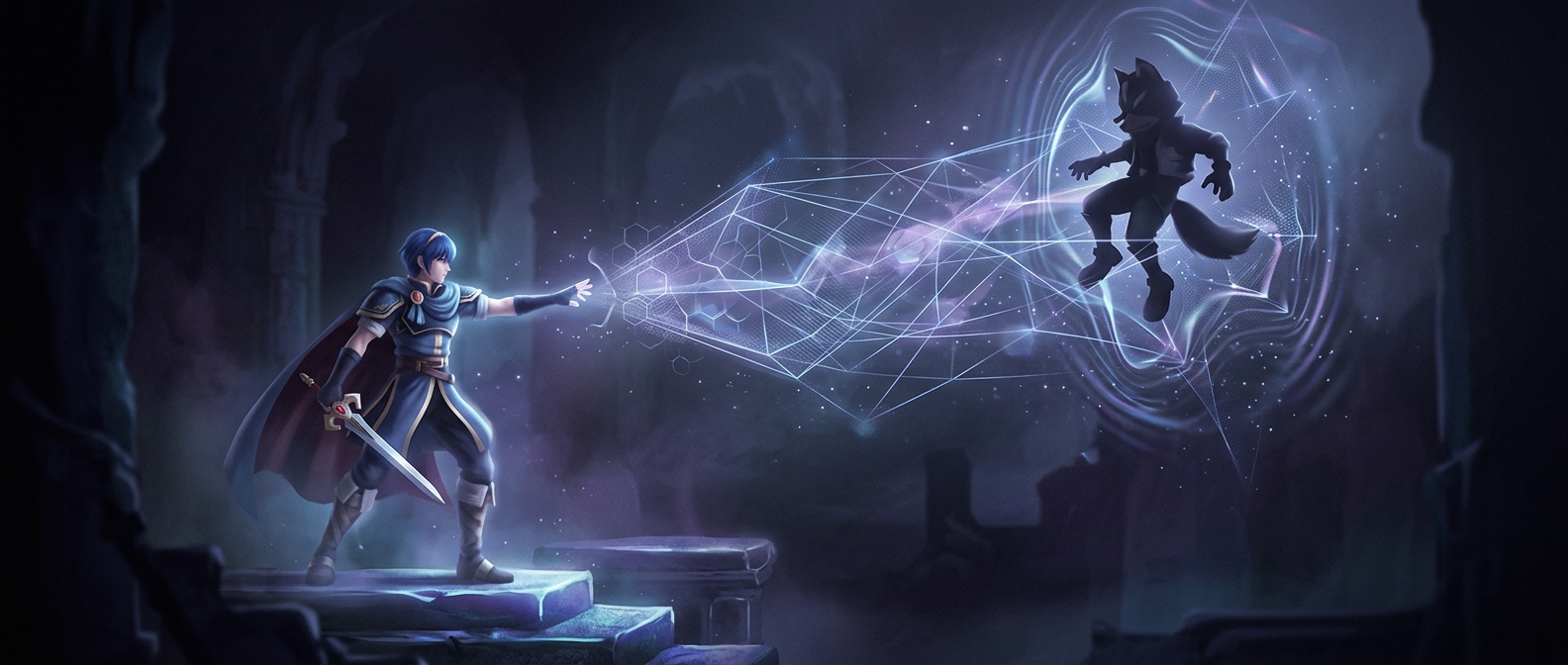
In Super Smash Bros., Marth’s grab is checked by an invisible region attached to the move’s animation. That region can extend past the visible hand and body, so an opponent may be caught even when the two characters appear not to touch. The apparent mismatch comes from the game’s collision geometry: the character model is what players see, while separate hidden shapes determine whether moves connect.
Why that extra space matters
A grab is especially useful against an opponent who is holding shield. Many ordinary attacks are blocked by a shield; a grab can catch the defender instead. Marth’s extended reach lets him threaten that response from farther away than his animation suggests, making a shield feel less safe at the edge of his range.
The reach is not a guarantee. The opponent still has to be in the grab region while it is active, and can avoid it by moving, jumping, or otherwise escaping the timing. For the Marth player, the practical lesson is to judge spacing by the move’s actual reach—not by where the hand appears to stop. That small visual gap can be exactly where a shielded opponent gets caught.