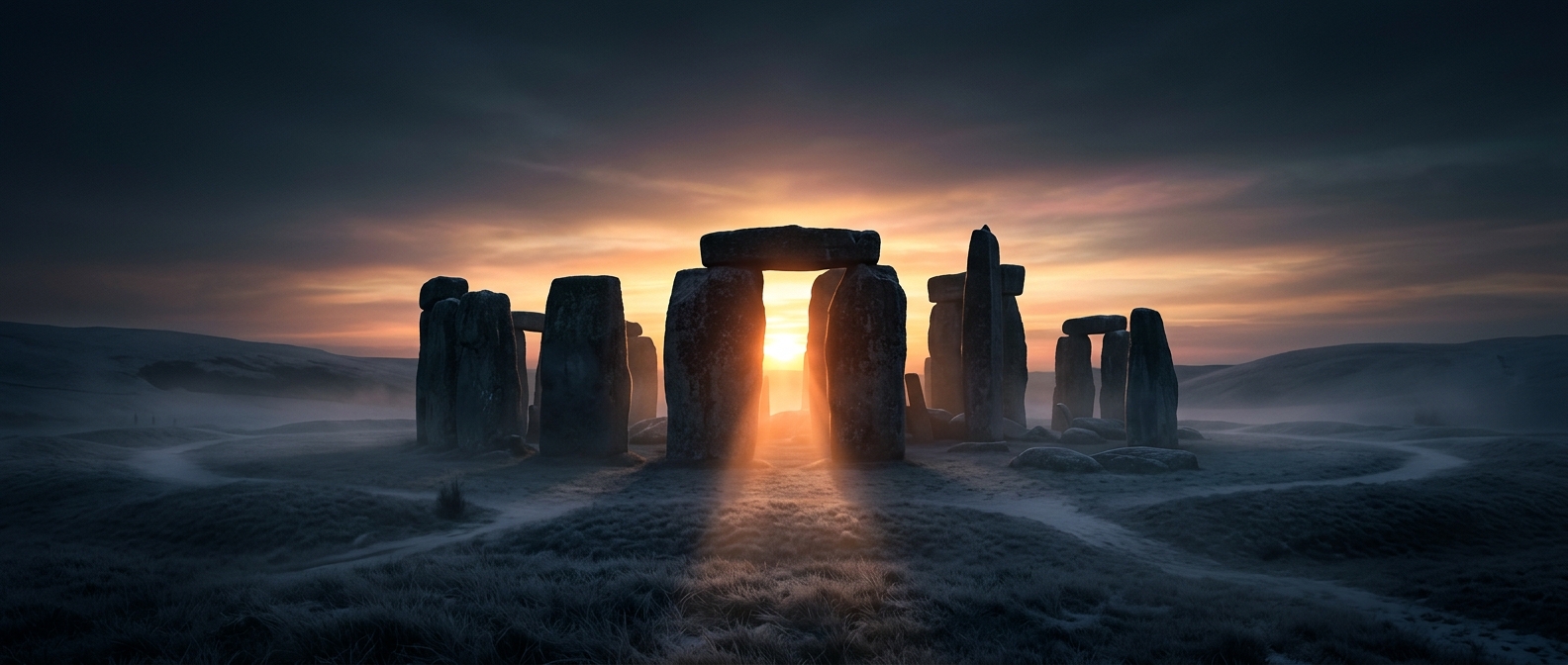
Stonehenge’s stones carried more than weight
The smaller stones inside Stonehenge are called bluestones, a catch-all name for several kinds of rock that look bluish when freshly broken. Their geological makeup points to the Preseli Hills in western Wales, far from the monument on Salisbury Plain. That match makes the stones’ journey part of the mystery: the builders had to move immense blocks through a landscape without wheeled freight or engines.
A journey built from many small efforts
No surviving account records how the stones were transported, and the exact route remains uncertain. One plausible method was to haul them on wooden sledges, easing their movement with prepared tracks and ropes. Water could have helped on parts of the route, with rafts carrying stones along rivers or coastlines. Each method would have brought its own obstacles; a route that worked on level ground might fail on a steep slope or in a bog.
The challenge was not simply pulling hard. A team had to keep a heavy stone stable, coordinate its movement, and negotiate changing terrain. Moving the blocks likely meant repeated, organized work by many people—not one dramatic act of strength.
Why bring stone from so far away?
The builders could have used local rock, yet they incorporated these distant stones into the monument. That choice suggests the material, its place of origin, or the effort of bringing it there mattered to the people who built Stonehenge. The precise meaning is unknown, but the stones made a distant landscape part of a lasting ceremonial place.
The striking detail is that the transport itself became part of the monument’s story: the stones connect Stonehenge not only to its builders’ labor, but to a place in Wales many generations away.