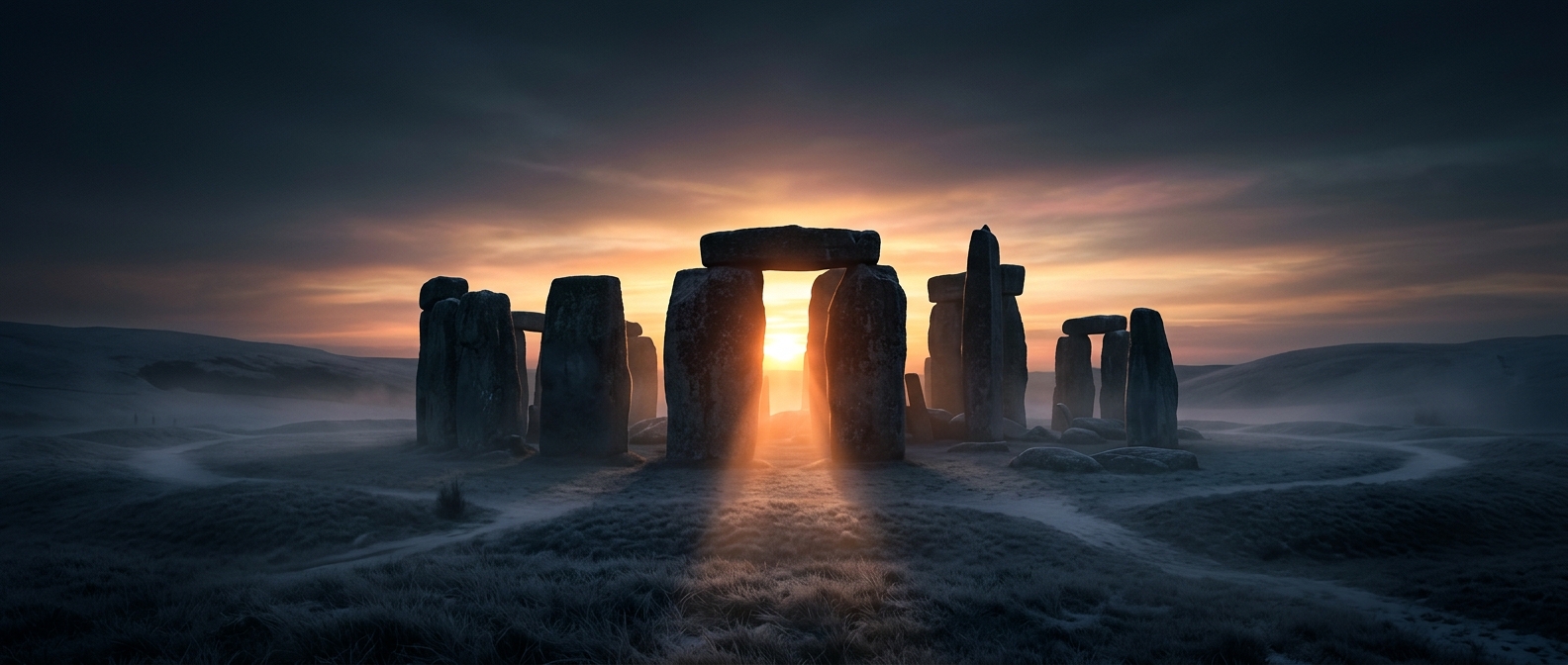
Stonehenge’s axis points toward midwinter sunset
Stonehenge’s arrangement creates a sightline along its main axis: from the monument’s center, toward the entrance and the Heel Stone outside it. Around the winter solstice—the shortest day of the year in the Northern Hemisphere—the Sun sets in the southwest, in line with that axis. The alignment is close, not a claim that the Sun hits a precise mark every year; the apparent position shifts slightly with the horizon and viewing conditions.
A way to make the season visible
The solstice is a turning point in the solar year. After midwinter, daylight gradually lengthens. A recurring sunset in the same part of the horizon would have made that change observable without instruments: people could gather, watch the Sun reach its seasonal extreme, and recognize that the year was turning.
That does not tell us exactly what Stonehenge’s builders intended. The monument took shape over many generations, and its alignment may have carried practical, ceremonial, or social meaning. But the construction makes the seasonal connection tangible: a massive stone setting frames a moment that otherwise passes quickly, as the Sun disappears at the year’s darkest point.