Why Pluto’s astrological role survived its reclassification
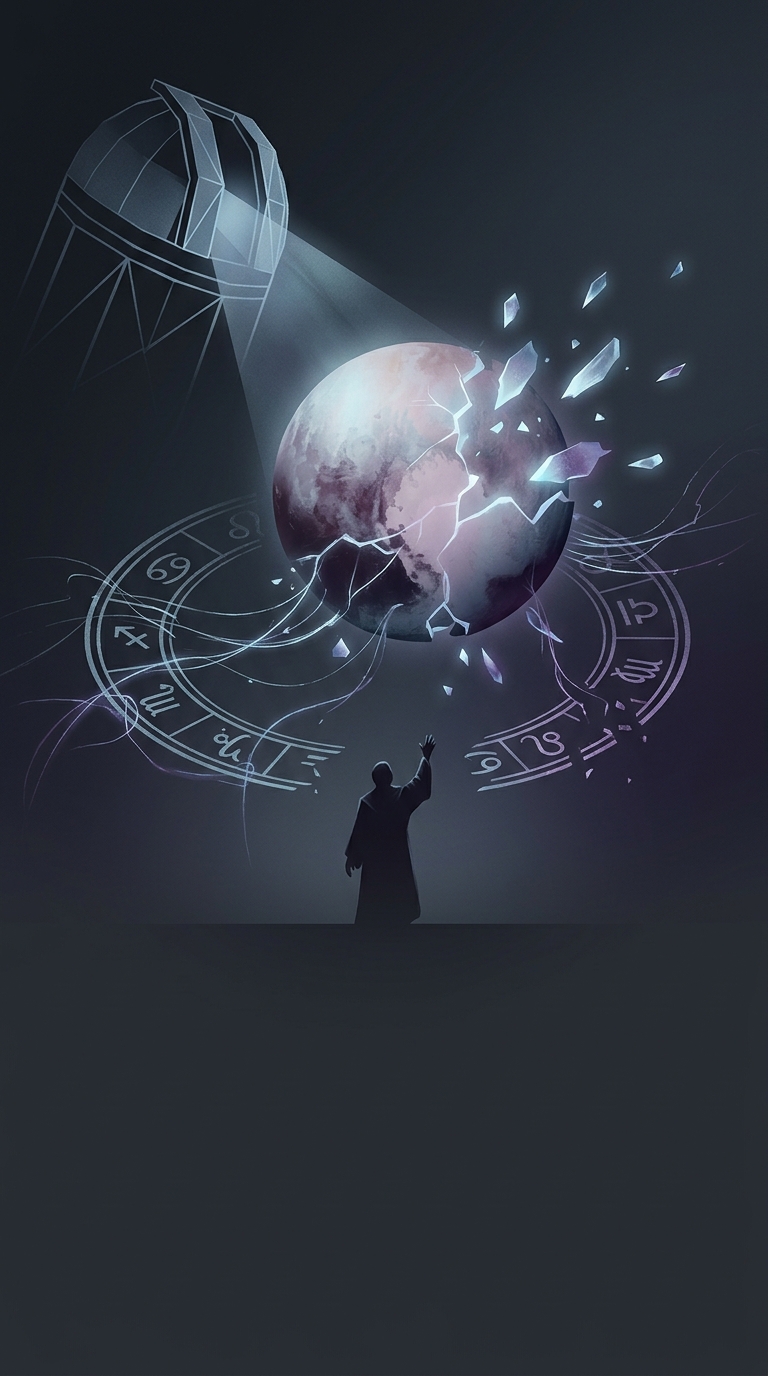
The International Astronomical Union’s decision changed Pluto’s astronomical category, not its place in the sky. A dwarf planet still orbits the Sun; the label reflects how astronomers classify celestial bodies, not whether Pluto exists or can be located. Astrologers who continued using Pluto could therefore keep calculating its position in a birth chart just as before.
Astronomy and astrology ask different questions
Astronomers classify objects using criteria about their orbits and their gravitational influence. Astrology, by contrast, treats the positions of celestial bodies as symbols for interpreting human experience. Its meanings are part of a tradition of interpretation, not consequences of an object’s official astronomical rank.
In that symbolic system, Pluto is associated with concentrated power, buried or hidden material, and profound change. “Transformation” often means a disruptive process: something concealed is brought into view, an old arrangement breaks down, and a new one takes shape. Those associations help explain why astrologers found Pluto useful in chart readings even after astronomers stopped calling it a major planet.
A label change, not a symbolic reset
The disagreement was partly about what counts as a planet and partly about what counts as a meaningful symbol. The IAU’s definition serves astronomy’s need for consistent classification. Astrology does not use that definition to decide which bodies belong in its interpretive vocabulary, so the reclassification did not automatically require astrologers to remove Pluto from charts or revise its assigned themes.
That separation is the lasting consequence: one word, “planet,” can carry a technical meaning in astronomy and a different role in astrology. Pluto’s new category altered how textbooks described the Solar System, while its familiar symbolic associations remained available to astrologers.