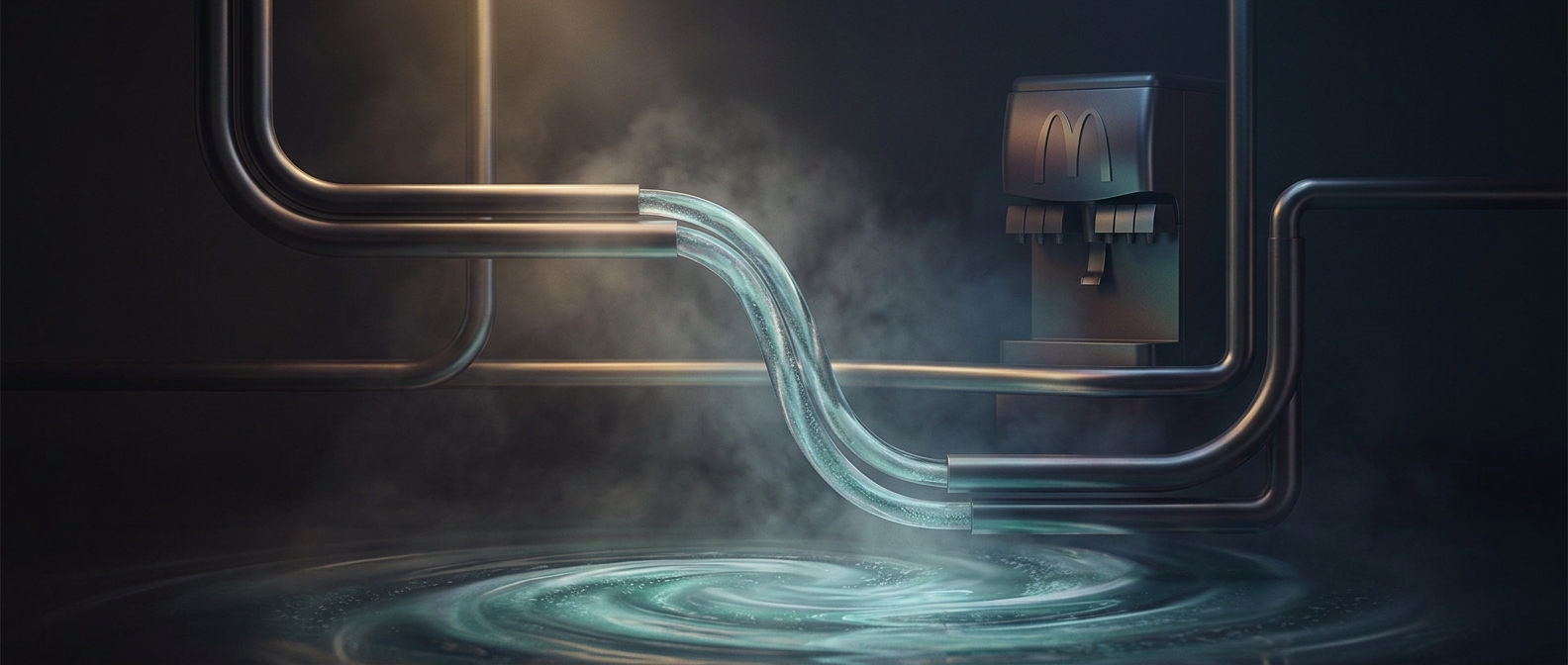
Where the fizz in a fountain Sprite comes from
A fountain drink is mixed at the dispenser, not shipped as finished soda through the syrup line. The machine sends flavor syrup through one channel and chilled, carbonated water through another; they meet at the nozzle. That distinction matters: syrup tubing does not carry the drink’s bubbles, so stainless-steel syrup lines cannot directly preserve Sprite’s carbonation.
What the tubing can—and cannot—change
Carbon dioxide makes soda fizzy by dissolving in water under pressure. Once the drink leaves the dispenser, pressure drops and some gas escapes as bubbles. Keeping the water cold helps it retain more dissolved carbon dioxide, which can make a freshly poured drink seem sharper. The condition of the dispenser and the water’s carbonation also affect the result.
The syrup line has a different job: deliver the flavor concentrate to the mixing point. Its material may matter for durability or maintenance, but the claim that metal syrup tubes are what make McDonald’s Sprite fizzier confuses the syrup path with the carbonated-water path.
Why one fountain Sprite can taste sharper
A colder pour, a well-adjusted dispenser, and the balance between syrup and carbonated water can all shape the taste. So the noticeable difference may be real, but the bubbles come from the carbonated water—not from stainless-steel tubing carrying syrup.