Why passing a slow group is harder than it looks
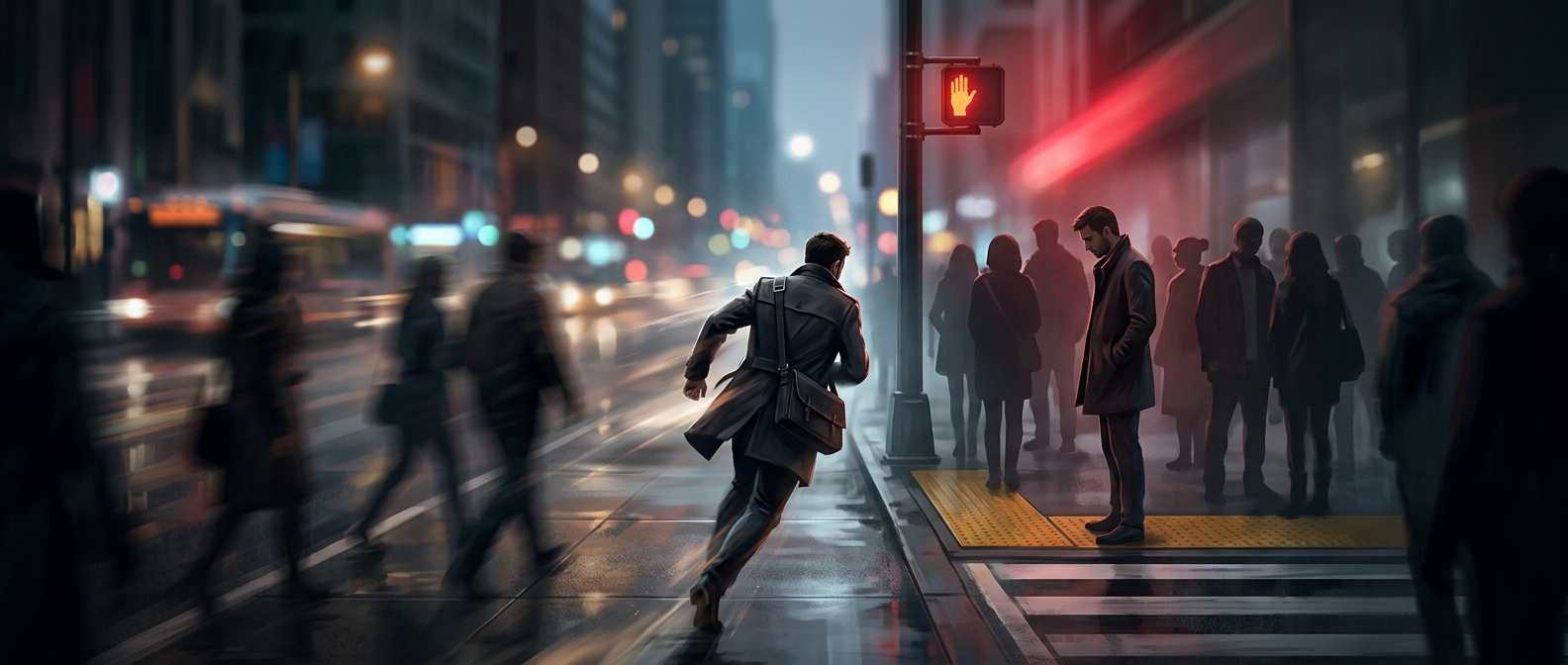
A sidewalk is not simply a narrow road with people moving in one direction. Walkers vary their pace, drift around obstacles, and need room to step aside. When a group spreads across much of the path, it removes the open lane that would let someone move faster without interrupting anyone else.
Passing then becomes a small negotiation. The faster walker has to find a gap, judge whether there is enough room to move around the group, and avoid clipping people or stepping into traffic. If the sidewalk narrows at a pole, tree pit, sign, or doorway, that gap may disappear altogether. The walker slows until a safe opening appears, speeds up briefly, then slows again when the path closes.
A moving bottleneck
The group’s pace affects more than the person immediately behind it. On a busy path, each delayed walker can bunch up with the next, much as vehicles gather behind a slow-moving obstruction. When the group finally passes a wider stretch or reaches a crossing, the line may loosen and people spread out again.
That stop-and-go pattern is why a short distance can feel disproportionately tedious: the effort is not just walking slowly, but repeatedly checking for a chance to move and adjusting to other people’s movements. A little spare width can turn that sequence into a smooth pass; without it, the sidewalk makes everyone share the group’s pace.