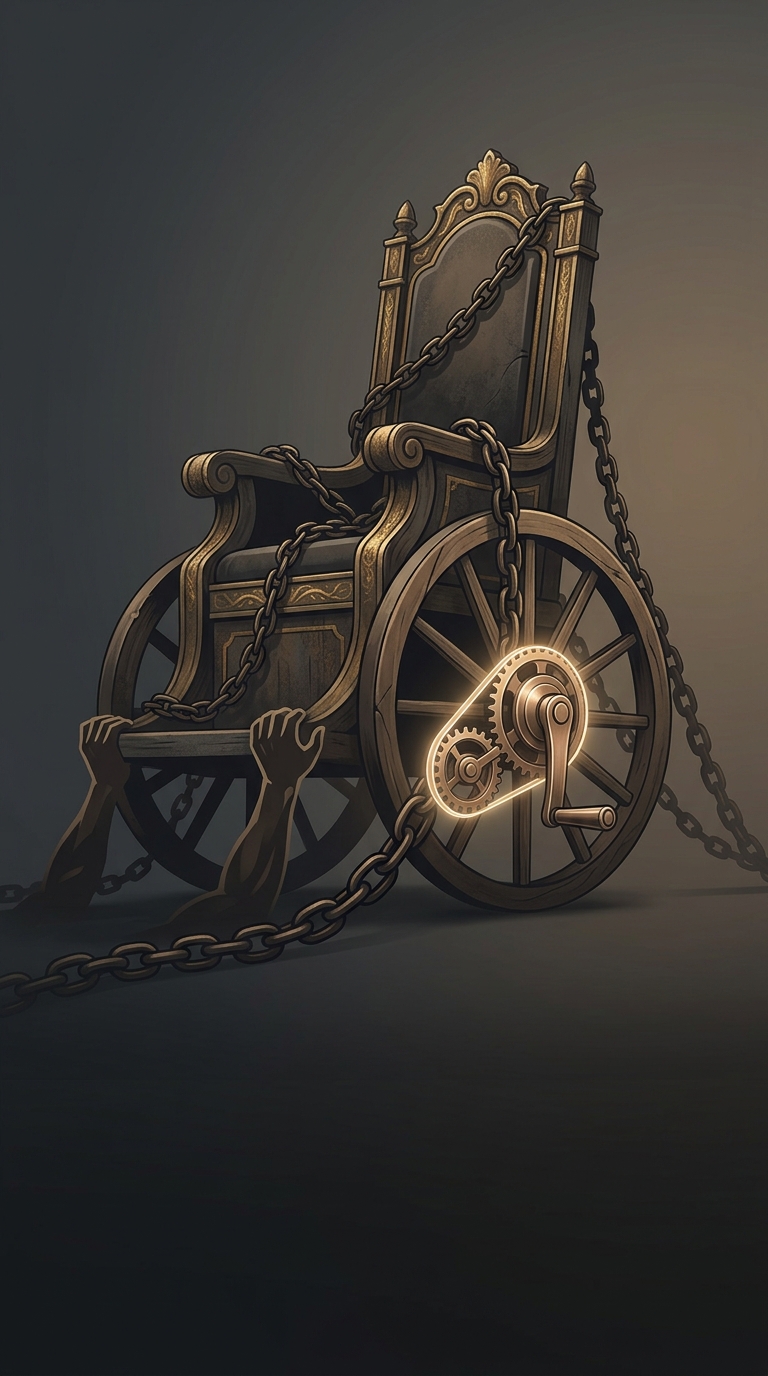
A blocked route can become a dead end
On a shared path, a person on foot can often step around a sign, a parked scooter, or a group waiting by a doorway. A wheelchair user may not have that option. The device needs enough clear space to move forward and turn; a curb, stair, or tightly packed crowd can make the apparent detour impassable.
That is why access rules and shared-space etiquette give wheelchair users priority at bottlenecks. The point is not that one traveler matters more. It is that the same obstruction imposes very different costs: one person may lose a few seconds, while another may lose the only usable route.
The route is a connected system
A ramp is useful only if the path leading to it is open. So is an accessible entrance if a delivery cart blocks the doorway, or a sidewalk if furniture forces someone into traffic. Access depends on an uninterrupted chain of usable spaces, not on a single ramp or wide door.
This makes narrow places especially important. At a doorway or pinch point, yielding briefly can keep the route working for everyone. Leaving equipment, bags, or waiting groups out of that passage prevents a small obstruction from turning into a barrier.
Priority keeps movement predictable
When people know to leave the clear route open and make room for someone who needs it, fewer encounters turn into awkward negotiations. The practical rule is simple: keep ramps, doorways, and narrow paths clear, and let the person whose route cannot easily bend pass through. A few steps aside can preserve a journey that otherwise ends at the obstacle.