Why Coober Pedy goes below ground
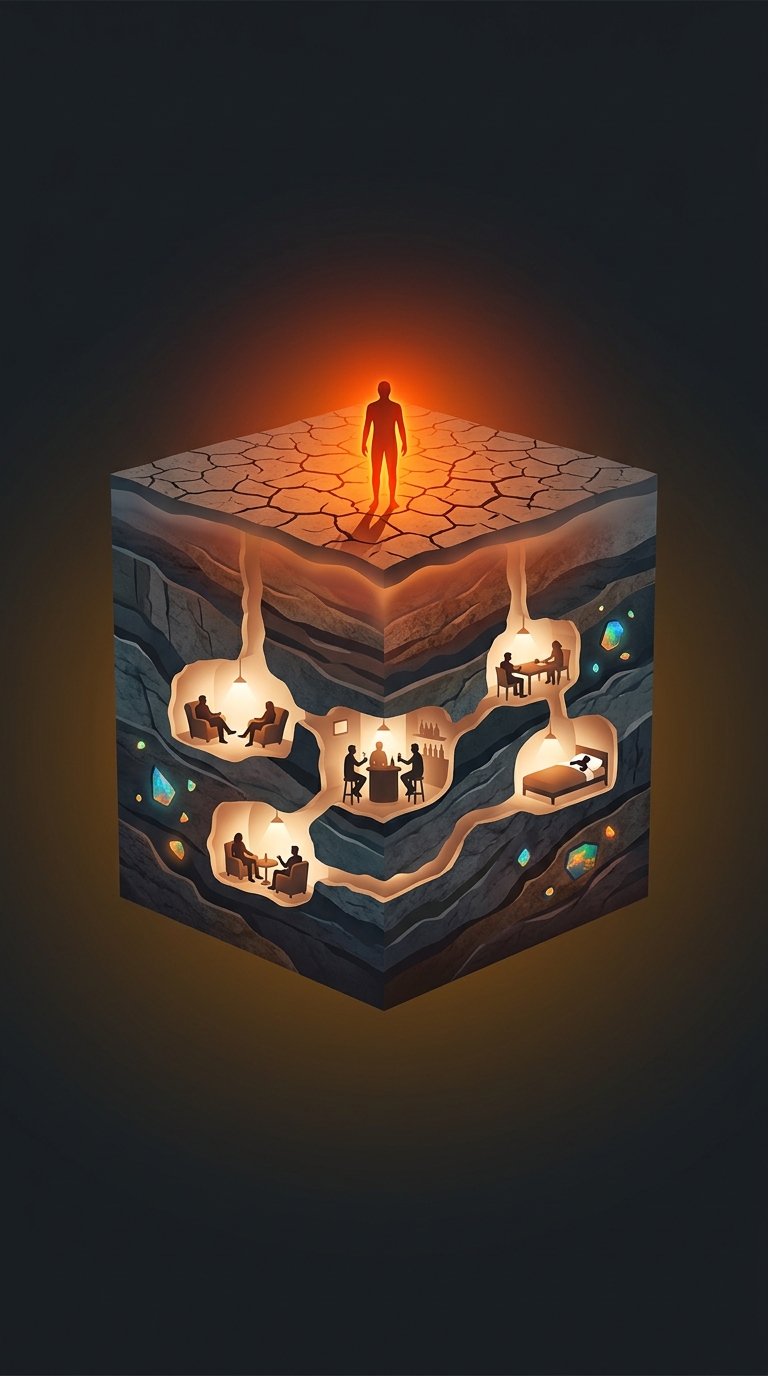
Coober Pedy sits in South Australia’s arid interior, where hot days and scarce water make conventional buildings and lush landscaping costly to maintain. The town’s underground homes, known as dugouts, turn the surrounding rock into part of the building: rooms are excavated into hillsides, creating shelter from the sharp swings in outdoor temperature. Rather than heating and cooling thin walls exposed to the sun, residents rely on the ground’s insulating mass to keep indoor spaces more even.
The landscape itself helped make this way of living practical. Coober Pedy is an opal-mining town, and miners already worked underground in the local rock. Excavation could produce rooms as well as access to opal-bearing ground, though a home dugout is a planned dwelling, not simply an abandoned mine. Openings and ventilation matter: living underground still requires fresh air, safe construction, and ways to bring daylight into rooms.
Making a town—and a golf course—work
Underground living changes what a house can look like, but it does not remove the challenges of desert life. Water is precious, and maintaining green lawns would demand resources that the dry setting cannot easily spare. The local golf course reflects that constraint: instead of grass greens, golfers use small pieces of artificial turf as hitting surfaces, moving them from shot to shot.
That detail captures Coober Pedy’s broader adaptation. The town has not tried to make the desert behave like a temperate suburb; it has adjusted its buildings and recreation to the conditions around it. A round of golf may begin with a patch of synthetic turf in hand, while just beyond the surface, homes and gathering places are tucked into the rock.