How a tree’s latex became chewing gum
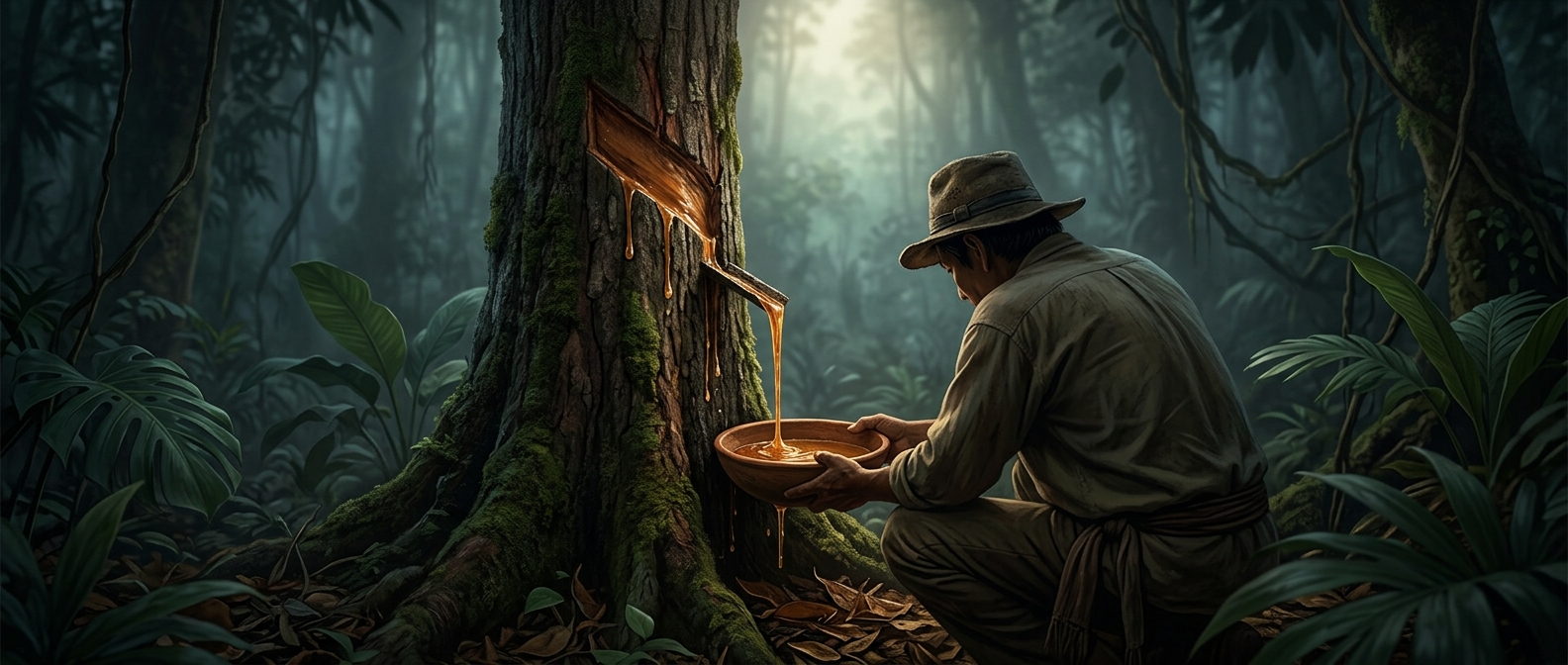
Chicle is the milky latex of the sapodilla, a tropical tree native to parts of Central America and southern Mexico. To gather it, harvesters cut shallow channels into the bark. The latex seeped into the cuts and ran down the trunk, where it could be collected and carried away.
Raw latex is runny, so it must be concentrated before it can be chewed. Producers heated it to drive off water, then worked the thickened material into a pliable mass. That natural elasticity made chicle useful as a gum base—the chewy core that holds flavor and sweeteners.
A harvest that depended on the tree
Collecting chicle required more than simply taking sap: workers had to climb tall trunks and make cuts without stripping away too much bark. With careful tapping, a sapodilla could recover and be harvested again. The work linked a forest resource to a manufactured product, while making gum supply dependent on trees, skilled labor, and the time needed for sap to flow and be processed.
For years, chicle gave chewing gum its characteristic chew. But a natural ingredient gathered from forests was harder to scale than factory-made substitutes. As synthetic gum bases became common, manufacturers relied less on chicle. The shift changed the economics of gum: its chewiness no longer had to begin with a machete cut in a Central American tree.