A hardware limit became a design rule
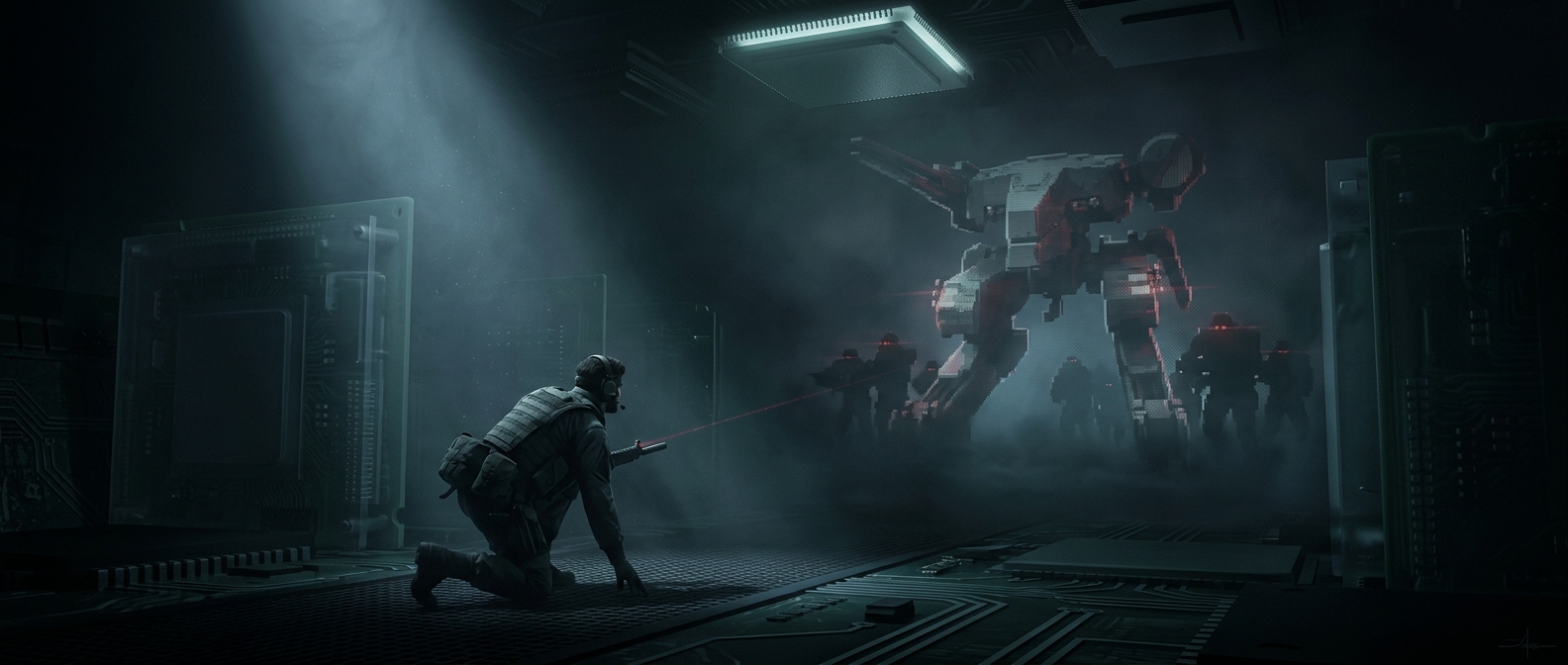
The MSX2 home computer could not smoothly handle a screen crowded with moving enemies. In the original Metal Gear, that constraint made a conventional action-game solution—fill rooms with opponents and let the player shoot through them—hard to support. Hideo Kojima instead built tension around keeping enemies from noticing the player.
That shift changed what counted as progress. A successful encounter might mean slipping past a guard, waiting for a patrol to turn, or finding another route—not defeating everyone in the room. The machine’s difficulty with displaying many enemies helped turn scarcity into a feature: each guard could matter because the player had to read and avoid them.
From workaround to series identity
The original Metal Gear appeared on the MSX2; Metal Gear Solid came later, on much more capable hardware. The stealth premise survived the technical limitation that helped inspire it. In the later game, hiding, timing movement, and managing enemy attention became deliberate systems rather than merely ways to work around a crowded screen.
That inheritance gave the series a different kind of suspense from a shooter. Instead of asking how quickly the player could clear a room, it asked how long the player could remain unseen—and made a single guard’s glance capable of changing the whole encounter.