A punishment designed for an audience
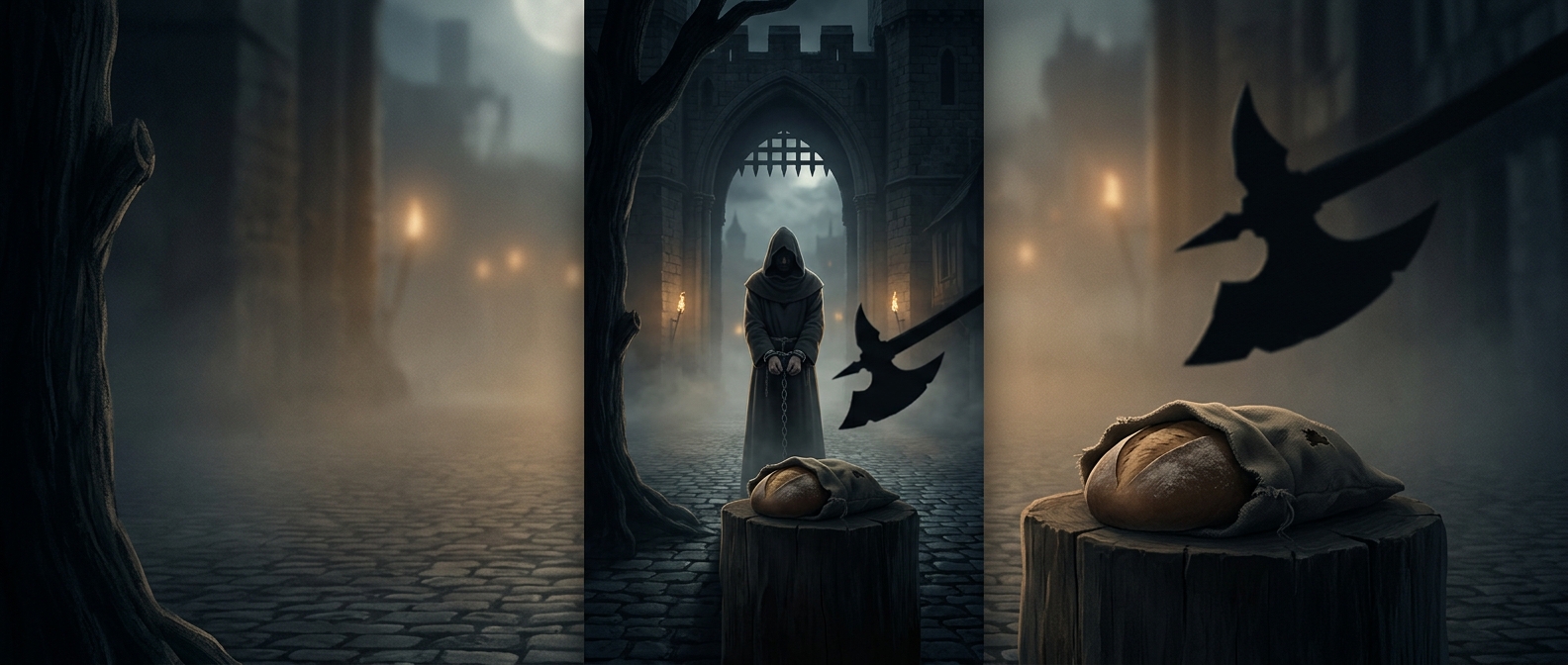
A hand cut off in a marketplace did more than punish the person accused of theft. It turned punishment into a public event. In a time when rulers could not rely on police, prisons, or constant surveillance everywhere, a visible penalty let authority speak directly to people gathered in a familiar place. The injured body carried the warning long after the crowd dispersed.
The spectacle also made enforcement appear immediate: an offense had been identified, a penalty imposed, and the ruler’s power displayed in front of witnesses. That display mattered because laws depend not only on what they forbid, but on whether people believe they will be enforced.
Why theft could draw an extreme penalty
Food theft could be treated as a challenge to social order as well as a loss to an individual owner. In societies where authority was expressed through law and public ritual, severe penalties could signal that even ordinary property was protected. A punishment imposed in a market—where goods changed hands and many people could see it—made that message especially legible.
But such practices were not identical across all rulers, places, or periods. The caption describes a form of punishment used in some historical settings, not a universal rule that every person who stole bread lost a hand. What a particular offense brought could depend on the law and the authority applying it.
The cost of making an example
Public mutilation could frighten onlookers, but it also permanently harmed the person punished. The state’s warning was therefore written onto a human body, not merely announced in words. That is what made the spectacle so stark: one person’s irreversible injury was meant to shape the choices of everyone watching.