From a Tent Stop to a Room Beside the Car
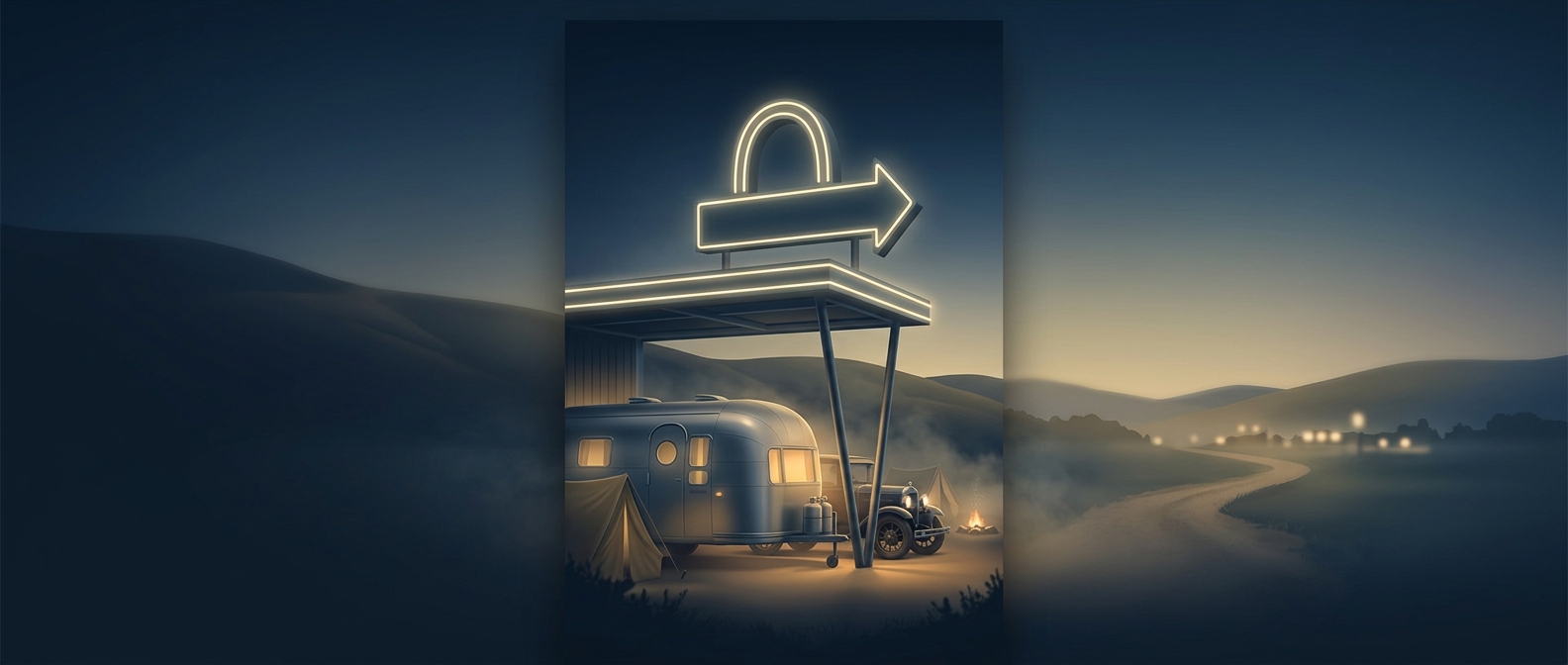
The first roadside overnight stops grew out of a simple problem: motorists traveling long distances needed somewhere to sleep, but the towns and hotels along new highways could be far apart. A patch of land where drivers could pitch a tent offered a basic answer. For landowners, it also turned a roadside location into a small business.
Why Camps Became Motor Courts
A tent camp depended on travelers bringing their own shelter. Operators could make the stop more useful by adding shared facilities, then simple cabins that gave guests protection from weather and a little privacy. As car travel spread, these sites developed into motor courts: small clusters of rooms arranged so drivers could park close to their doors.
That layout suited both sides. Guests could unload directly from the car instead of carrying bags through a large hotel, while owners could build and manage a modest property beside a busy road. The car was not just how travelers arrived; it shaped the lodging itself.
A New Kind of Stop
The shift from open ground to cabins and rooms made an overnight stay more predictable without losing the convenience of a highway stop. In time, the word motel—short for “motor hotel”—came to describe this automobile-centered form of lodging.
Its lasting design idea is still visible in many motels: park outside, open the door, and be in your room within a few steps.