Why six dollars became the name
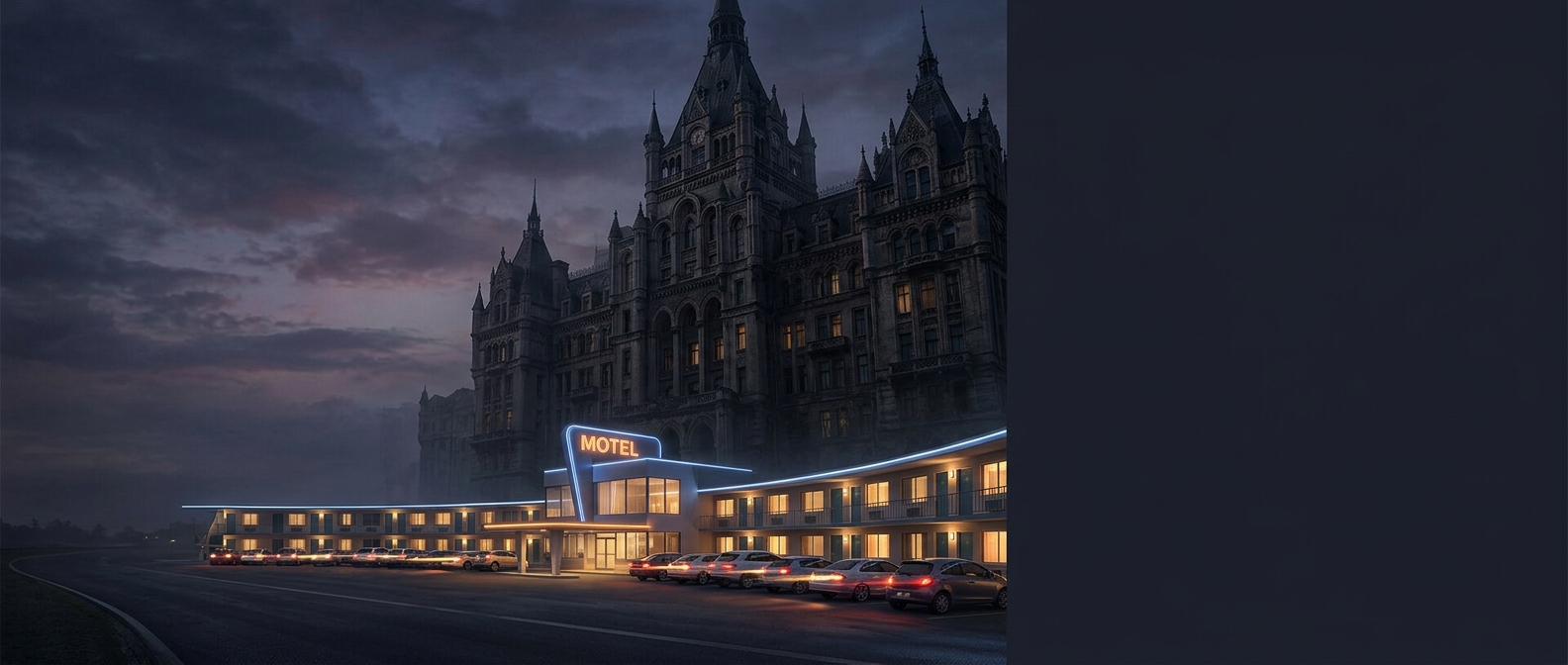
When Motel 6 opened in Santa Barbara in 1962, its name stated the price of a night’s stay: six dollars. The figure was more than a catchy label. It made the motel’s promise immediately legible to travelers—an overnight room at a set, low rate, rather than a stay whose price depended on elaborate extras.
A price shaped by what the motel left out
A low fixed rate works only when the business can keep the cost of providing each room predictable. Motel 6’s approach centered on a basic place to sleep, not a full-service hotel experience. Keeping the offer simple helped make a posted rate easier to understand and gave travelers a straightforward way to compare the cost of stopping for the night.
That simplicity also defined the tradeoff: guests were paying for the essentials of a motel stay, not for a range of amenities and services. The price was part of the product, and the limited scope of the product helped make that price possible.
From posted price to booking price
Today, lodging prices can change with factors such as demand and the date of a stay, so the amount a traveler sees may depend on when and where they book. A fixed-rate idea is different: it treats price as a stable part of the brand’s promise, not merely a number recalculated for each booking.
The original six-dollar rate is long gone, but the name preserves the logic behind it. It recalls a time when a motel could introduce itself with one clear number—and when knowing the cost before pulling off the road was part of the appeal.