The Lot Makes You Read the Dark
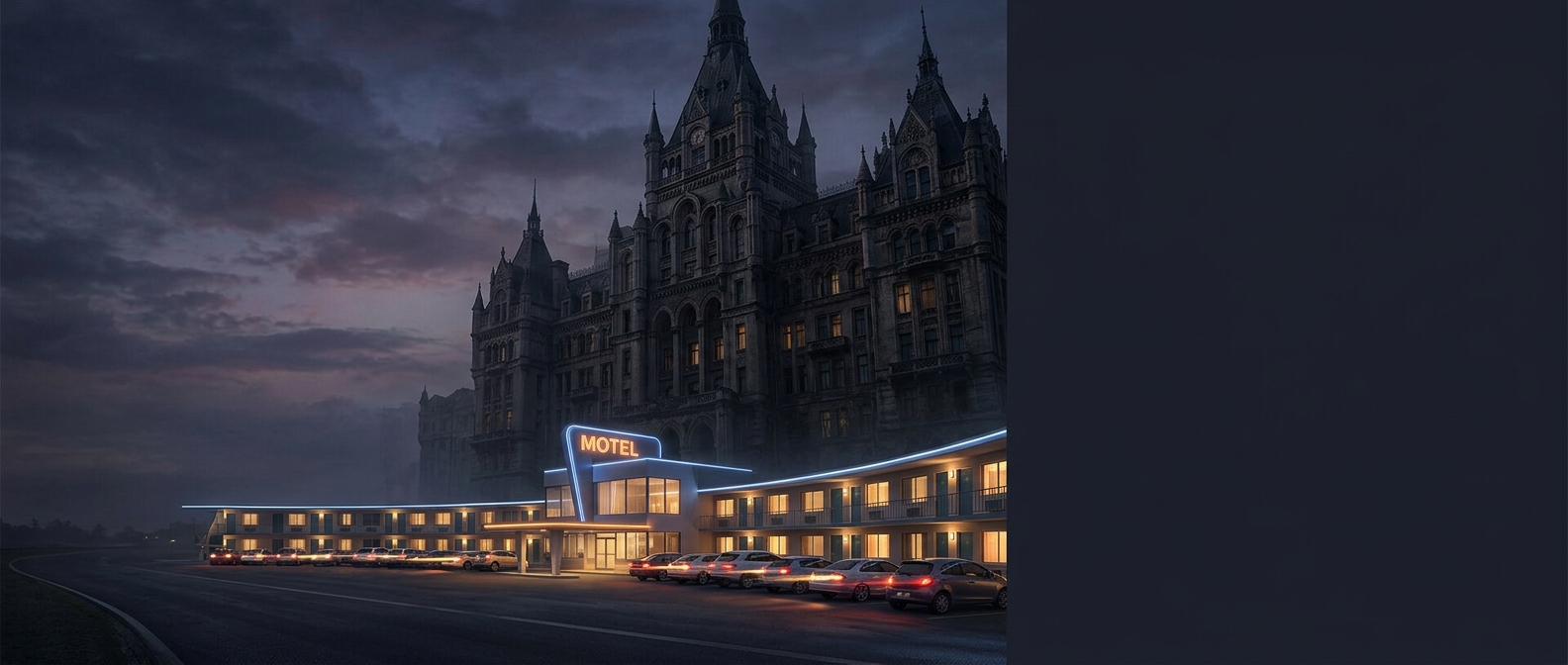
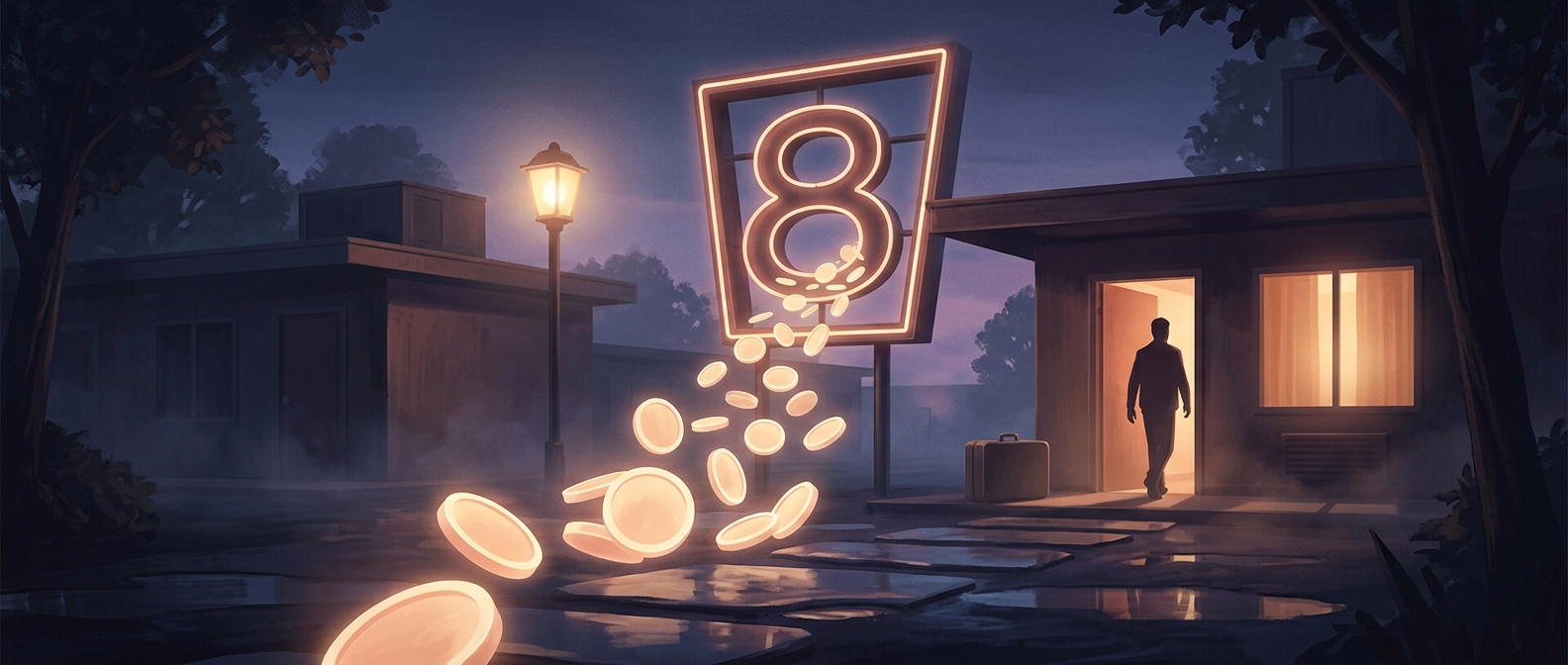
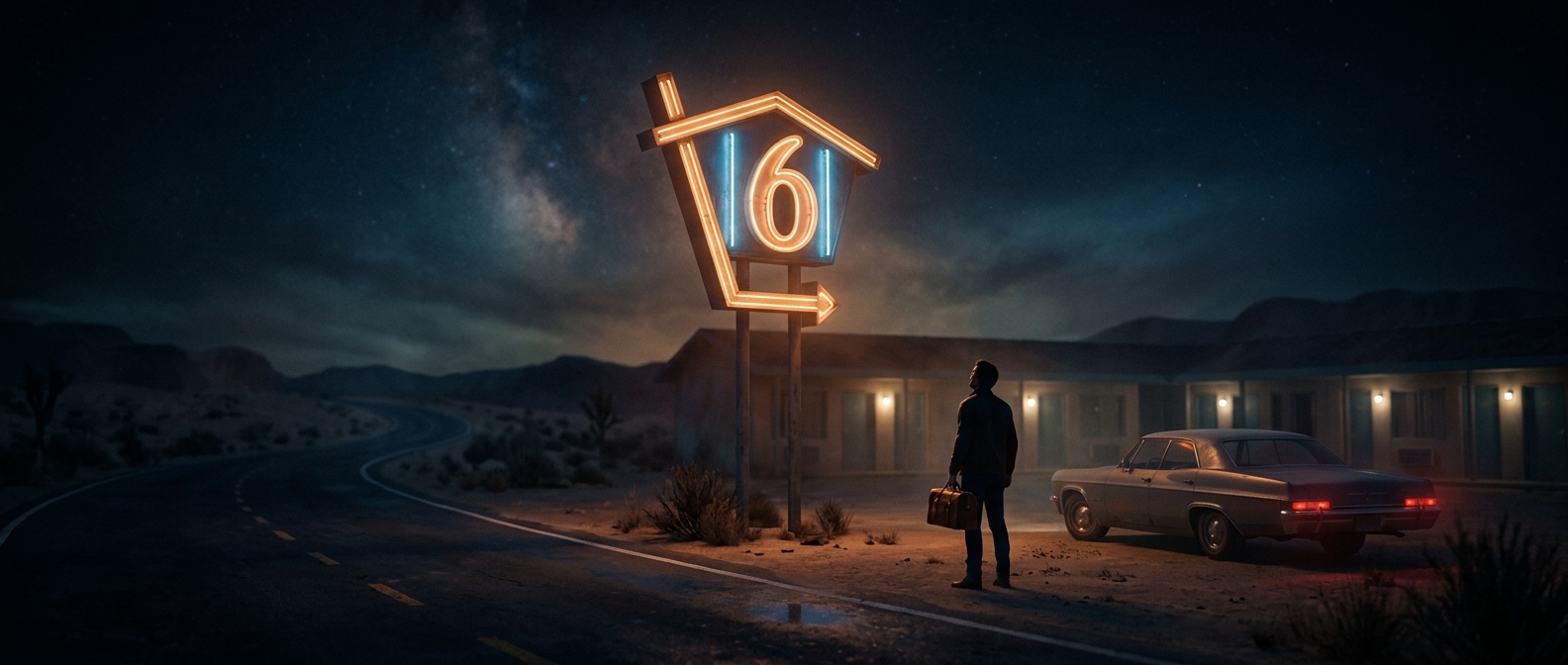
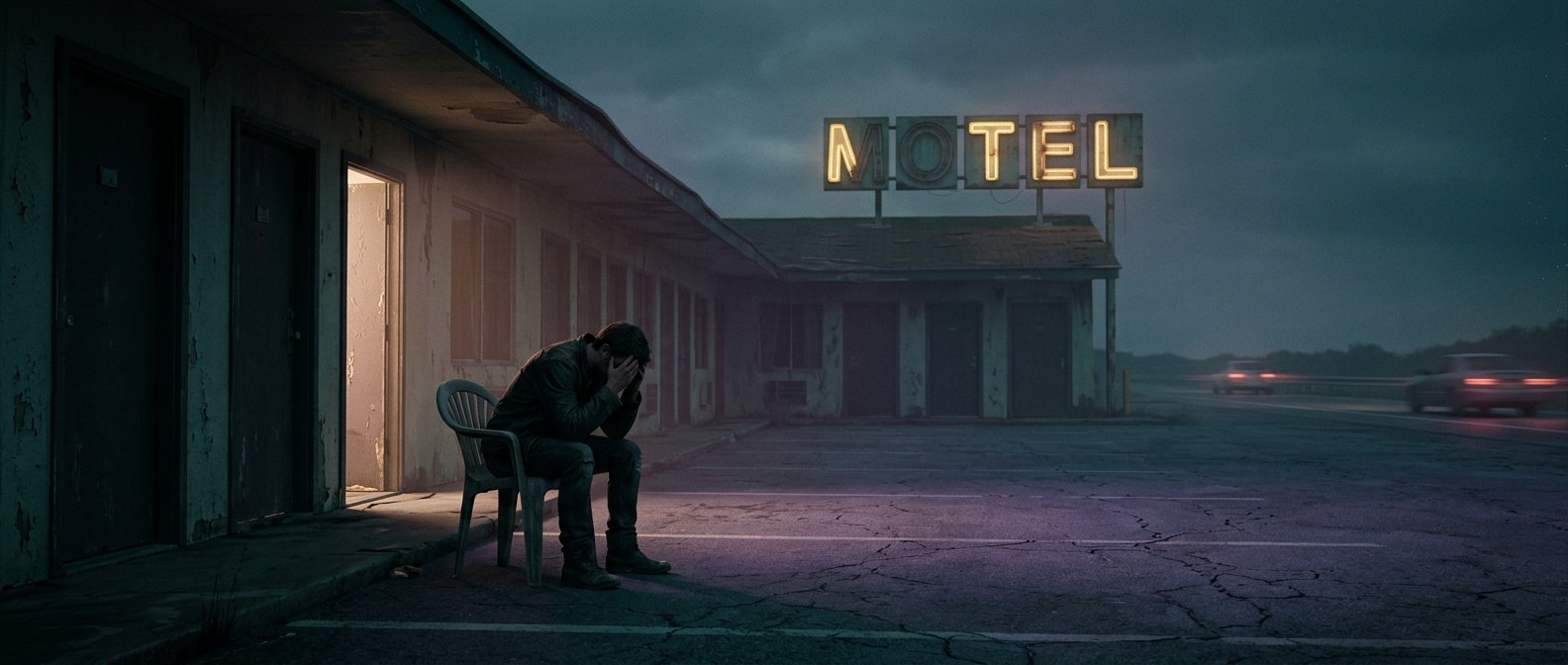
A roadside motel is often arranged for convenience, not atmosphere: rooms face a parking lot so guests can pull up close, unload, and get inside. At 3 a.m., that layout can leave the open space between your car and your door feeling exposed. A few lit windows against a largely dark building make it hard to tell whether the place is empty, asleep, or simply quiet.
That uncertainty matters. In low light, familiar details disappear, while isolated sounds—a car door, a humming sign, footsteps on an outdoor walkway—stand out. Your attention shifts toward possible movement and exits. The motel has not necessarily become more dangerous; it has become harder to read.
A Place Between Places
Motels are designed for brief stays, often beside roads rather than in the middle of a neighborhood. Their guests are strangers passing through, and the building may offer few shared indoor spaces where people can see one another. By day, that makes for quick access and privacy. Late at night, it can make the property feel detached from ordinary street life.
The room adds another small uncertainty: you are entering an unfamiliar space when you are tired, with little time to learn its sounds or layout. A mattress that feels wrong or a door that needs an extra tug can become part of the same impression. The ominous feeling often comes from a mismatch: a place built for easy arrival, encountered when darkness makes every detail harder to judge.