A nightmare becomes a movie’s organizing idea
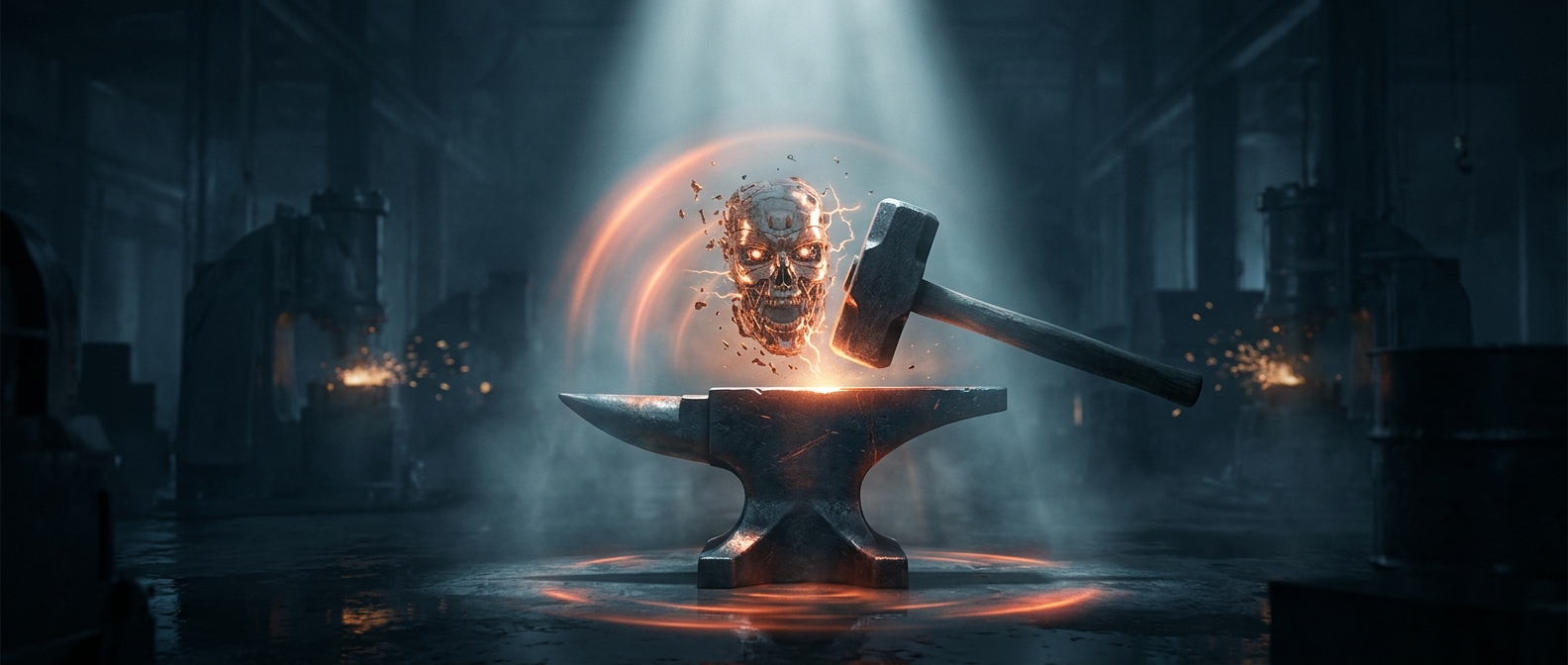
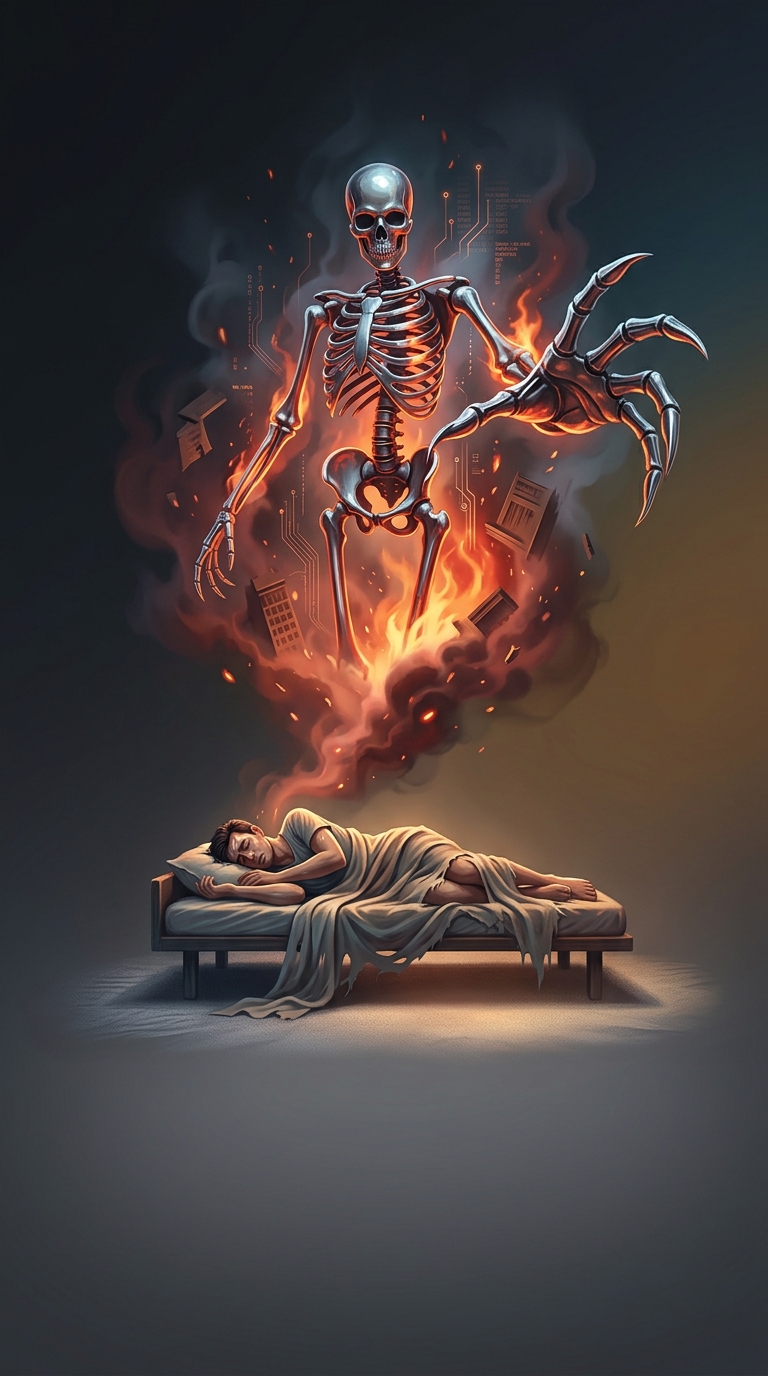
The power of James Cameron’s fever-dream image was not just that it looked frightening. It suggested a whole dramatic problem: what if a pursuer could be damaged, burned, or slowed down, yet never persuaded to stop? That idea gave The Terminator a simple engine. The characters could escape temporarily, but the machine would keep coming.
The film made that threat more unsettling by hiding it inside a human shape. Arnold Schwarzenegger’s imposing presence made the killer seem physically unstoppable, while the story’s gradual exposure of its mechanical nature turned an ordinary-looking man into something more disturbing: a machine that could imitate people but could not share their fears or limits.
Making the machine feel real
The image of a metal skeleton also gave the production a concrete visual target. Rather than relying on a fully computer-generated creature—technology that was not available for this kind of feature in the early 1980s—the effects team built physical models and used techniques such as stop-motion animation to show the endoskeleton moving. Stop-motion creates movement by photographing a model a little at a time, then playing the images in sequence.
That handmade approach shaped the film’s menace. The machine’s stiff, deliberate movement did not look like a human actor in a costume; it looked like an object forcing itself through space. A brief nightmare became both the story’s central threat and a practical blueprint for how audiences would see it.