When the Asteroids Ran Out of Models
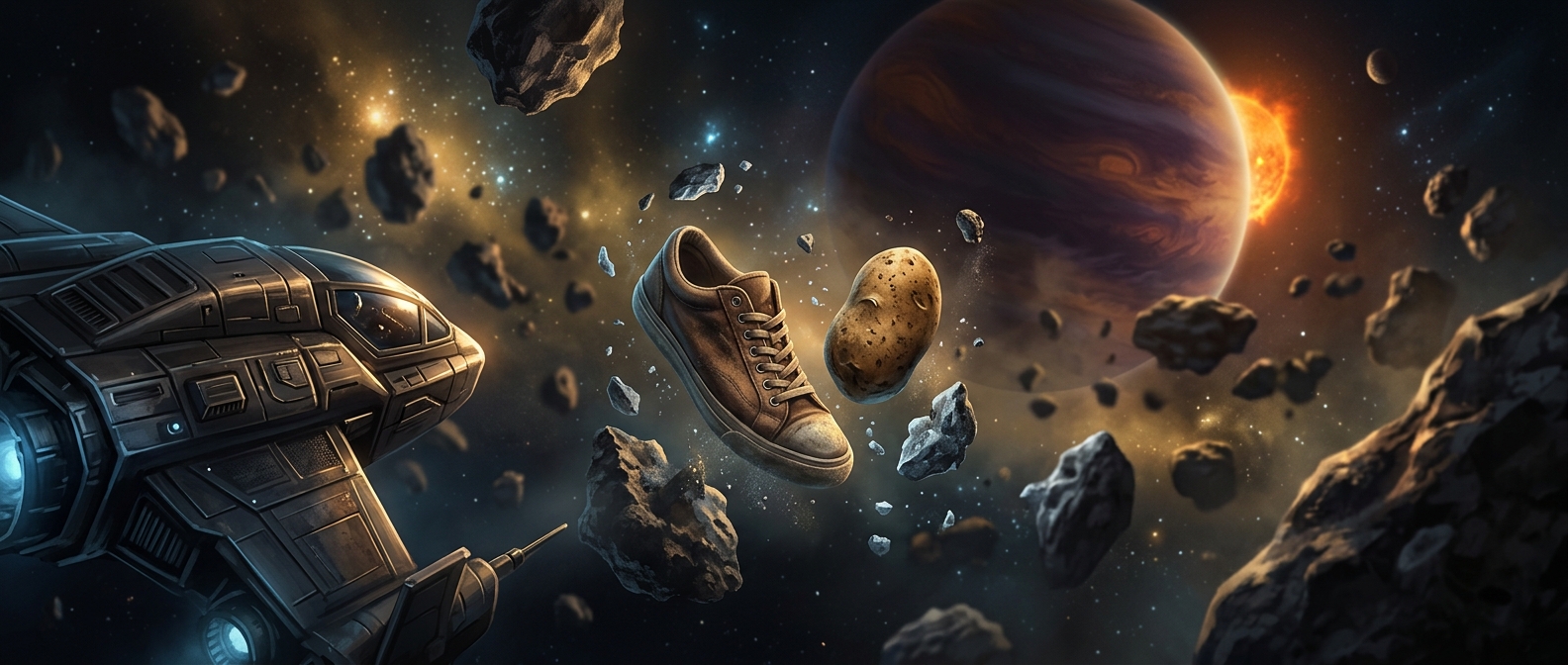
Building a convincing asteroid field by hand could become repetitive work. During postproduction on a Star Wars Millennium Falcon chase, Industrial Light & Magic artists slipped a tennis shoe and a potato into the background as asteroid stand-ins. The joke was also a practical shortcut: familiar household objects supplied odd, irregular shapes without requiring another carefully modeled rock.
Why the Joke Could Hide in Plain Sight
An object does not have to fool a viewer close up to work in a fast-moving background. In a chase scene, attention is pulled toward the Falcon, while distant shapes register mainly as brief silhouettes and flashes of movement. A shoe or potato can read as an asteroid for that instant—not because it looks like one in isolation, but because the scene gives viewers little reason to inspect it.
That is a useful visual-effects principle: context does part of the illusion’s work. The audience interprets a passing shape according to the scene around it, and a background detail can remain unnoticed when the main action has the stronger claim on attention.
A Cameo With a Long Delay
The objects stayed in the film, but their identities went unnoticed for years. Their appeal comes from the contrast between the grand spectacle on screen and the ordinary things used to furnish it. Somewhere in the asteroid chase, the universe briefly contains a potato—and the chase keeps moving before anyone has time to ask why.