The “Mirror” Was a Carefully Staged Trick
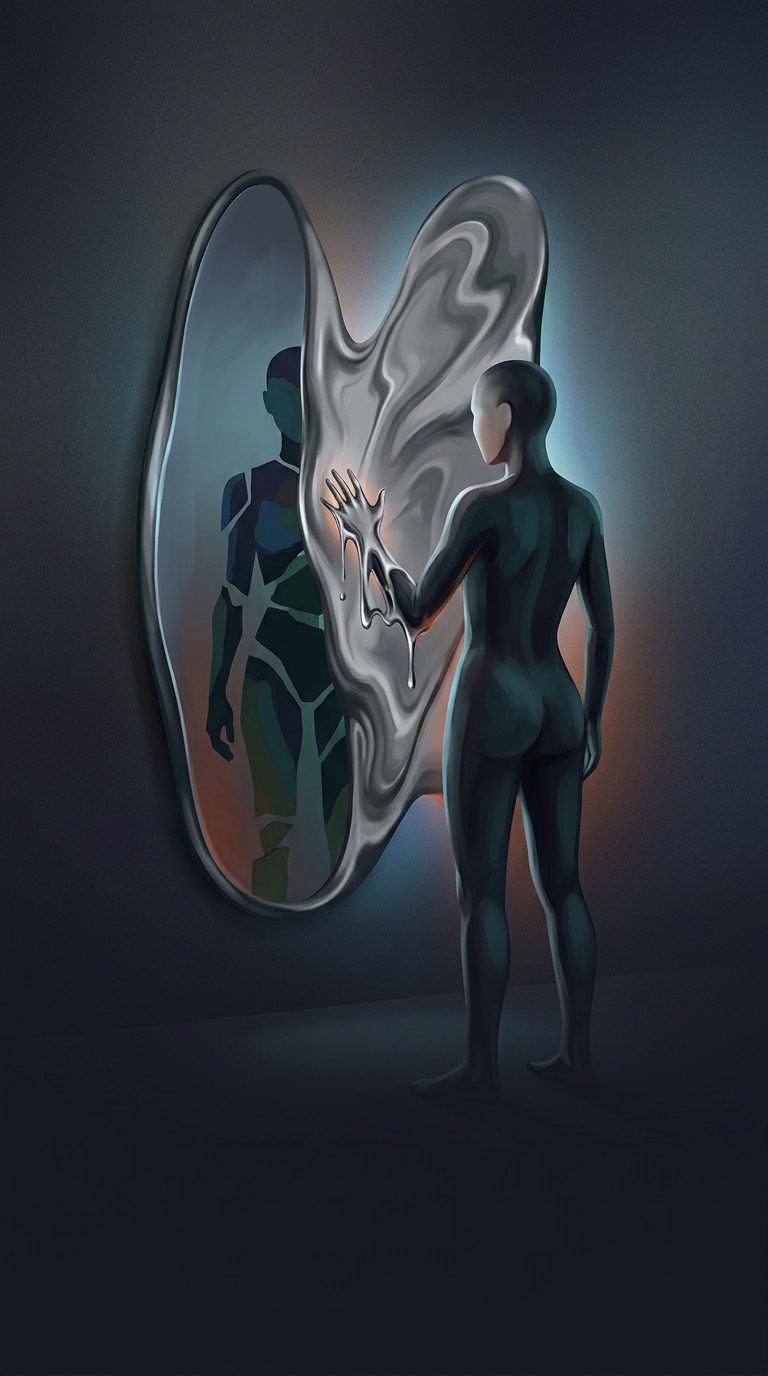
The famous mirror sequence in Terminator 2 was not made without CGI—but its most convincing illusion depended on a very human resource: Linda Hamilton’s identical twin sister, Leslie. In the scene, the T-1000 has copied Sarah Connor’s appearance, so the audience must see two nearly identical Sarahs at once: the real woman and her reflection.
Instead of relying on a digital reflection, the crew used Leslie as the double. The apparent mirror was arranged so the camera could film both sisters in the same composition, with Leslie performing the reflection’s movements. Careful positioning and choreography made the two performances line up. The camera, rather than a computer, sold the uncanny image.
A Hybrid Effect, Not a CGI-Free Film
That practical method suited the mirror gag, but the T-1000’s transformations used a combination of techniques. Robert Patrick’s performance and physical effects supplied a tangible presence; animatronics and makeup helped with effects that needed to exist on set. For the most fluid changes—such as the liquid-metal figure reforming or passing through solid barriers—Industrial Light & Magic created computer-generated imagery.
The distinction matters: Terminator 2 was a landmark partly because it used CGI where the effect demanded impossible movement, while still leaning on actors, props, and camera tricks when those could make a shot feel real. In the mirror scene, the “reflection” was not a digital copy at all. It was another Hamilton, standing in exactly the right place.