Jefferson treated macaroni as a process to reproduce
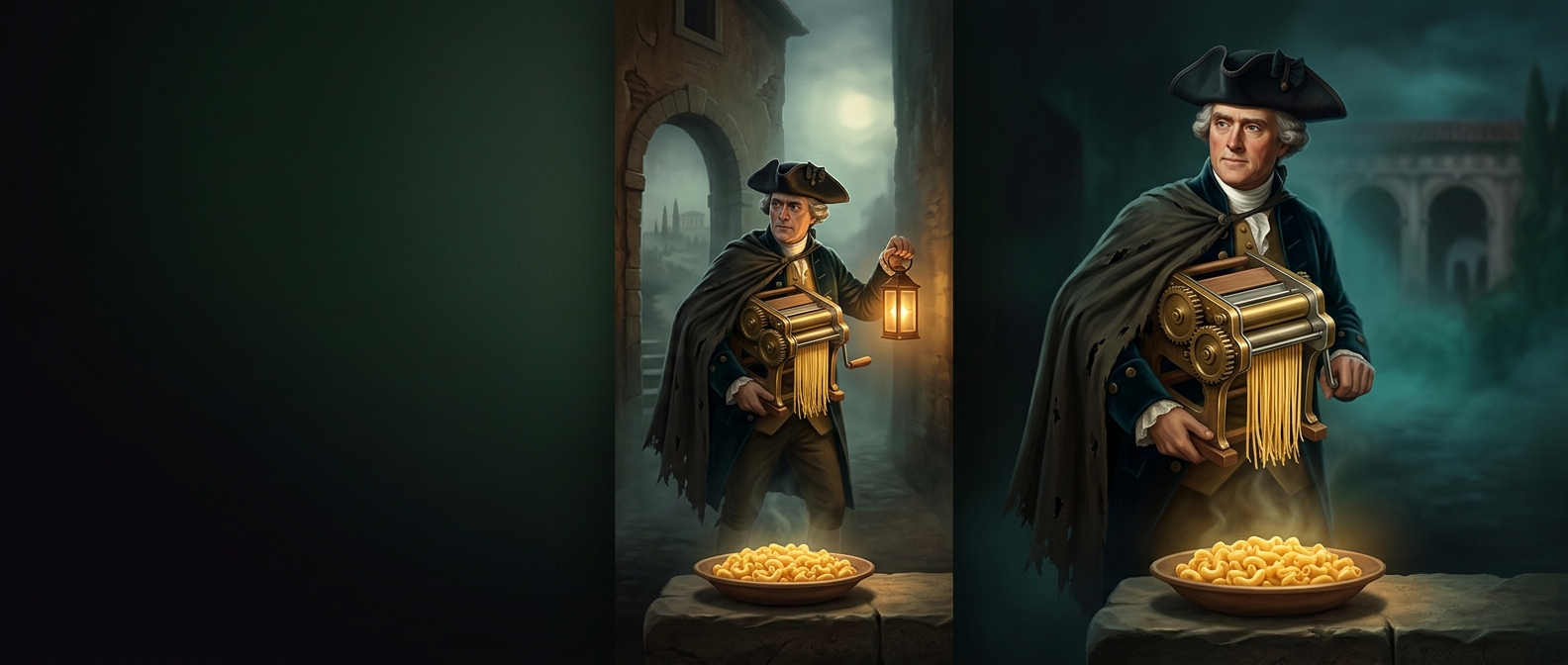
In 1787, while in northern Italy, Thomas Jefferson did more than sample macaroni. He studied the equipment that shaped it, sketching how a press worked and writing down instructions for making pasta. The distinction mattered: a meal could be enjoyed once, but a method—and the machine behind it—could be carried home and used again.
A macaroni press forces dough through a shaped opening, producing strands or other forms. Its design determines what comes out, while the dough’s consistency and the pressure applied affect whether it holds together. Recording both the machine’s operation and the recipe gave Jefferson a practical description of the whole process, not merely a list of ingredients.
From travel notes to an American kitchen
Jefferson later arranged to obtain a machine. That step turned curiosity into an effort to reproduce the food at home: the press could make a distinctive pasta shape, while the instructions could help someone prepare suitable dough for it. Imported know-how was useful precisely because the result depended on more than knowing that macaroni existed.
The episode also shows how closely food and technology were linked in an era when many products were made by hand or with specialized tools. To bring home a culinary fashion, a traveler might need to bring home the means of making it. Jefferson’s notes preserve that practical, inventive side of his interest in food: he watched dinner being made and asked how the mechanism could make it possible elsewhere.