A lawyer’s map of the unseen world
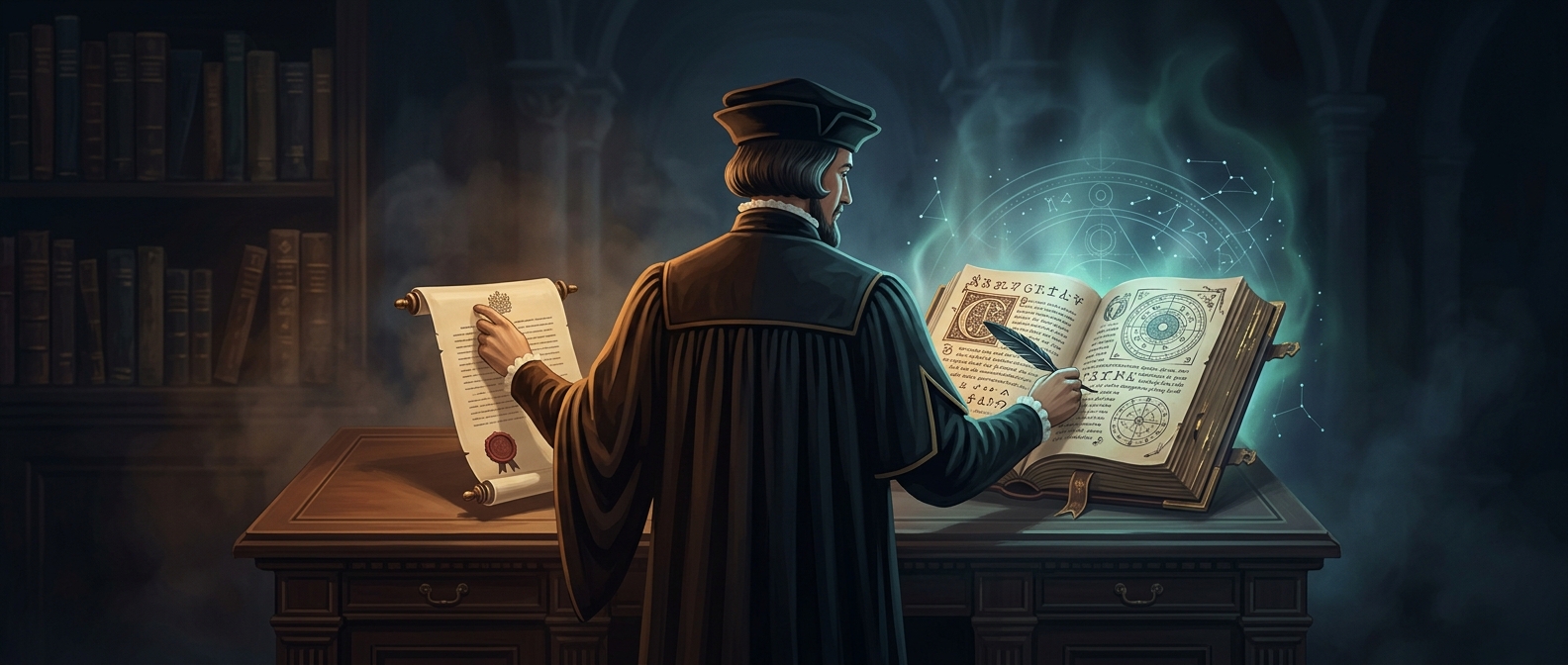
Agrippa’s Three Books of Occult Philosophy was not simply a collection of spells. It tried to organize Renaissance magic into a system: the natural properties of plants, stones, and other earthly things; the influences of the planets; and the powers of spiritual beings. “Occult” here meant hidden or little-understood, not necessarily sinister. Agrippa treated these layers as connected, with the visible world reflecting forces above it.
That framework helps explain why the book could sit alongside legal work and military service. Agrippa was pursuing a learned account of how the universe fit together, drawing on the period’s natural philosophy, religious ideas, and inherited texts. Its catalogues of planetary spirits, angels, and demons placed those beings within a ranked cosmos rather than presenting them as an unrelated parade of monsters.
A long work made amid a shifting career
Agrippa developed the work over many years, beginning an early version in the first decade of the 1500s and publishing a substantially revised edition in 1533. The gap matters: this was not a single burst of occult experimentation, but a book he continued to reshape as his intellectual and professional life changed.
Its mixture of learned explanation and practical instructions also captures a tension of the period. Magic could be treated as a disciplined art grounded in the structure of nature, yet its claims about spirits and supernatural powers remained religiously charged. Agrippa’s encyclopedia made that boundary visible: it presented magic as knowledge to be organized, while showing how easily such knowledge could provoke suspicion.