How an Impact Crater Becomes a Lake
A meteorite striking solid ground can excavate a broad bowl in seconds. The impact throws rock outward, leaving a rim around the depression. In larger impacts, the buried rock briefly rebounds upward, sometimes forming a raised center inside the crater.
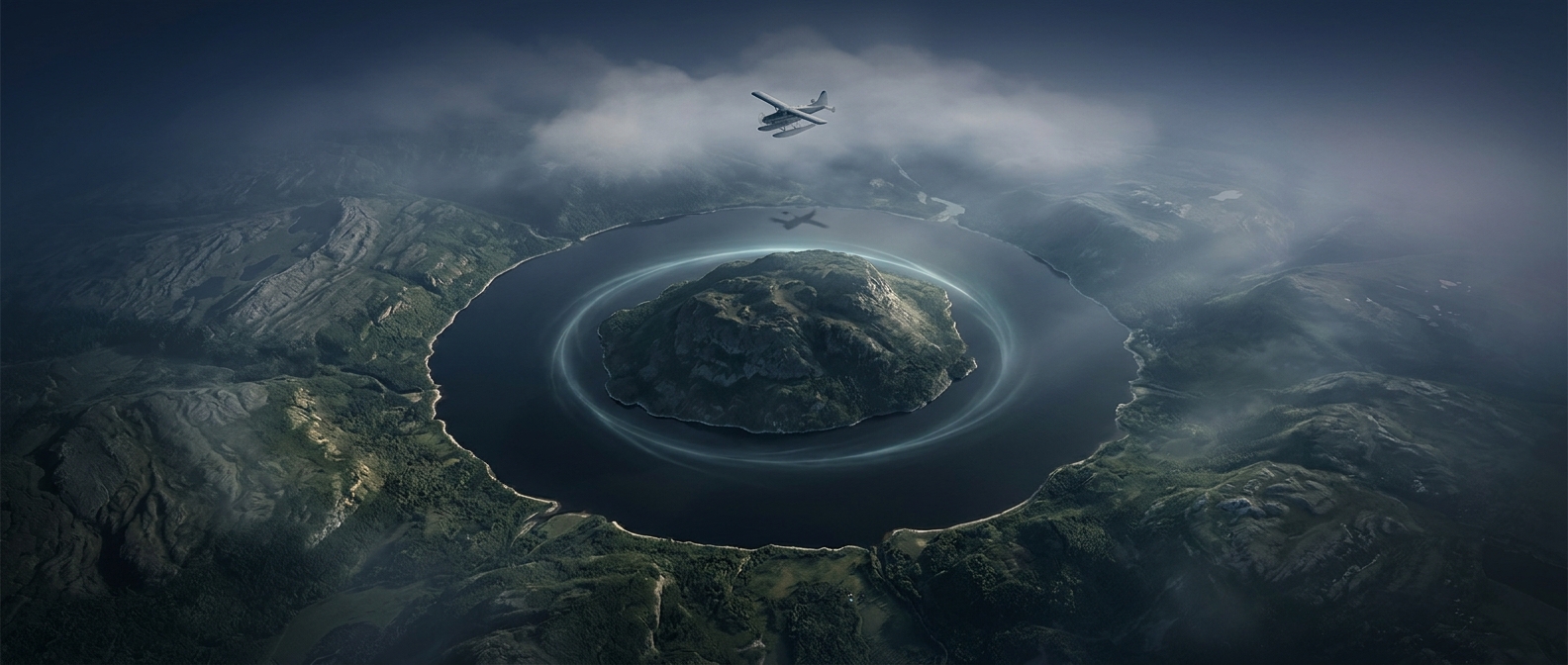
Over time, rain, streams, or groundwater can fill the low basin. If the raised center stays above the waterline, it becomes an island. The result is a striking arrangement: a lake tracing the crater’s outer hollow, with higher ground in its middle.
Reading the Landscape
The island’s position can make the crater’s structure visible from shore or from above. But a central island is not automatically the crater’s rebound peak; erosion, later deposits, and changes in water level can also shape what remains above the surface. The landscape’s circular outline and central high point are clues to its past, not a complete geological map.
That contrast is what makes the view memorable: the water occupies a hollow made by impact, while the island preserves a piece of the ground that resisted being submerged.